




Related: PG&E's Fleet Electrification Efforts
How PG&E is Doing More with Data
Senior Director Michael Glover talks about how the utility company’s skilled mechanics, engineers and analysts are integrating asset management system, telematics and diagnostic tools to increase safety, compliance, and efficiencies.

Lexi Tucker・Former Senior Editor
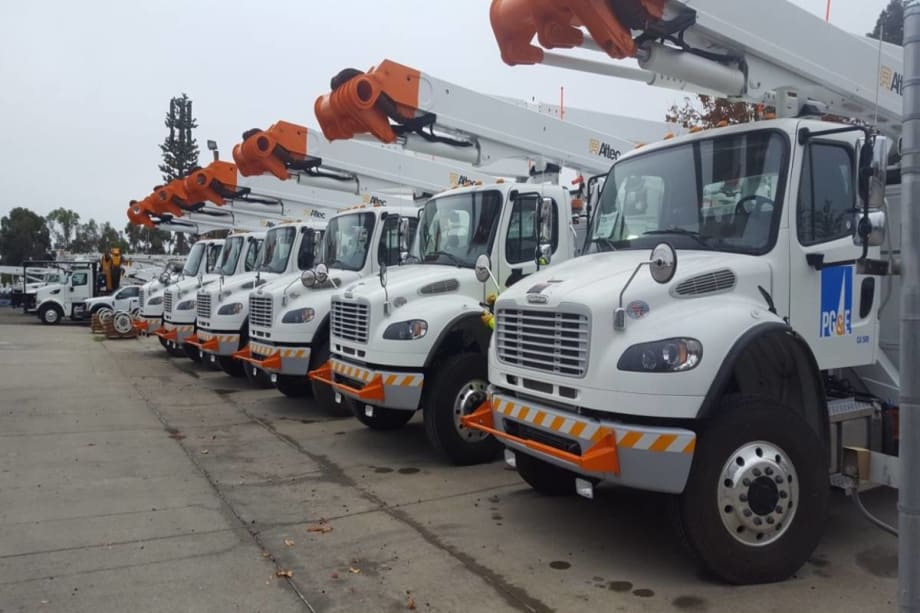
The company has 63 garages across the state of California.
Photo: PG&E
5 min to read
Technology has made managing fleets both easier and more complex at the same time. Michael Glover, senior director of Pacific Gas & Electric Company (PG&E) in San Francisco, discussed how his department has been able to unlock seemingly endless amounts of data collected from asset management and telematics systems and how his team is partnering together to adapt not only to new tech, but the pandemic and natural disasters as well.
Fleet Overview
Glover’s been with PG&E for 12 years, and has served in various roles supporting transportation services, from strategic planning to major initiatives and financial planning. After gradually progressing through the organization, he now is responsible for managing a team of over 400 who support day-to-day fleet operations, including field operations, engineering, compliance, fuel procurement and overseeing diagnostics, technical training, telematics, fleet vehicle procurement, and more.
PG&E collectively operates approximately 15,500+ assets within its Transportation Services Department. The fleet is comprised of Class 1 through Class 8 trucks and construction and off-road equipment.
Making Smart Use of Telematics
The use of telematics is vital to increasing employee and public safety. In-cab coaching, alerts, and reporting of hard acceleration, braking, and excessive speeding are several elements that are incorporated into PG&E’s Motor Vehicle Safety Program. In addition to this, the utility is now branching into asset tracking for off-road and construction equipment to reduce the amount of time locating equipment for maintenance purposes.
“When you’re operating in over 70,000 square miles of territory across the state of California, trucks transfer from one location to another overnight. Being able to find those vehicles with the click of a mouse is helping to reduce non-productive time spent trying to hunt assets down and increase productivity where it is best spent - on maintenance and repairs,” he said.
Being able to retrieve diagnostic trouble codes (DTC) from the telematics system is the next step in enabling mechanics to further improve efficiency when going on road calls to perform maintenance, as they will already have a feel for what the general area of the breakdown might be before leaving the shop.
Driving Decisions with Data

Michael Glover
Photo: PG&E
With the increased use of fleet management systems and telematics comes an overabundance of data. Glover said his team has pulled together a lot of this information using business intelligence/data platforms to make it more meaningful and actionable.
“We want our supervisors to be equipped to make the most informed decisions for their local teams, and our management team to make the best decisions on behalf of the entire department,” he explained.
Turning data into information that's easily digestible, his team has created greater visibility into PM, workload scheduling, and compliance by using business intelligence dashboarding tools to stay on top of and ahead of the game.
“We've always had this information, but you had to mine for it or be a system’s expert to access it. It's been a major success story with pairing our data scientists with fleet operations leaders to partner and develop solutions that can be used to create actionable results,” he said.
Using the underlying data collected via their fleet management system, Glover and his staff have been able to provide better operations, compliance, and financial visibility in real-time to monitor the health of their operations and have increased visibility into upcoming PMs, repairs, and campaigns. Supervisors also have better access to monitor their costs, and how much time is allocated to internal labor, contracts, parts, towing, accidents, and more.
“Generally, this kind of information would have been available once a month. Now, it's available and at our fingertips almost daily,” he said.
Searching for Highly-Skilled Mechanics
Mechanics and labor have been at a shortage across the industry, so the company has been focusing time and attention on recruiting efforts by building internal training programs. PG&E generally hires journeyman level mechanics due to the heavy concentration of specialty equipment that's somewhat unique to the utility industry, including a focus on airbrakes and hydraulics.
The company has also been expanding its diagnostics program. As trucks and other assets become more computer-driven, PG&E has seen the need for doubling down on support for enhancing knowledge of diagnostics.
“It's the use of OEM-level diagnostics, not just scanning tools,” he explained.
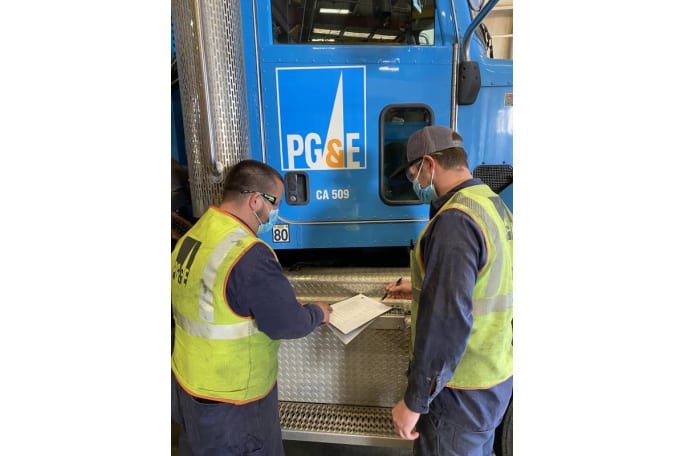
Glover said his field operations team is one of the strongest, most dedicated, talented and flexible teams one could work with.
Photo: PG&E
Adapting to COVID Challenges
Glover said his field operations team is one of the strongest, most dedicated, talented and flexible teams one could work with. When the pandemic hit in March 2020, the company adhered to state shelter-in-place guidelines for employees who were able to do so. Naturally, mechanics are field staff, so they didn’t get that luxury.
“They’ve been out there on the front lines since the pandemic started. They’ve endured anything and everything that can be thrown at them. We’ve had many people that have been impacted due to the pandemic and have been unable to work. We’ve had to juggle resources a lot to make that work. But the team consistently delivers and continues to put safety and compliance first. I couldn’t be more proud and thankful to them for that,” he said.
His team partnered with their Human Resources department to create a comprehensive process so when an employee is assessed as potentially having COVID-19, trucks are tagged as out of service. From there, the truck is commercially disinfected using a contract environmental company. They are also working on enhancing their vehicle cleaning pre-treatment process as an added layer of protection.
“The process has been challenging and is continually adapting, but we continue to make improvements based on real-time feedback from our front line and the changing environment,” he said.
Braving Environmental Challenges
On top of the pandemic, California saw intense wildfires in 2020. At one time during the August lightning complex fires, there were dozens of fires within its service territory, some in excess of 300,000+ acres each. His team stepped up to mobilize field operations to support PG&E field crews, coordinated mobile fuel services, and established a fleet of 30 mobile resource centers to support customers.
“We responded to support a record number of more micro-sites, staging areas, and base camps, based on the geographic footprint of the fires across the state, than we've had in recent memory,” he said.
Fortunately, the company has 63 garages across the state, so the team was able to mobilize and support those who were trying to restore gas and electricity for people who were impacted by the natural disaster.
Originally posted on Work Truck Online
Subscribe to Our Newsletter
More Operations

Moventum Fleet Management Names Mark Iorillo Head of Sales
Iorillo brings nearly 20 years of fleet management and sales experience to the role, including previous positions at Element Fleet Management, CEI, Donlen and Ryder.
Read More →
Fleet Has a Talent Pipeline Problem. What Comes Next? | AF News Recap
Where will fleet’s next generation of leaders come from? This week, we’re looking at the industry’s talent pipeline, what certification can add to a fleet career, how to build an award-worthy track record, and the return of Automotive Fleet’s Personal Use Survey.
Read More →
Smith System Launches Driver Risk Management Program
Fleets have more driver data than ever, but identifying risky behavior doesn't necessarily correct it. Smith System's new Driver Risk Management program combines monitoring, training, and follow-up coaching to help fleets connect risk signals with driver intervention.
Read More →
Automotive Fleet Opens 2026 Personal Use Survey for Commercial Fleet Managers
Less than two weeks left! Commercial and corporate fleet managers are invited to share how their organizations handle company vehicle personal-use policies, charges, and driver eligibility.
Read More →
From AI Prompts to AI-Generated Safety Songs | AF News Recap
Can better prompts make AI more useful for fleet managers? This week, we’re breaking down smarter fleet analysis, an AI-assisted experiment that turned safety training into music, and what happened to fuel prices in August.
Read More →
How to Write Better AI Prompts for Fleet Analysis
Include these six elements in your fleet prompts to generate more relevant analysis and accurate answers.
Read More →
Fleet Meets: Eric Kilgore
This edition of the Fleet Meets series features one of the industry's best leaders driving multi-market and national operations.
Read More →
Why Reactive Fleet Management Is Becoming Too Expensive to Sustain
Research highlights a growing need for proactive management strategies to address rising costs in fleet operations effectively.
Read More →
Sponsored•August 12, 2026
What Your Fleet KPIs Aren’t Telling You
Tracking fleet metrics is only useful when the data leads to better decisions. This guide helps fleet leaders assess cost, utilization, and downtime more accurately, identify performance gaps, and prioritize the actions that can improve operational results.
Read More →
Sponsored•August 7, 2026
Hidden in Plain Sight: Fleet Compliance Risks
Fleet compliance isn't just about having policies — it's about consistently enforcing them. This practical guide reveals six hidden compliance risks common in public sector and shared fleet operations and outlines proven strategies to improve visibility, accountability, and audit readiness
Read More →