




Going Green: Out With the Old, in With the New: Diesel Alternatives for Construction
How One Fleet 'Escalated' its Services During 2022
With supply chain restraints and pressure to go green as the new normal, one company shares its secrets to surviving 2022.

Hillary Weiss・Senior Editor
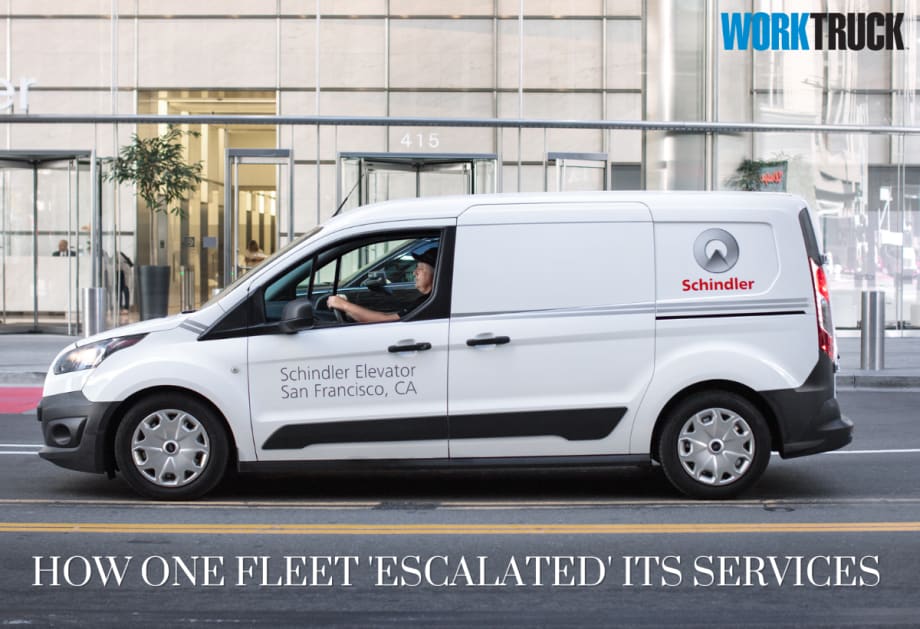
Schindler Elevator is transitioning toward net zero emissions by 2040.
Photo: Schindler Elevator
4 min to read
Moving toward a net zero emissions fleet is a huge task. The pressure is high for small and large fleets to utilize eco-friendly vehicles. Depending on the desired green fleet, a complete overall might be needed.
And once the plan is decided, fleet management also needs adjusting. Just some items to recalculate might be charging stations, maintenance techs, and route optimizations.
In the end, it’s worth the cost and maintenance overall. A 2020 Consumer Reports study showed that electric vehicle (EV) drivers tend to spend about 60% less each year on fuel costs compared to drivers of gas-powered cars.
And according to the U.S. Department of Energy, it is less expensive to fuel a truck with propane than with gas long term because propane-fueled trucks require less maintenance.
But a green fleet is not the only obstacle fleet managers have to deal with. At Work Truck, we’ve witnessed supply chain issues and delays for the past few years. Not to mention the day-to-day tasks of managing registrations, driver supervising, and more.
It’s safe to say fleet managers are going through the wringer in 2022.
Work Truck spoke with one such company navigating toward a green fleet on top of managing supply chain restraints and utilizing telematics.
Ted Chan, fleet manager of Schindler Elevator, shared how he adjusted his fleet to reduce CO2 emissions and handles ongoing supply chain issues.
Escalating a Fleet to Success
Schindler Elevator Corporation manufactures elevators, escalators, and moving walks and installs, maintains, and modernizes mobility solutions for almost every type of building requirement worldwide.
And it has over 6,000 employees in more than 160 locations in North America.
Founded in 1874 in Lucerne, Switzerland, by precision engineer Robert Schindler, its U.S. headquarters is in Morristown, New Jersey, and its Canadian headquarters is in Toronto, Ontario.
Chan manages a fleet of 3,800 vehicles that travel throughout North America to office buildings, airports, shopping centers, retail establishments, and specialty buildings.
Of the fleet vehicles, 90% are light-duty vehicles, and 10% are medium-duty. The vehicles are utilized for servicing and modernization of existing elevators/escalators and installing new elevators and escalators.
Chan likes to pay attention to “payload, and fuel efficiency when it comes to his fleet. We do not compromise safety and check all the boxes of options when possible.”
Tackling Fleet Obstacles
Throughout the nation, fleets are battling supply chain restraints. A shortage of materials such as microchips, raw materials, packaging, and even drivers heavily delays operations.
And those restraints and shortages extend to the elevator manufacturing industry also. Not only has it impacted delivery times, but Schindler’s has also seen an increase in supply prices, affecting net revenues.
Chan said one of Schindler Elevators’ top challengers is supply chain restraints. He and his team best handle it by “aggressively exploring all options and maintaining good relationships with our suppliers.” Without patience and good relationships, you might be out of a supplier.
Another obstacle to tackle is driver motor vehicle records. With a fleet of almost 4,000, it is a lot of paperwork to handle.
That’s why Chan transitioned the process from manual paperwork to an electronic and automated system. By engaging with his fleet management company to handle most of the heavy lifting, drivers can now enter their driver information online versus a paper system.
Once the shift is fully completed, more time will open for maintaining the overall fleet.
Transitioning to a Green Fleet
In 2021, President Biden set a greenhouse gas pollution goal. The plan is to reduce CO2 emissions to 50-52% less than 2005’s emissions by 2030.
According to the EPA, transportation is the most significant contributor to greenhouse gas emissions. For fleet managers across the U.S., considerable changes are required.
Schindler Elevator wants to be a part of that change and contribute to helping the environment. In 2020, it made the decision companywide to reduce its CO2 emissions.
The company has made a public commitment to be net zero emissions by 2040, and fleet is a massive contributor to this goal. Chan said the company is using a multi-phased approach to meet its goals.
“We are actively engaging with our OEM partners in converting our ‘ICE’ fleet to EVs where it makes sense. We are also actively looking into better ways to operate more efficiently, such as improved route planning and optimization,” Chan added.
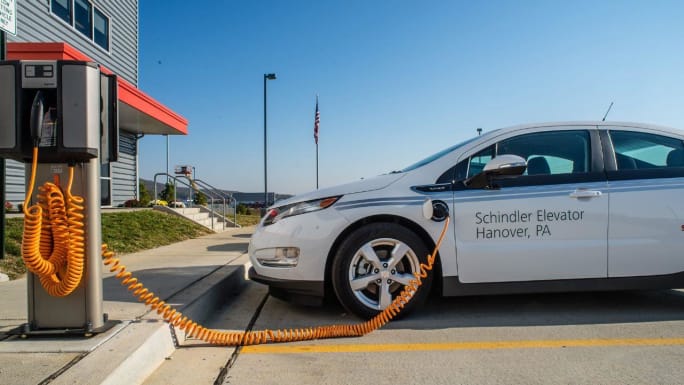
Schindler Elevator's fleet services, modernizes, and installs elevators and escalators.
Photo: Schindler Elevator
Optimizing the Fleet’s Overall Health
Aside from going green, Chan implemented other solutions to optimize the fleet’s overall health, such as rightsizing and telematics.
The best solution to maintaining an optimized healthy fleet is rightsizing. Chan said, “It goes without saying that a fleet manager’s responsibility is to constantly evaluate and rightsize their fleet for the job.”
This is the perfect way to curate the right amount of inventory needed for Schindler's Elevator’s requirements.
Another solution Chan recommends is utilizing telematics. The company has plans to take advantage of telematics in 2023 entirely. Telematics can help improve fuel costs, maintenance schedules, and route optimizations. Chan is most excited about the impact it can have on driver safety and ways it can allow drivers to compete for bragging rights within the company on who is the safest driver.
As Chan’s final advice to fleet managers, he said, “Be aware we are all in this together. Continue cultivating a good relationship with your suppliers and peers to navigate these difficult times.”
Originally posted on Work Truck Online
Subscribe to Our Newsletter
More Operations
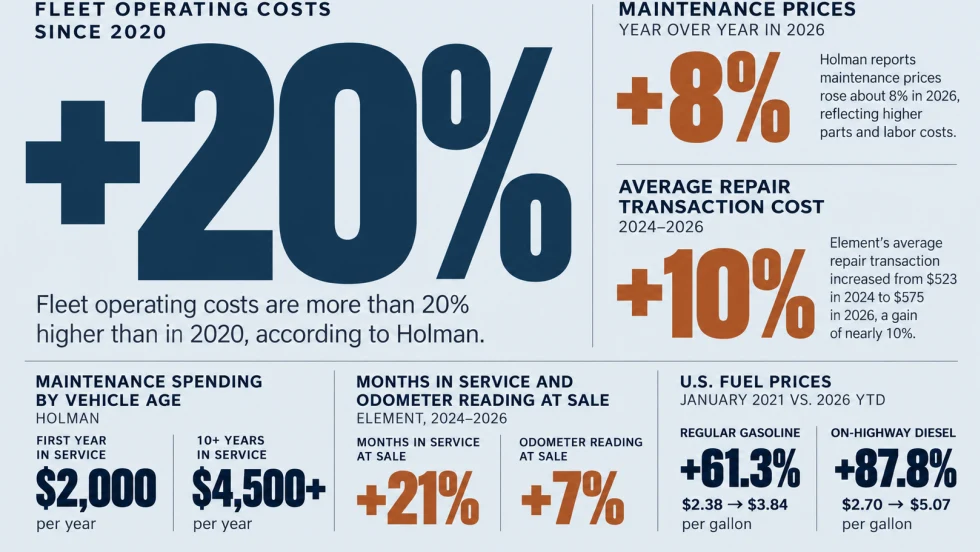
Managing Fleet Costs in an Era of Permanent Volatility
Fleet operating costs have risen more than 20% since 2020, raising a key question: When does extending a vehicle's service life stop making financial sense?
Read More →
The Next Evolution of Fleet Management: Autonomous Operations
This opening keynote session at the Fleet Forward Conference highlights the future of autonomous driving for fleets.
Read More →
How to Reduce the Total Cost of Risk From Catalytic Converter Theft
A stolen catalytic converter can cost fleets far more in downtime and lost productivity than in repairs. A total-cost-of-risk approach can help fleet managers quantify their exposure and prioritize theft prevention.
Read More →

Personal-Use Charges Rise as Vehicle Values Fall | AF News Recap
Personal-use charges are climbing, wholesale used-vehicle values are declining, and commercial fleet sales growth is slowing. This week, we're breaking down the latest fleet data, plus how Element Fleet Management is helping Waymo prepare for its first Canadian robotaxi market.
Read More →
Here's When You Should Make an Exception to Fleet Policy
Fleet policies are designed to create consistency, but not every driver or situation fits neatly within standard rules.
Read More →
AI-Native or AI-Acquired: What Should Fleet Managers Look for in an AI Platform?
Six questions can help fleet managers look beyond AI marketing claims to evaluate integration, data access, and real-world operational performance.
Read More →
Sponsored•October 14, 2026
A buyer's guide to fleet management software in 2027
Buying fleet management software in 2027 means looking beyond features and price. As fleet operations, technology and expectations evolve, this guide explores what today’s fleet professionals should consider when choosing a system that can deliver value now and adapt to what comes next.
Read More →
What Will Shape the Next Era of Fleet Management?
EVs, AI, and autonomous vehicles are reshaping fleet management. Discover what’s ahead—and how fleet leaders can prepare for the next era.
Read More →
How Fleets Can Recruit and Train Veterans for Technician Roles
Here's how the technician shortage has affected uptime for fleets, and what to do about it.
Read More →
Avis Budget Group Deploys Neology Toll Management Technology Across Major Brands
Neology’s neoFleet platform will manage toll transactions and toll-authority operations for vehicles across Avis, Budget, Payless, Budget Truck and Zipcar.
Read More →