




How Do YOU Define Professionalism?
Spotting a professional is as easy to recognize as a Green Bay Packer defensive end in the Baltimore Colt offensive backfield.
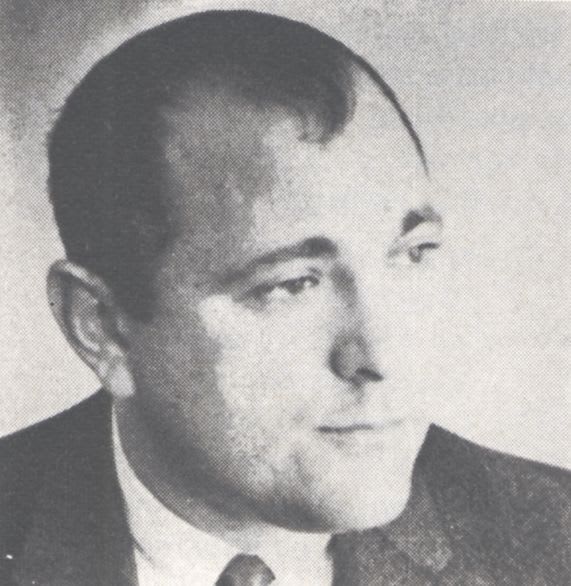
My 12 years in the journalism field has taught me one very important lesson: It is much easier to work with professionals - individuals that know how to do a job and do it well.
It is hard to define professionalism. Perhaps it's like defining public relations. Everyone knows what PR is or isn't and how it is supposed to work. An accepted definition? That's something else.
Spotting a professional, however, is another matter. The professional is as easy to recognize as a Green Bay Packer defensive end in the Baltimore Colt offensive backfield.
Perhaps it's his no-nonsense approach to his business. Perhaps it's his understanding of employer-employe relations. Maybe it's his relationships with his business associates or with his customers. Then again, maybe it's his desire to achieve the utmost in his field without sacrificing personal standards. Perhaps it's a combination of all of these.
Whatever the defining terms, professionalism runs rampant throughout the car fleet industry. To those new to the industry it's as obvious as that Packer end. To those; who have grown up with the industry perhaps it's an aura that is hard to recognize because of its very being.
This professionalism, this experience, has been one of the car fleet industry's main building blocks on the road to future growth.
One of our biggest jobs at Automotive Fleet is to furnish to industry professionals the information, the foundation, upon which this future growth can be based. Our efforts in this direction have been rewarded by the overwhelming acceptance given AF by the car fleet industry - an acceptance that has placed us in a unique and enviable position among magazine's in the field.
This acceptance also carries a burden of responsibility. It is a responsibility, however, that the team of professionals here at AF has gladly and enthusiastically accepted. It is my pledge to you that this enthusiasm, this desire to serve, will continue to grow throughout the coming years.
Journalists are in a unique position in reporting on current events in that they are afforded a view of both sides of an issue - a view that many protagonists in an issue seldom get.
Such is the position of this editor on the reporting of diagnostic center operations regarding the car fleet industry.
Diagnostic center proponents believe they have a service that can be of value to the fleet administrator in his over-all maintenance picture. They believe that by using the diagnostic center concept administrators can pinpoint down to the final nut and bolt - and to the final penny - the mechanical status of a car. They maintain that this service can be performed accurately and at a minimum of time lost to the fleet manager.
Despite the fact that diagnostic center advocates have not made an industry-wide attempt to woo the car fleet leaders, these same center proponents are puzzled at the: reluctance on the part of the fleet industry to totally accept the diagnostic concept.
But, this is the other side of the issue.
It is obvious to us at Automotive Fleet that car fleet industry leaders are reluctant to get involved with diagnostic centers simply because of a fear of the unknown: They do not understand how such centers can be of use to their industry.
"I don't know enough about the centers to make a judgment," was a typical plea given by administrators who took part in an AF sampling.
Questions on downtime, cost of inspection, accuracy of tests, guarantees on work performed we're just a few of the issues raised by administrators.
Because of this obvious need to communicate, AF will co-sponsor a seminar on the diagnostic center concept to be held at the April 25 Chicago chapter meeting of the National Association of Fleet Administrators. Such a meeting will provide center advocates and car fleet industry leaders an opportunity to sit down and discuss the center concept and how if possible, such a concept could be applied to the fleet industry.
The need for such a meeting was made vividly clear when all of the administrators and all of the diagnostic center proponents contacted in an AF sampling on diagnostic centers wholeheartedly endorsed, such a project. We at Automotive Fleet strongly believe such a meeting is needed by the car fleet industry.
More Operations

Reading the Global Signals: What AI and the Energy Transition Mean for Fleets Now
How can fleet managers navigate a never-ending, changing industry landscape?
Read More →
90% Use Telematics. Are Fleets Getting Safer? | AF News Recap
This week, we're breaking down which industries have the highest rates, how Jamie McKay manages 2,400 vehicles, what's happening with the 2027 fleet awards, and why software-defined vehicles could introduce new costs.
Read More →
What's Best Handled by an FMC, and What's Better Done Directly?
Fleet managers continue to rely on FMCs for essential services but are taking a closer look at where working directly with suppliers can improve efficiency and responsiveness.
Read More →

Fleet Meets: Erin Gilchrist
Meet Erin Gilchrist, the inaugural Mike Antich Spirit of Fleet Award winner, as she shares insights on leadership, mentorship, the power of industry connections, and why people remain at the heart of fleet's future.
Read More →
How 2026 Fleet Visionary Jamie McKay Manages 2,400 Vehicles Across 37 States
How do you keep 2,400 vehicles running across 37 states? Fleet Visionary Award winner Jamie McKay shares how collaboration, flexibility, and a few simple strategies help her tackle fleet management challenges at Aptive Pest Control.
Read More →
Managing Fleet Costs in an Era of Permanent Volatility
Fleet operating costs have risen more than 20% since 2020, raising a key question: When does extending a vehicle's service life stop making financial sense?
Read More →
The Next Evolution of Fleet Management: Autonomous Operations
This opening keynote session at the Fleet Forward Conference highlights the future of autonomous driving for fleets.
Read More →
How to Reduce the Total Cost of Risk From Catalytic Converter Theft
A stolen catalytic converter can cost fleets far more in downtime and lost productivity than in repairs. A total-cost-of-risk approach can help fleet managers quantify their exposure and prioritize theft prevention.
Read More →
Personal-Use Charges Rise as Vehicle Values Fall | AF News Recap
Personal-use charges are climbing, wholesale used-vehicle values are declining, and commercial fleet sales growth is slowing. This week, we're breaking down the latest fleet data, plus how Element Fleet Management is helping Waymo prepare for its first Canadian robotaxi market.
Read More →
Here's When You Should Make an Exception to Fleet Policy
Fleet policies are designed to create consistency, but not every driver or situation fits neatly within standard rules.
Read More →