




Related: Hot Takes: Understanding CARB’s Commercial EV Moonshot
Hot Takes: Amidst Setbacks, Commercial Vehicle Electrification Heats Up
Within three years, North American fleets will see a doubling of zero-emissions models, though the Fuso eCanter won’t be one of them.
by Staff
June 9, 2020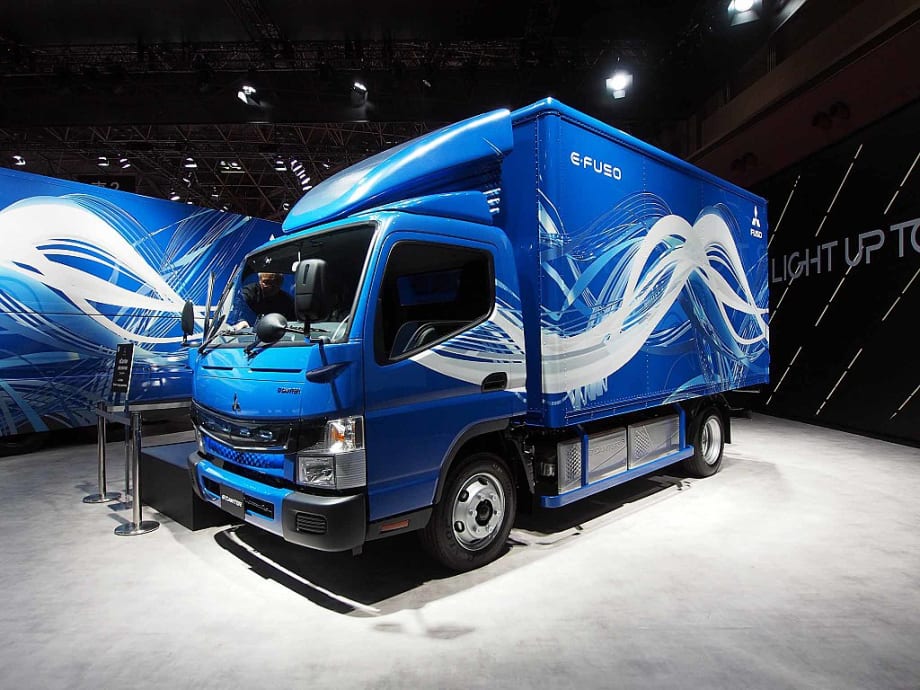
With its eCanter, Fuso was the industry’s first OEM to offer a series produced all-electric truck. But with Fuso exiting the North American market, the eCanter will go with it.
Photo via Comyu/Wikimedia Commons.
4 min to read
How do you make sense of it all? Hot Takes is our ongoing analysis of recent mobility news from a fleet perspective.
As the first Nissan Leaf, Tesla S, and BMW i3 models rolled off production lines, the commercial vehicle (CV) market was also in the midst of Electrification 1.0. Yet while those passenger car models continue, none of the electric van or truck models from the early years of 2010 to 2014 are for sale today, and few are still on the road.
That’s changing — rapidly. “We've always thought this was the year of the electric fleet pilot. It is, but we’re starting to see some significant implementations as well,” says Michael Hughes of ChargePoint. In our interview with Hughes, he lays out the hot market sectors for CV electrification — transit buses and municipal motor pools, with the e-commerce delivery market the Next Big Thing.
As the CV electric market develops, fleets are tasked with infrastructure decisions. Yes, more expensive Level 3 DC fast charging is on the horizon, which can charge equipped vehicles in 30 to 60 minutes. For most fleets, however, Level 2 charging will be just fine.
Hughes says the decision process first needs to focus on creating a central hub and a distributed charging network, in which a central hub distributes power to multiple smart dispensers at various locations that are independently controlled and managed.
When Ford goes big with a surprise announcement of an electric Ford Transit, you know General Motors can’t be far behind. Though slim on details, General Motors is developing an electric van aimed at business users. The van would start production in late 2021 at the Detroit-Hamtramck plant that will make GM’s new electric pickup truck.
Automakers rarely like to be held to production volumes before a new model is launched, and “pre-orders” is often more an investor ploy than tied to production. (Remember CODA Automotive’s 3,000 pre-orders?)
So, to say that upstart EV manufacturer Lordstown Motors has nearly 20,000 pre-orders for its electric pickup may not mean much. (For what it’s worth, Tesla has over 600,000 for its Cybertruck.)
But the fact that the upstart EV manufacturer has taken over from General Motors a 6.2-million-square-foot facility and is hiring 600 workers to build the first Endurance electric pickups is “putting money where your mouth is.” Lordstown updated its plans this week.
For a larger perspective, Calstart released analysis that by 2023 the number of zero-emission truck, bus, and off-road equipment models will double. By the end of 2020 there will be 169 zero-emission medium- and heavy-duty models in production in the U.S. and Canada, compared to 95 offerings in 2019. Within three years, there are expected to be 195 such vehicles.
(Let’s keep in mind this doesn’t portend actual wheels on the road.)
And yet, major economic shocks have a way of pushing companies teetering financially — or those seeing little future in certain markets — to close up shop. Mitsubishi Fuso, which trumpeted the Fuso eCanter as one of the first true commercial trucks to electrify, is discontinuing sales in the U.S.
The news is somewhat surprising in that Fuso’s cabover models played into the lightning growth of e-commerce in cities, and the electric eCanter was poised to satisfy cities’ emissions reductions targets. Still, Fuso only sold about 1,500 in North America last year. Parent company Daimler may think a slimmer product line leads to a more profitable future.
In the big rig space, Nikola and Ryder Trucks have annulled their marriage, even after sharing a booth at CES in Las Vegas this year. Nikola, makers of a Class 8 hydrogen-electric tractor, was to benefit from Ryder’s leasing and maintaining infrastructure. The breakup allows both companies “to explore emerging opportunities within the rapidly growing commercial transportation industry.”
The autonomous vehicle market has seen similar disruption, even as partnerships and deployments continue apace. High-profile startup Zoox found a deep-pocketed investor in Amazon. When GM’s autonomous division Cruise got wind of the tie up, it made a public pitch to poach Zoox’s engineers.
Cruise itself has let about 140 staffers go during the pandemic, even as it prepares to deploy its Origin autonomous shuttle in San Francisco.
One sign of market development is the growth of trade groups designed to look out for the interests of suppliers, manufacturers, and end users in that ecosystem.
One such group, PAVE (Partners for Autonomous Vehicle Education) is looking out for the nascent self-driving industry. Nary a few days after an IIHS study that contended autonomous vehicles could only prevent a third of all road crashes in the U.S., PAVE came out with a response that disputed the claims:
“There’s nothing fundamentally wrong with trying to anticipate the transformative changes that AVs might unlock, but extrapolating from an unsound factual foundation can lead to grotesquely warped conclusions,” PAVE said in a blog post.
An industry group for autonomous vehicles — we have certainly come a long way.
Subscribe to Our Newsletter
More Fleet Forward
What Fleets Want: FFC Panel to Examine the Future of the Fleet-OEM Relationship
Fleet and OEM leaders will tackle how connected vehicles, embedded telematics, and data are changing the relationship between commercial fleets and automakers.
Read More →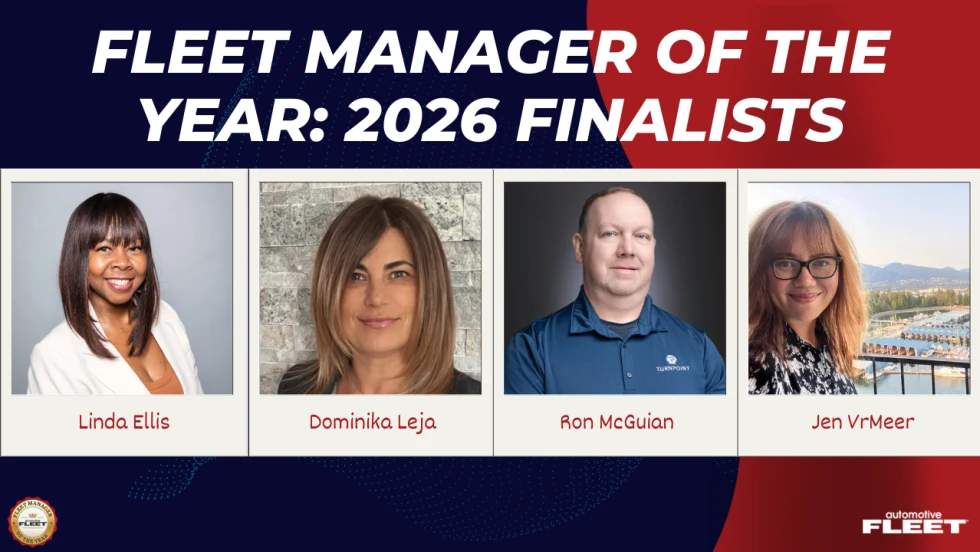
2026 Fleet Manager of the Year Finalists Announced
Who are the 2026 Fleet Manager of the Year finalists?
Read More →
John Rossant to Deliver Opening Keynote at 2026 Fleet Forward Conference
The CoMotion founder will draw on developments across Europe, China, the Middle East, and other international markets to identify trends that could influence how U.S. fleets plan for the coming decade.
Read More →
How to Build Custom Fleet Tools With AI and Vibe Coding [Webinar]
A new Automotive Fleet webinar explores how fleet managers are using AI and vibe coding to automate routine work and create simple operational tools without traditional programming skills.
Read More →
Is Fleet Ready for Its New Disruptors?
Three emerging leaders from a corporate fleet, public fleet, and the automotive supply chain will bring new ideas and a willingness to challenge industry norms to the Fleet Forward Conference stage.
Read More →
NAFA Announces 2026 Fleet Safety Symposium Education Program
Register for NAFA’s Fleet Safety Symposium and save $200 on your Fleet Forward Conference registration.
Read More →
Fleet Managers Take the Lead in Hands-On AI Workshop at FFC
The fleet manager-led session will show how to use “vibe coding” to build practical fleet tools without a traditional programming background.
Read More →
NETS Crash-Cost Data and CoolSys’ 80% Loss Reduction Take Center Stage at FFC
NETS will present findings from its latest Cost of Crashes research, then CoolSys safety leader and author Shawn Martinez will explain how the company built a safer driving culture across 3,500 employees.
Read More →
Is Your Grey Fleet Creating an Unmanaged Safety Risk?
NCR Atleos Fleet Manager Jose Rocha will join Cardata and SambaSafety experts at Fleet Forward Conference to examine how fleets can extend safety oversight to every employee who drives for business.
Read More →
Agentic AI Session at FFC Will Help Fleets Turn Data Into TCO Action
Mike Albert Fleet Solutions and Motorq will show how agentic AI can uncover maintenance, fuel, and utilization savings buried across disconnected fleet data.
Read More →