




Hillcrest Finds Minicomputer Cuts Cost, Improves Control
Lessor learns better management means better client service.
An on-line minicomputer system has been the key behind Hillcrest General Leasing's greatly reduced operating cost and improved management control. The system was installed only six months ago but it has already proven successful beyond the most optimistic hopes.
Hillcrest General Leasing is one of the oldest and most respected automobile leasing companies in Canada. With over 5,000 cars leased through its seven offices across Canada, the company prides itself in being able to meet the most demanding requirements of its customers through its service and flexibility. The company offers open and closed-end leasing plans and four types of maintenance plans: no maintenance, all inclusive, budget, and management.
The flexibility in offering so many plans has brought about an increasingly complex paper flow and almost inevitable control problems. To improve efficiency, Hillcrest started using an IBM "batch processing system" in 1964 to produce its invoices. Documents were batched together and at the end of the month they were delivered to the IBM Data Centre in Toronto for processing.
By 1970, however, the company found itself in a situation where the volumes were increasing dramatically. However, most of the work was still being done manually.
Following an evaluation of the various alternatives available, Hillcrest decided to switch to a more modern system. Under this system, the documents were batched as before but they were keyed throughout the month onto punched paper tape using an Olivetti machine.
PROBLEMS DISAPPEARED
At the end of the month, the tapes would be transmitted via telephone lines to a Data Centre for processing and reports would be received a few days later. Some of the old problems disappeared but new ones were introduced. Unexplained losses of data, inability to balance some of the accounting records, and a general lack of control over the quality of the work performed by the Data Centre were some of the new problems encountered.
Following an auditor's report at the end of 1974, Hillcrest finally decided that the only course of action that could solve the old and new problems was to install an in-house interactive minicomputer system. After numerous visits to various installations, and aid by their auditors, Hillcrest decided to install a Datapoint minicomputer system.
Fortrex Consulting Limited of Toronto, a well-known firm specializing in developing minicomputer systems, was hired to develop the system and the project was started in August, 1975.
Six months later, the system was completed and a series of "parallel" runs was carried out in order to ensure the accuracy of the reports produced. At the same time, all the files stored at the Data Centre were converted to the new system. Finally, in May 1976, the system was deemed to be problem-free and all processing started to be done on the new minicomputer system.
How does the new system work?
The data is entered into the minicomputer via "CRT" terminals which are TV-like devices with keyboards attached to them. (Similar devices areused by the airline reservation clear in order to record new reservations or modify existing ones). Usually, up-to 32 such devices can be connected to one minicomputer.
Hillcrest uses six CRT terminals. Two of them are used for Car Control, one CRT terminal is used for Accounts Payable, two for Accounts Receivable and one is used by management in order to obtain reports and statistics on the total operation.
PERMANENT RECORDS
Every time a new automobile is ordered, an entry is made by a Car Control clerk on the CRT terminal. This entry automatically creates a permanent record on the minicomputer's files. These files of data are stored on magnetic disks, not unlike the records used for home entertainment.
A "unit number" is assigned to the new automobile and throughout its "life" this number is used to identify it. When the automobile arrives from the dealer, the Car Control clerk calls back onto the screen the previously stored unit information, by simply keying in the unit number.
At any time prior to delivery of the automobile to the lessee, all leasing information can be added to the permanent record, including length of lease, type of lease, type of maintenance plan, financial factors, and name of driver. Once the automobile is delivered, the minicomputer automatically issues an invoice for the options to be paid for by the driver and another invoice for options to be paid by the lessee.
Every month during the term of the lease, an invoice is automatically generated by the minicomputer without any further human intervention for each customer. Customer statements and reminder notices are also produced whenever required.
Cash receipts and miscellaneous charges are keyed in by the Accounts Receivable clerks as part of their normal daily routines. Automatic balancing of totals by the minicomputer ensures that the cash keyed in adds up to the daily deposits. As soon as an entry is made, it is posted to the customer's account so that up-to-date information is always available to answer customer queries. This information can be displayed on a CRT terminal by simply keying in the customer number.
Supplier invoices are keyed in by the Accounts Payable clerk in a fashion similar to Accounts Receivable. An extra check is automatically made by the minicomputer to ensure that duplicate invoices from the same supplier cannot be posted. Everyday, the check processing program is run which automatically prints checks for those invoices to be paid on that day. Part of keying in Maintenance invoices involves the recording of the type of maintenance performed on the appropriate automobile. This information is later tabulated automatically into various maintenance statistics reports.
At the end of the lease, the system calculates the settlement charges for extra mileage, tires, and other costs and a final invoice is automatically issued. When the used automobile is sold, the capital cost information is adjusted and the charge to the buyer is posted to his Accounts Receivable record. Three months later, the permanent record for the unit is automatically dropped from the disk files in order to make room for new entries.
As a by-product of processing invoices and checks, postings are automatically made to the General Ledger by printing the journals. The book depreciation of each unit is automatically maintained by the system.
The new system has brought about significant benefits to Hillcrest. The operating cost of this system is nearly half that of the old Data Centre system.
Furthermore, the clerical staff required to handle the Car Control, Accounts Receivable, Accounts Payable, and Maintenance Control functions has been reduced from 11 people to six. Management now has up-to-date accounting and control information and new marketing reports heretofore impossible to get. Due to the speed of producing statements and invoices, and because of the improved accuracy, the outstanding Accounts Receivables have been reduced by over 25-percent. Based on the savings generated by the new system, the entire development cost and the cost of the equipment will be totally recovered within the first year of its operation.
LOOKING AHEAD
What are the plans for the future?
An insurance program will be developed to handle the growing number of units that are insured by Hillcrest. Claims processing and underwriter reporting will also be put on the minicomputer.
Another program will allow CRT terminals to be installed in each one of the branch offices across the country. These terminals will be connected via telephone lines to the minicomputer in Toronto. Data entry and retrievals will then be possible from the branches without using the mail with its associated delays.
Ray Sadowski, president of Hillcrest, feels that the new system will enable his company to increase its fleet by as much as 50-percent without incurring significant additional costs. Based on his many years of experience in the automotive industry, he feels that similar systems can equally successful for smaller leasing companies as well as for companies who manage their own fleets.
More Operations
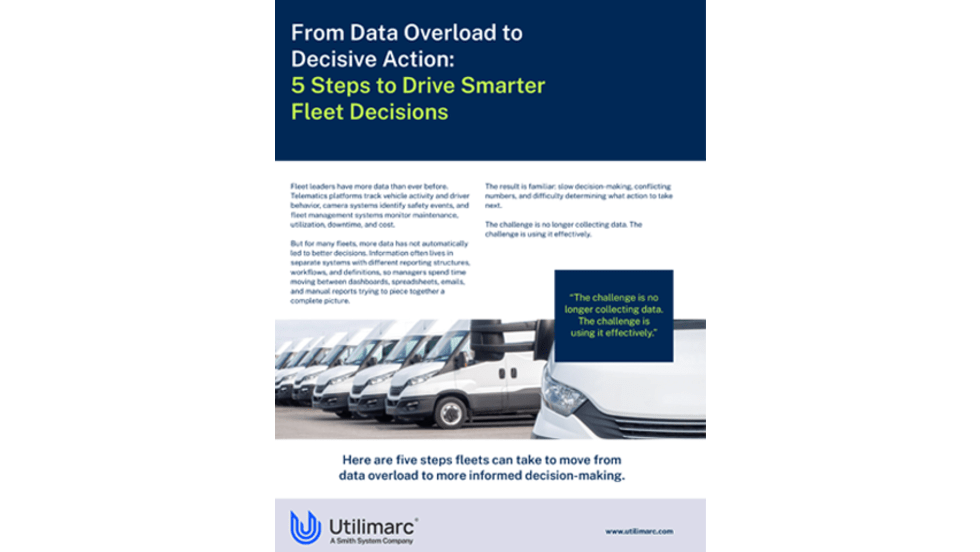
Turn Fleet Data Into Smarter Decisions
Fleet leaders have access to more operational data than ever, but disconnected systems and unclear metrics often slow decision-making instead of improving it. This article outlines five practical steps fleets can take to transform fragmented data into actionable insights that improve planning, safety, utilization, and long-term performance.
Read More →
Hybrids: Electrification Without the Challenges
For fleet managers, fuel is one of the biggest line items in the budget — and it's one hybrids can shrink without changing how your people work. Download the eBook to see the numbers, understand the technology, and get a step-by-step guide to making the switch.
Read More →
How NOV Uses Telematics to Improve Fleet Safety Across 160 Locations
James Victory of NOV discusses how the company manages fleet safety, maintenance, and telematics across more than 150 locations supporting oilfield operations throughout the U.S.
Read More →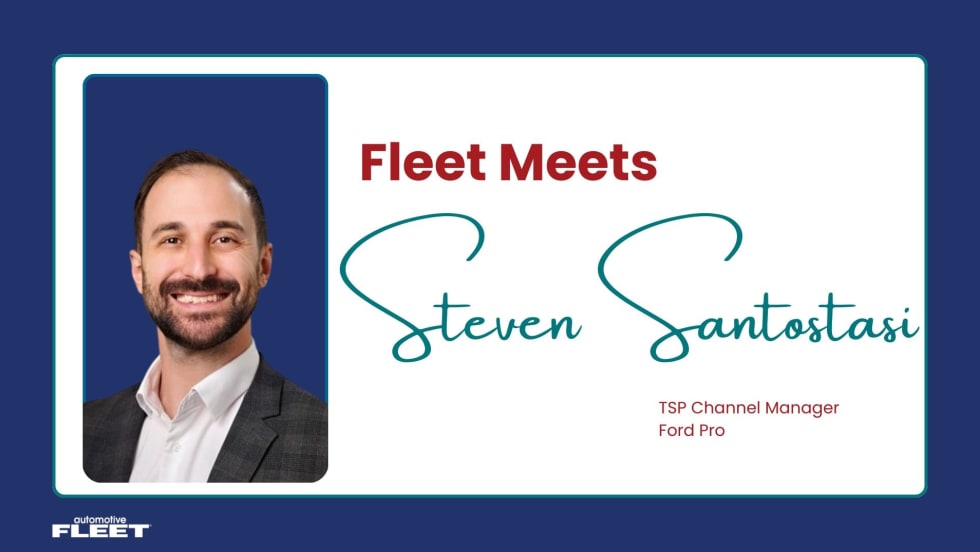
Fleet Meets: Steven Santostasi
This edition of the Fleet Meets series features Steven Santostasi, the current TSP channel manager for Ford Pro.
Read More →
Why Fleet Managers Are Replacing Departmental Vehicles with Shared Motor Pools
Departmentally assigned vehicles often create hidden costs through underutilization, poor visibility, and increased administrative burden. This white paper explores how shared motor pool strategies help fleets reduce costs, improve accountability, and optimize vehicle utilization.
Read More →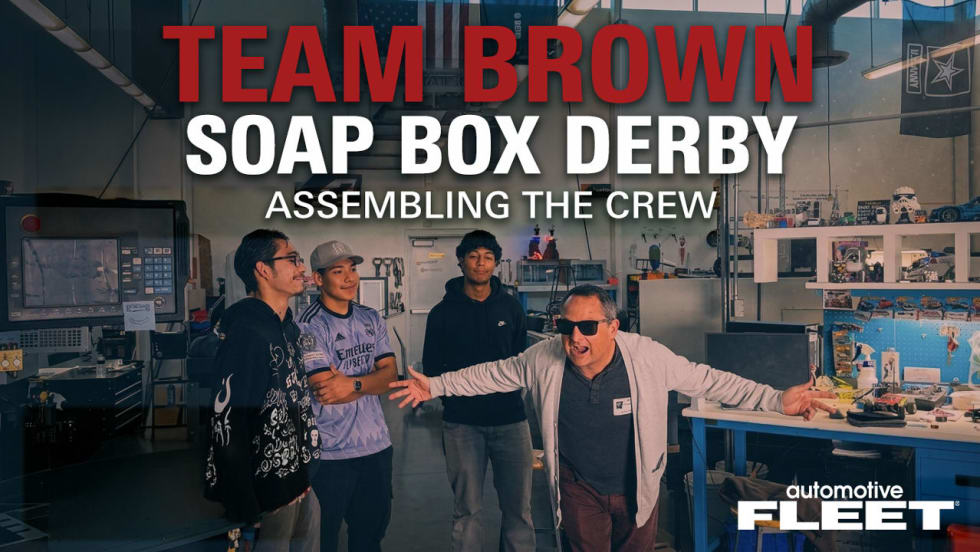
Soap Box Derby Challenge: Assembling the Crew
Meet Gabriel, Matthew, and Angel — the team helping bring this soap box derby build to life.
Read More →
BBL Fleet Acquires Velcor Leasing Corporation
BBL Fleet expanded its footprint in the fleet management industry with the acquisition of Velcor Leasing Corporation of Madison through a stock purchase agreement finalized Feb. 27, 2026.
Read More →
Lytx Introduces New AI Fleet Technologies at Protect 2026
The company introduced new AI-driven fleet safety and operations technologies during its annual user conference.
Read More →
Fleet Costs Are Rising: Here’s How Leaders Are Responding
Fleet leaders are under pressure to reduce costs, adapt to economic uncertainty, and make smarter decisions. See how peers across North America are responding with real data, proven strategies, and forward-looking insights. Download the 2026 Market Pulse Report to benchmark your strategy and uncover where you can gain an edge.
Read More →
From Waffle House to AI: Fleet Trends You Need to Know
In this AF news recap, host Faith Howell covers how Waffle House stepped up during disaster response and new AI tech on the market.
Read More →