




Growing Legislative Trend to Mandate Fleet Vehicles as Smoke-Free Workplaces
The legislative definition of “workplace” is expanding to include company or publicly owned fleet vehicles. The catalyst behind this change is legislation mandating smoke-free workplaces. (See Market Trends, December 2003 issue.) The latest legislation to do so is in the Commonwealth of Massachusetts, which is expected to enact (after our press time) a new public health law (H4256), which goes into effect July 5. The new state health law bans in Massachusetts all smoking in public buildings and


The legislative definition of “workplace” is expanding to include company or publicly owned fleet vehicles. The catalyst behind this change is legislation mandating smoke-free workplaces. (See Market Trends, December 2003 issue.)
The latest legislation to do so is in the Commonwealth of Massachusetts, which is expected to enact (after our press time) a new public health law (H4256), which goes into effect July 5. The new state health law bans in Massachusetts all smoking in public buildings and workplaces, including publicly owned (but not private) fleet vehicles. Specifically, the law prohibits any type of smoking in all vehicles owned, leased, or otherwise operated by the Commonwealth of Massachusetts or any political subdivision thereof, such as cities, towns, and counties. An owner of the vehicle who violates the law can be fined $100 for the first offense; $200 for a second violation occurring within two years of the date of the first offense; and $300 for a third or subsequent violation within two years of the second violation. However, if a city or town in Massachusetts has an ordinance with a fine greater than the state public health law, then the local fine will prevail over the state law.
An individual who violates the law is subject to a civil penalty of $100 for each violation. (Prior to passage, a Massachusetts legislator attempted to add an amendment to make it a criminal violation, but, fortunately for fleet drivers, this was defeated.)
Last July, the state of New York implemented its Clean Air Indoor Act, a state public health law that extended the workplace smoking prohibition to not only government vehicles but also to private fleet vehicles operating in the state.
Mandating Smoke-Free Workplaces
An estimated 1,700 cities in the U.S. have ordinances that restrict public smoking. Nationwide, 74 cities and counties have expanded smoking bans to also include the workplace. This is a growing trend. In the coming months, additional cities and counties are set to mandate smoke-free workplaces, which include fleet vehicles. One example is in Texas, where Smith County commissioners approved on April 26 a ban on smoking in all county facilities, which includes county vehicles. The ban is effective July 1. In Georgia, the city of Canton in Cherokee County is on the verge of becoming a smoke-free city. Employers with “enclosed workplaces” within the city boundaries will be required to prohibit smoking in common work areas, which include company vehicles. In North Carolina, Charlotte city councilwoman Susan Burgess wants to ban smoking in city vehicles, including police cars. This trend isn’t solely a U.S. phenomenon. Smoking bans have recently become law in a growing number of countries. On March 29, Ireland became the first country in the world to prohibit smoking in the workplace, including company vehicles. Irish employers have the onus to enforce the law and failure to do so can result in stiff fines of up to 3,000 euros (approximately $US 3,600). Other countries that have recently enacted (or will be enacting) laws restricting smoking are Uganda (March 2004), India (May 3, 2004), Norway (May 6, 2004), Sweden (July 1, 2004), and New Zealand (Dec. 31, 2004). An international treaty sponsored by the World Health Organization and signed by 107 countries seeks to become the first legal instrument designed to reduce tobacco-related deaths and disease. The U.S. has not signed the treaty.
Economics and Lawsuits Will Prompt Legislation
One driving force behind this legislative trend is economics, in particular the rising cost of health care benefits provided by employers - both private and public. Health care costs for employers are increasing almost three times as fast as inflation. Some employers (and legislators) reason that if they can help employees quit smoking, it will reduce health care costs, workers’ comp costs, absenteeism, and boost productivity. Another motivation is that some cities and counties want to indemnify themselves against future lawsuits from victims of smoking-related illnesses, suing legislatures for culpability in failing to protect them from second-hand smoke. The EPA reports, “The concentration of breathable particles (from secondhand smoke) in a closed motor vehicle is more than 133 times higher than the current average annual EPA standard.” Secondhand smoke has been classified as a Group A carcinogen, one that is known to cause cancer in humans. Consequently, employers run a liability risk if employees are exposed to secondhand smoke at their workplace. Employee drivers, such as those with chronic respiratory illnesses such as asthma, have already sued for protection against tobacco smoke under the Americans with Disabilities Act. The issue of culpability and liability from second-hand smoke in the workplace promises to be tested more and more in the courts, which will only fuel more legislative pressures to mandate fleet vehicles as smoke-free workplaces.
Let me know what you think.
More Operations

Gary Van Orden Retires After Nearly Four Decades in Commercial Fleet
From answering customer calls at Ford Motor Company to leading fleet sales across multiple OEMs and a fleet management company, Gary Van Orden's career reflects nearly four decades of leadership in commercial fleet.
Read More →
How Stellantis Plans to Get Ahead of Fleet Downtime
Vehicle acquisition may grab the headlines, but fleet uptime increasingly determines operating success. Darren Bradshaw of Mopar North America gives the details.
Read More →
Hyundai Releases 2027 Commercial Program Incentives
The 2027 Model Year "Fleet Street Incentives" are available to commercial and government fleets.
Read More →


It's All Downhill from Here! Fleet Industry Raises $22,000 for Skilled Trades Scholarships
Work Truck’s Lauren Fletcher and Automotive Fleet’s Chris Brown turned a friendly racing rivalry into $22,000 for automotive technology and skilled trades scholarships.
Read More →
The Top 300 Commercial Fleets
The Top 300 Commercial Fleets: See the List
Read More →

Your Local Dealer Knows More Than You Think
Your local dealer can provide an information advantage that extends well beyond courtesy deliveries.
Read More →
Fleet Meets: Austin Schutte
Here are some industry insights, personal touches, and words of advice from the CEO and Founder of Anew Solutions.
Read More →
Soap Box Derby Challenge: What’s Powering Team Brown
The car is coming together, the students are solving real build problems, and the fleet industry is helping push Team Brown toward the starting line.
Read More →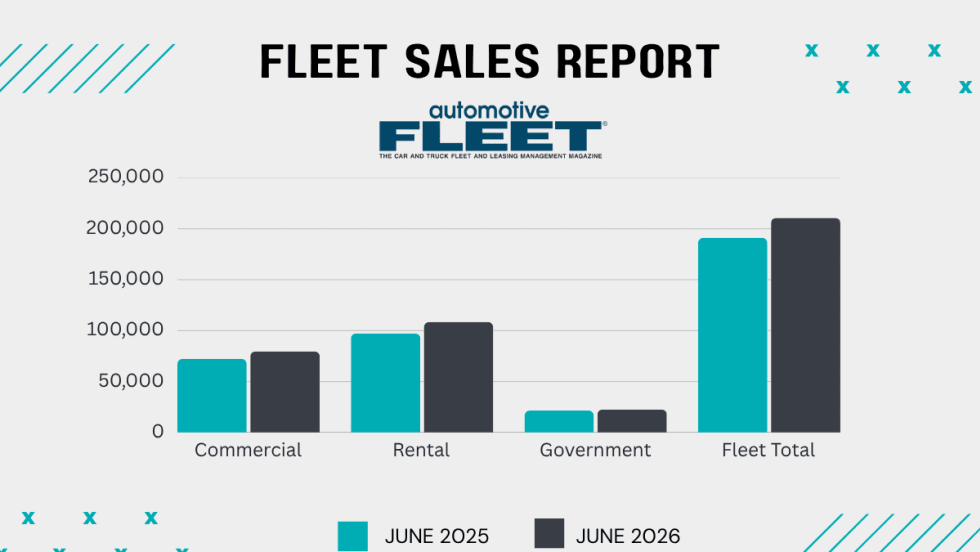
Commercial Fleet Sales Contribute To June, YTD Gains
The fleet sector has boosted its vehicle purchases at a reliable pace in the first half of this year compared with 1H 2025.
Read More →