




Government, Tighter Money Cloud Fleet Finance Picture
But Chevy finance expert says fleet people can cope.
With the dawn of the new year, questions of financing for fleet replacement or expansion are much on the minds of the nation's fleet administrators. Charles McCrary, manager of the Sales Finance Department of Chevrolet Motor Division, routinely spends much of his time providing answers to questions of fleet finance. Automotive Fleet recently gathered a number of questions from fleet administrators and presented those queries to McCrary in the following interview.
AF: With a new Administration assuming control in Washington, what do you see in the area of government controls as they apply to fleet operations?
McCrary: "We feel the advent of more and more governmental regulations will have a peripheral effect of making satisfactory credit arrangements more and more difficult for many fleets to obtain. Areas of governmental regulation which seem imminent are used vehicle warranty and disposition practices. Serious proposals have been made at various governmental levels to require licensing of fleet operators who dispose of used vehicles as retail dealers."
AF: Can you identify any particular pressure group that seems to be lobbying for expanded government control of fleet affairs?
McCrary: "Consumerists are pushing for strong used vehicle warranty programs. Mechanics' licensing requirements are being promoted in some areas. As such governmental requirements become more common, evaluation of credit requirements by lending agencies will be importantly influenced by the borrower's ability to demonstrate satisfactory compliance with such regulatory requirements."
AF: Can the country's recent history serve as an indicator to the future of fleet financing?
McCrary: "A factor which will affect extension of fleet financing in the future is the experience encountered by many lending sources in 1974 and 1975. The recession and business fatalities encountered in these two years were far worse than at any time since before World War II. Many of the management personnel of these lending sources had never in their entire business lives experienced the difficulties they then encountered. As a consequence, lending policies have been tightened and a much closer scrutiny will be given to future fleet financing requests."
AF: What are some of the specific details of this closer scrutiny that you foresee?
McCrary: "Increased insurance costs will cause lending sources to pay closer attention to a prospective borrower's loss experience as another factor to be considered when evaluating requests for financing. Some lending sources will be taking a much closer look at all phases of a prospective borrower's operation and will not confine their inquiries only to financial matters and balance sheet information. Their investigations will include the character, experience and capacity of management personnel, their operational procedures and their used car disposal practices, to name just a few items of interest to lenders."
AF: What steps will fleet borrowers have to take to justify their loan requests?
McCrary: "Many lenders' experiences of the past two or three years have taught them a lesson that they must be more familiar with the total operation of their fleet accounts rather than relying wholly on after-the-fact financial reporting. Many fleet accounts are going to be required to provide more comprehensive and in-depth information regarding their operational philosophies and plans as a prelude to consideration of their financing requests."
AF: In which direction do you see interest rates going?
McCrary: "We believe the increasing activity of the economy will eventually result in higher interest rates. As loan demands from various businesses increase, the result will inevitably be increases in the interest rate. While we will not hazard a guess as to the exact figure, we would not be surprised to see the prime rate go well above eight percent in 1977."
AF: What trends do you see now that will indicate economic conditions in two or three years when today's new fleet cars are due to be replaced?
McCrary: "The foregoing comments may seem to be somewhat on the negative side. However, this was in no way our intention. Actually, we feel very optimistic about fleet prospects for the next several years. True, we feel fleet management is necessarily to have to live with higher interest rates, higher insurance costs, more government regulations and more sophistication in the credit-granting process. But, at the same lime, we feel strongly these same pressures will result in an expanded fleet market and expanded opportunities for those fleet managers who learn to cope with increases in costs, more governmental regulations and more restrictive credit. Also, we believe more operators of car and truck fleets will look to lessors for fleet management services."
AF: Will the economic factors you foresee have an impact on fleet leasing as an alternative to ownership?
McCrary: "The increased cost of automobile ownership will result in many individuals relying to a larger extent on leasing for basic transportation and to rental for occasional business and personal use. Those rental and leasing fleets who are most successful accepting and living with these changing conditions will be generously rewarded by substantially increased business and profits."
More Operations

Why Reactive Fleet Management Is Becoming Too Expensive to Sustain
Research highlights a growing need for proactive management strategies to address rising costs in fleet operations effectively.
Read More →
What Your Fleet KPIs Aren’t Telling You
Tracking fleet metrics is only useful when the data leads to better decisions. This guide helps fleet leaders assess cost, utilization, and downtime more accurately, identify performance gaps, and prioritize the actions that can improve operational results.
Read More →
Hidden in Plain Sight: Fleet Compliance Risks
Fleet compliance isn't just about having policies — it's about consistently enforcing them. This practical guide reveals six hidden compliance risks common in public sector and shared fleet operations and outlines proven strategies to improve visibility, accountability, and audit readiness
Read More →


Turning Fleet Payment Data into Executive Insights
Does data alone drive results in operations?
Read More →
Automotive Fleet Opens 2026 Personal Use Survey for Commercial Fleet Managers
Commercial and corporate fleet managers are invited to share how their organizations handle company vehicle personal-use policies, charges, and driver eligibility.
Read More →
Gary Van Orden Retires After Nearly Four Decades in Commercial Fleet
From answering customer calls at Ford Motor Company to leading fleet sales across multiple OEMs and a fleet management company, Gary Van Orden's career reflects nearly four decades of leadership in commercial fleet.
Read More →
How Stellantis Plans to Get Ahead of Fleet Downtime
Vehicle acquisition may grab the headlines, but fleet uptime increasingly determines operating success. Darren Bradshaw of Mopar North America gives the details.
Read More →
Hyundai Releases 2027 Commercial Program Incentives
The 2027 Model Year "Fleet Street Incentives" are available to commercial and government fleets.
Read More →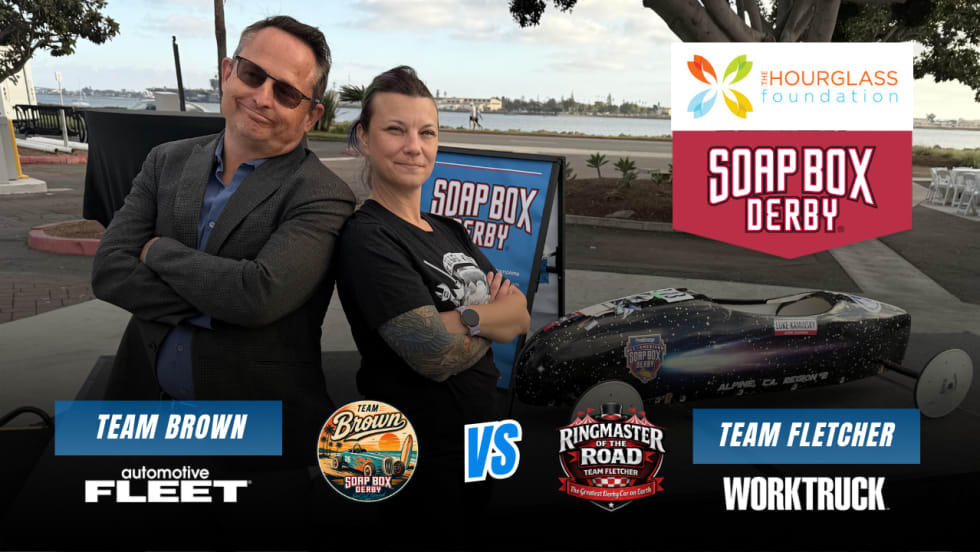
It's All Downhill from Here! Fleet Industry Raises $22,000 for Skilled Trades Scholarships
Work Truck’s Lauren Fletcher and Automotive Fleet’s Chris Brown turned a friendly racing rivalry into $22,000 for automotive technology and skilled trades scholarships.
Read More →
The Top 300 Commercial Fleets
The Top 300 Commercial Fleets: See the List
Read More →