




Going Diesel - Good or Bad?
More than 50 percent of light vehicles in Europe and Asia are diesel, and the percentage is growing. Now with biodiesel, the U.S. is being thrust towards diesel power.

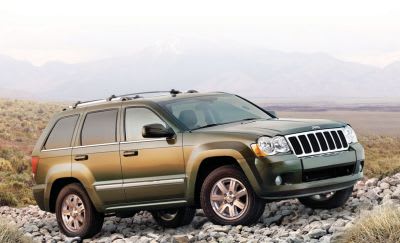
The 2008 Jeep Grand Cherokee with a 3.0L Bluetec diesel engine is currently offered in 45 states. The 2009 model-year will be available throughout the U.S.
Conventional wisdom tells us that U.S. drivers will not switch to diesel power. That wisdom comes in part from the disastrous attempts to produce domestic diesel-engined cars during the fuel crisis of the 1970s.
The same conventional wisdom also would have us believe the other reason U.S. drivers will not switch to diesel is because they perceive diesel vehicles as slow, noisy, smelly, and smoky. In both cases, reality is quite different.
Now in the 21st century, diesel power is an entirely new matter. Not only are modern light diesel engines quiet and smooth, they can operate on biodiesel fuel made in part from natural materials, thereby not contributing to greenhouse gas formation.
Of course, the other major impetus in the thrust towards diesel power comes from the fact that diesel engines are roughly 40-percent more efficient in their use of fuel than spark-ignition engines. That is one of the reasons Europeans and Asians, whose daily fuel costs $5-$7 per gallon, are such large diesel users.
Diesel vs. Hybrid
In the U.S., gasoline-electric hybrid power has sparked the imagination of the public. The hybrid is ideal for high-density city driving. In stop-and-go traffic, a hybrid runs most of the time on its electric motor, keeping fuel consumption down. But take that same hybrid vehicle out on the interstate, and it runs on the gasoline engine, burning fuel almost as fast as a conventional vehicle.
So why hasn’t everyone simply switched over to diesels? There are several reasons. First, conventional diesel engines available through the 1990s were considered old technology — noisy and smoky. Though they burned less fuel, the clatter — and worse — the choking smoke, limited their popularity. Just take a look at any construction site and see dozers and graders belching clouds of black smoke.
Plus, as air quality requirements became stricter, diesels were dropped by the few companies providing them for passenger cars. Since pollution requirements for heavier vehicles were less strict, they continued to be offered in heavy pickups and other vehicles.
The revolution in diesel power came around the turn of the 21st century, with the development of the common-rail injection system and electronic injectors, rather than the old system of an injection pump that mechanically supplied the injector for each cylinder individually. The much higher injection pressures possible with the new system allow better atomization of the fuel, which correspondingly allows it to burn cleaner.
Technologies improving diesel performance include Bluetec and TDI. Bluetec refers to a suite of emissions technologies that focus on reducing particulates and nitrogen oxide output to help diesels meet the most stringent California regulations and thus be saleable in all 50 states.
TDI technology includes common rail permanently pressurized fuel injection. This allows multiple injections of fuel for each power stroke of the engine, tailored precisely for the most efficient combustion that also minimizes vibrations and noise. Regenerating particulate filters and other exhaust after-treatment are integral with TDI engines’ smooth, quiet, and powerful operation.
The Biodiesel Revolution
The second revolution, at about the same time, comes from the development of biodiesel fuel. Since diesel engines as a rule are not finicky about what they burn, substituting vegetable oil for mineral oil has many benefits. Biodiesel significantly reduces overall greenhouse gas emissions, including particulates, from diesel vehicles.
In addition to its environmental benefits, biodiesel reduces dependence on oil, especially imported oil, and supports the U.S. agricultural economy.
According to the Environmental Protection Agency (EPA), if the U.S. had a light-duty fleet that was one-third diesel, the country would reduce its oil consumption by up to 1.4 million barrels of oil per day. That is equivalent to the amount of oil the U.S. imports daily from Saudi Arabia.
Biodiesel is rated by the percentage of vegetable versus mineral oil. Thus, B-5 biodiesel is 5-percent vegetable oil. B-20 is 20-percent vegetable oil. Again according to the EPA, if B-5 (5-percent biodiesel blended in conventional diesel fuel) were used in all diesel fuel for onroad use in the U.S., it would reduce fuel consumption by 1.85 billion gallons, the amount of fuel produced from all oil imports from Iraq.
Today, most diesel vehicles available in the U.S. are certified to run on B-5, which is available at pumps in some areas. What manufacturers are working on is certifying vehicles to run on B-20, a much cleaner fuel.
To expand the use of biodiesel, Chrysler announced that, beginning with the 2007 model-year, it will approve and endorse the use of B-20 in diesel-powered Dodge Ram trucks by government, military, and commercial fleet customers.
The company is also working with the biodiesel industry, other OEMs, suppliers, nonprofit organizations, and federal and state governments to develop national quality standards for B-20.
According to Loren Beard, Chrysler’s senior manager – fuels, “Diesel will be good for America, and biodiesel makes diesel better. Emissions of particulates — an important issue in congested urban areas — can be reduced more than 80 percent with modern, clean diesel engines running on biodiesel.”
Bluetec is now the standard name for clean diesel technology, driven by a cooperative agreement between several manufacturers, designed to identify diesel technologies that meet 50-state clean diesel requirements for the U.S. market..
More Operations

Avis Budget Group Deploys Neology Toll Management Technology Across Major Brands
Neology’s neoFleet platform will manage toll transactions and toll-authority operations for vehicles across Avis, Budget, Payless, Budget Truck and Zipcar.
Read More →
Fleet Personal-Use Charges Edge Higher in 2026
Nearly eight in 10 surveyed fleets allow personal use of company vehicles, while just over half of respondents report charging employees for the privilege.
Read More →
The Future of Fleet + What’s Changing Right Now | AF News Recap
Could developments overseas offer a preview of what’s coming for U.S. fleets? This week, we’re looking at the future of AI, autonomy, and electrification, plus Ford Pro’s new certified pre-owned program, smarter vehicle offboarding, and a new way for fleets to manage toll expenses.
Read More →
How to Handle Vehicle Offboarding
What do fleet managers need to do when a driver leaves?
Read More →
Fleet Manager’s Ultimate Playbook: Navigating the New Standard in OEM Connectivity
Rising operating costs, driver safety concerns, and unplanned downtime are putting unprecedented pressure on modern fleets. Discover how fleet managers use embedded OEM connectivity and real-time vehicle data to cut TCO, prevent downtime, and protect drivers without aftermarket telematics hardware.
Read More →
U.S. Bank Adds Verra Mobility Toll Management to Voyager Fleet Platform
The integration allows U.S. Bank Voyager fleet customers to manage toll payments and violations alongside fuel, EV charging and maintenance expenses.
Read More →
ADAS Prevents Crashes. But Repairs Cost More | AF News Recap
ADAS-equipped vehicles may crash less often, but they can cost more when they do. This week, we’re breaking down what that tradeoff means for fleets, plus Subaru’s first Forester Wilderness Hybrid, Nissan’s new e-POWER Rogue, and why Calstart has become Catalyst Mobility.
Read More →
Moventum Fleet Management Names Mark Iorillo Head of Sales
Iorillo brings nearly 20 years of fleet management and sales experience to the role, including previous positions at Element Fleet Management, CEI, Donlen and Ryder.
Read More →
Fleet Has a Talent Pipeline Problem. What Comes Next? | AF News Recap
Where will fleet’s next generation of leaders come from? This week, we’re looking at the industry’s talent pipeline, what certification can add to a fleet career, how to build an award-worthy track record, and the return of Automotive Fleet’s Personal Use Survey.
Read More →
Smith System Launches Driver Risk Management Program
Fleets have more driver data than ever, but identifying risky behavior doesn't necessarily correct it. Smith System's new Driver Risk Management program combines monitoring, training, and follow-up coaching to help fleets connect risk signals with driver intervention.
Read More →