




Future of Renting Is Bright
While no one expects a nation rolling entirely on rented wheels, the rent-a-car industry has a virtually limitless growth potential.

Consider the growth that the industry has experienced since the close of World War II. Best available estimates place the number of vehicles in operation in 1947 at about 12,000 and the revenues they produced at about $20,000,000. Last year there were more than 70,000 cars in domestic rental operations producing revenues of more than $200,000,000. And the outlook for 1962 is even brighter. AUTOMOTIVE FLEET estimates that 1962 rent-a-car revenues will top $250,000,000. This means that the industry has experienced a 600 per cent increase in fleet size and a 1,200 per cent increase in revenues in less than a decade.
Since the industry has grown so rapidly, it might appear to the casual observer that a leveling-off period is ahead. To the contrary, experienced observers look for a continued healthy growth in the immediate years ahead.
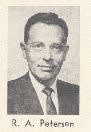
R. A. Petersen, executive vice president of Hertz Corp. said the future growth of the car rental industry will reflect the "continuing change in our society and the expanding need of the average American for increased mobility."
"Since potential is rarely, if ever, achieved through passivity, perhaps the most pertinent factor in the situation is our industry's consistently active efforts to reach out for new customers-by the process of tailoring rent-a-car services to the growing needs of a mobile population," Petersen told AUTOMOTIVE FLEET.
BUILT-IN MARKET
One reason for the almost unlimited growth potential of the car rental industry is readily evidenced in the fact that there are more than 90,000,000 licensed drivers in the United States, one third of whom do not own a personal car. This is a built-in-and virtually untapped market. By a steady series of innovations and promotion campaigns-including special rates and tin use of credit-the car rental industry is getting-and will continue to get these drivers into rented cars.
"Unquestionably, the industry's growth has been, and is being, greatly stimulated by increased convenience and accessibility of rent-a-car service and by the growing number of special car rental services and rates," Petersen said.
Some of these services, according to Petersen, include "rent it here . . . leave it there"-which makes one-way motoring possible. Free delivery of rented cars to home or office is also provided in some cities. Arrangements with carriers and hotel-motel chains make it possible to offer "package" vacations featuring use of a rented car.
To get its message across to the public, the rental industry will spend an estimated $20,000,000 on national and local advertising in 1962. This is a substantial sum when compared with the first rent-a-car advertisement-a 50 cent classified ad in 1904.
"In the years ahead, business and travel will increase still more and society's general need for mobility will further expand," Petersen said. "These years will bring an era characterized by more cars, more rental locations and continuing healthy growth for the already burgeoning rent-a-car industry."
AIR TRAVEL AIDS INDUSTRY
The spectacular post-war increase in air travel is another factor favorable to the growth of the rent-a-car industry.
Since jet planes now can carry travelers virtually anywhere in the world in a matter of hours, vacationers are able to enjoy more of their valuable vacation time by renting a car when they reach their destination rather than spending several days or even a week driving. By tin's same "fly-drive" method, business travelers get the mobility they need to cover destination areas more thoroughly. There isn't much sense, for example, in having a salesman take a full day to drive from Detroit to Chicago or New York to Boston, and another full day out of his work week to drive back home. He can fly to his destination in less than an hour, rent a car and take care of his business, using a full five days, and then fly back home. The "fly-drive" method results in a return to a five day sales week, rather than a three day week.
Competition Grows
Competition in the rent-a-car field is continuing to become fierce as the newcomers grow and the old-line firms expand.
Both Avis and National Car recently completed reorganization and expansion programs aimed at giving them an increased share of the market. And Hertz, the giant of the field, shows no signs of letting up. Hertz expenditures for equipment this year will be at a record high.
The newcomers are beginning to flex their muscles. Kinney Corp., headquartered in New York, plans to expand to the Miami market. Kinney now operates more than 3,000 cars, double the number it had a year ago. Econo-Car, which began operations 14 months ago, now has outlets in 16 states and plans to expand to all 50 states within the year.
Budget-Rent-A-Car, according to President Jules Lederer, will have a 1963 volume of $9,000,000 to $12,000,000 as the result of "aggressive advertising and lower rates." Budget, based in Chicago anticipates 1962 volume to hit $4,500,000.
Olin's Rent-A-Car System Inc., which has operated exclusively in Florida for the past 28 years, has now branched out and now operates in such cities as New York, Boston and Atlanta. President L. R. Smith told AUTOMOTIVE FLEET that Olin's should increase its fleet size "by tenfold by 1966." Plans call for offices or licensees in the top 20 major population cities by the end of 1963.
Cars Rental System Inc., an association of new car dealers who are in the rental and leasing field, has also expanded operations. As part of its program to help new car dealers increase their share of market, the association conducts special educational seminars on renting and leasing.
More Operations

Fleet Has a Talent Pipeline Problem. What Comes Next? | AF News Recap
Where will fleet’s next generation of leaders come from? This week, we’re looking at the industry’s talent pipeline, what certification can add to a fleet career, how to build an award-worthy track record, and the return of Automotive Fleet’s Personal Use Survey.
Read More →
Smith System Launches Driver Risk Management Program
Fleets have more driver data than ever, but identifying risky behavior doesn't necessarily correct it. Smith System's new Driver Risk Management program combines monitoring, training, and follow-up coaching to help fleets connect risk signals with driver intervention.
Read More →
Automotive Fleet Opens 2026 Personal Use Survey for Commercial Fleet Managers
Less than two weeks left! Commercial and corporate fleet managers are invited to share how their organizations handle company vehicle personal-use policies, charges, and driver eligibility.
Read More →
From AI Prompts to AI-Generated Safety Songs | AF News Recap
Can better prompts make AI more useful for fleet managers? This week, we’re breaking down smarter fleet analysis, an AI-assisted experiment that turned safety training into music, and what happened to fuel prices in August.
Read More →
How to Write Better AI Prompts for Fleet Analysis
Include these six elements in your fleet prompts to generate more relevant analysis and accurate answers.
Read More →
Fleet Meets: Eric Kilgore
This edition of the Fleet Meets series features one of the industry's best leaders driving multi-market and national operations.
Read More →
Why Reactive Fleet Management Is Becoming Too Expensive to Sustain
Research highlights a growing need for proactive management strategies to address rising costs in fleet operations effectively.
Read More →
What Your Fleet KPIs Aren’t Telling You
Tracking fleet metrics is only useful when the data leads to better decisions. This guide helps fleet leaders assess cost, utilization, and downtime more accurately, identify performance gaps, and prioritize the actions that can improve operational results.
Read More →
Hidden in Plain Sight: Fleet Compliance Risks
Fleet compliance isn't just about having policies — it's about consistently enforcing them. This practical guide reveals six hidden compliance risks common in public sector and shared fleet operations and outlines proven strategies to improve visibility, accountability, and audit readiness
Read More →
Turning Fleet Payment Data into Executive Insights
Does data alone drive results in operations?
Read More →