




Future of Alternative Fuels in Fleets
A leading authority an alternate-fuel vehicles, Cliff Hayden of GTE Service Corp. describes the poor air quality in America and warns fleet managers to prepare for the inevitable use of such vehicles in the near future.
Editor's note:The following is the substance of a speech made by Cliff Hayden, director of buildings, fleet, and energy for GTE Service Corp. at the Automotive Fleet & Leasing Association Spring Conference in Houston, TX. In addition to managing 40,000 vehicles and 8,000 mobile tools, Hayden is chairman of the Electric Vehicle Association of the Americas; chairman of the Electric Vehicle Users Task Force for the Department of Energy; and a member of the Research Coordinating Council of the Gas Research Institute.
People have been bombarded with information on air pollution, the greenhouse effect, acid rain, and a host of other environmental issues.
The result is pending legislation at the federal, state, and local levels. The issues behind the legislation affect fleet operations - today and well into the future. The government is taking several approaches aimed at cleaning up the atmosphere. Principal among these is the utilization of alternative fuels and more restrictive tailpipe emissions. This text will explain the basis for the government's concerns, what they mean by "alternative fuels," and their initiatives to deal with the problem.
One point should be made clear, since there are three options (methanol/ethanol, compressed natural gas, and electric vehicles); I do not have a personal axe to grind or a hidden agenda in any of these fuels. Each has advantages and disadvantages.
Bui first, what is driving the alternative fuels issue? Basically, there are three driving forces: the EPA emissions standards for diesels; the National Ambient Air Quality Standards for ozone and carbon monoxide (CO) compliance, and national and state support for alternative fuels. While the diesel issue does not impact most members of the National Association of Fleet Administrators, it is nonetheless a primary driver because diesels are a major contributor of particulate matter.
Despite National Air Quality Standards established by the EPA, more than 100 cities in the United Stales are in non-compliance. In view of this and in searching for solutions, the issue of alternative fuels has become a major factor in any solution. Air pollution can be seen in cities everywhere. But what exactly is causing the pollution?
What people call "smog" is created when sunshine causes reactive organic gas (ROG) to photochemically react with oxides of nitrogen (NOX) to form ozone. The map shows air quality and emissions trends throughout the United States in ozone concentrations on a maximum, daily, one-hour time frame. The height of the indicated spike indicates the magnitude of the problem, and identifies a city that is in non-compliance. Heaviest concentrations are m California, the upper Midwest, and the Northeast. While these areas have the highest concentration, cities such as Houston are also heavily polluted. When we look at the National Ambient Air Quality Standards for ozone, we find that the standard is .12 parts per million maximum in a one-hour time frame. Los Angeles has .35 parts per million - orroughly three times the national standard.
With respect to particulates, we find somewhat similar concentrations in cities on the West Coast, Midwest, and Northeast with scatterings throughout the country.
Another air quality standard is the acceptable concentration of carbon monoxide (CO): nine parts per million. Again, California is a leader with nearly 18 parts per million - or double the standard.
The minimum standard for nitrogen oxide (NOX) is 5.3 parts per one hundred million on an annual basis. California's South Coast air basin averages slightly over six parts. Again, it's out of standard. Essentially, three pollutants are involved: ROG, NOX, and CO. And the automobile is responsible for most of these pollutants. In ROG, 46 percent comes from automobiles and trucks; while 59 percent of the NOX originates in automobiles, and 87 percent of the CO also comes from the same source.
Clearly, this is a national problem with more than 100 cities in noncompliance. But California is the worst, and it is not just Los Angeles.
Every major city in California is affected. The potential air quality improvement strategies can change that, but they also will affect vehicle fleets. Certainly, much detail will go into vehicle inspection. Extensive maintenance programs also are in the wings. An example would be in the case of Florida, which is proposing that all tailpipe emissions testing be done on a dynamometer while the vehicle is under full load. And there is an attempt to restrict car travel. Look at Southern California, where Regulation 15 attempts to reduce personal commuting miles by a significant amount. Last, but not least, there is the alternative fuels issue. The airquality solution encompasses diverse fuel economy rules, stringent air control plans, fuel additives, and, in many cases, the introduction of alternative fuel vehicles.
The automobile is of primary concern, both in urban and suburban settings. Secondly, the use of vans, which we see more of on the roads today, will be scrutinized.
Electric vehicles are currently available in van configurations. These include the current G-van from GM as well as T-vans presently in prototype form at Chrysler and Ford. The hybrid is a compromise introduced to provide greater range with most of the benefits of the electrics. In this way, a small on-board internal combustion engine would be utilized as a battery charger, thereby extending the range considerably. The use of methanol in a dedicated fleet is available in passenger cars, light-duly trucks, and vans, while the flexible fuel vehicle will probably only be available in the short-term in passenger cars. (A flexible-fuel vehicle is defined as one which can burn any combination of gasoline and methanol. This vehicle has the ability to move easily from its normal fueling locations and to substitute fuels at any time wherever it may go.)
The electric vehicle is by no means new. Prior to 1927, the electric car was the predominant vehicle. It's by far the cleanest of alternative fuels, therefore contributing the most to reducing air pollution, as well as noise pollution. Its drawbacks are range and refueling time. Current electric vehicles are capable of approximately a 60-mile range and require eight to 10 hours to "refuel." They appear to be ideal in an urban setting with a known daily-range requirement and where there is ample time for overnight recharging. The future of the electric vehicle will depend largely on its power source, be it battery or fuel cell.
However, current electric vehicle technology has some rather severe limitations, but when coupled with a small, natural gas-fueled range-extender, it can overcome many of the vehicle's perceived problems. The electric vehicle which I drive is a converted Mercury Lynx. The conversion was done by Eaton Corp. It drives much like a conventional gas-powered vehicle with an automatic transmission. The only things noticeably different are two extra gauges and the dashboard. One gauge provides battery condition information and the other shows data on the power drain. It has one battery pack under the hood and one in the rear.
Compressed natural gas is also a feasible fuel. The conversion cost for such a vehicle is relatively low with two exceptions. The fuel must be stored under high pressure and therefore requires a special tank. These tanks are expensive, and can cost in excess of $ 1,200 each. They are fairly large and in the case of passenger cars, occupy considerable trunk space. A compressor station also is required to compress the fuel from the pipeline.
There are two methods of fueling compressed natural gas vehicles. A "slow fuel" method uses an individual compressor for each vehicle and requires several hours for refueling. A "fast fuel" method requires a large capital expenditure for the fueling station - about $3,000 per vehicle - but speeds refueling to less than five minutes per vehicle.
The range for such a vehicle would be approximately half that of a gasoline-powered vehicle, so it would be best-used with light vehicles in urban situations and/or to replace the diesel fuel in urban buses. It is finding wide acceptance. There are more than 30,000 units currently in use in the United States.
Of the alcohol-based sources, only methanol seems to be feasible economically. Ethanol, which is made from grain, is both expensive and energy-inefficient. Ethanol is being used currently as an oxygenizer to reduce tailpipe emissions.
Since methanol is a liquid fuel, it lends to have a ready-made distribution infrastructure. It is transportable and can be pumped al service stations, which seems to make it suitable for non-dedicated fleets. Its conversion also is relatively simple, requiring only the changeout of some hoses, gaskets, and aluminum parts. It has approximately 70 percent of the energy content of a gallon of gasoline and therefore is restricted somewhat in range. In addition, methanol is corrosive lo some materials, particularly aluminum. It attacks rubber and some plastics. And it is toxic. It is fatal if swallowed in even small amounts. Continuous exposure to the skin can cause toxicity since it can be ingested through the skin.
Finally, methanol burns with a clean, invisible flame and therefore creates a safety hazard. While its pollutants are different from gasoline and diesel fuel, they are nevertheless of concern since one of the major existing emissions is aldehyde, a carcinogen.
In the near term, methanol could be made from natural gas. In the process, though, roughly half the energy content is lost. In the longer term, it would most likely be made from coal.
Notwithstanding all the above, methanol may well become a major power source in the alternative fuels arena. It is presently being viewed as an alternative to diesel fuel because it will reduce particulates in the atmosphere. Secondly, it is possible to manufacture vehicles that burn gasoline and/or methanol, or any combination of these two fuels. Given till this, it would be possible for a vehicle to burn pure methanol as it left its home base and later refuel with gasoline without making any adjustments.
What does all this mean to fleets? Very soon, fleets will be required to purchase alternative fuel vehicles of one type or another. Fleets will be compelled to use them, therefore fleet managers and suppliers will have to deal with them. This problem will not go away; it will only become worse. So the more fleet managers understand the problem, the more they will understand the alternatives, and the belter they will be able to deal with them. Legislators will continue to seek solutions to the pollution problem and since the automobile is such a major contributor, fleets will be looked to for solutions.
More Green Fleet
EV Charging Use Is Outpacing Infrastructure Growth
ChargePoint’s 2026 Charging Forward Report points to rising charger use, higher-powered charging, commercial vehicle electrification, and energy-management technology. Here’s what fleets should know.
Read More →
Merchants Fleet Reports 290M EV Miles as Fleets Navigate Changing Electrification Market
From millions in operating savings to hundreds of millions of EV miles, Merchants Fleet’s latest report reveals what’s working and what’s changing in fleet electrification.
Read More →
The EV Breakdown Nobody's Talking About: Why Most Electric Vehicle Roadside Calls Aren't Mechanical Failures
Here's why EV breakdowns are widely misunderstood.
Read More →
ChargePoint Now Available in Energy Pass
ChargePoint and additional planned charging network integrations were added to GM's Energy Pass.
Read More →

First Look: Slate Auto's Electric Fleet Pickup
Could an affordable, modular EV pickup make electrification more practical for fleets?
Read More →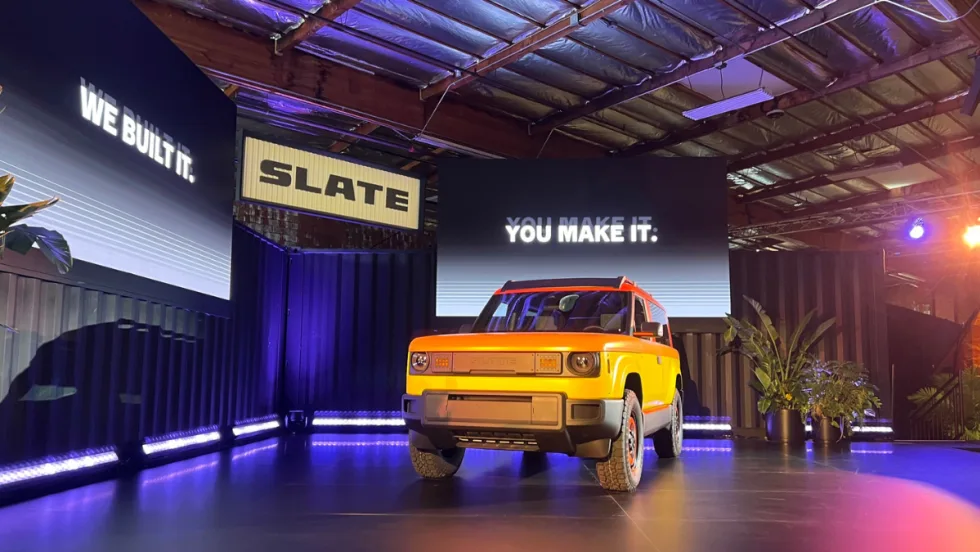
Slate Debuts Colorful, Unique EV Models
A recent media and client event, studded with electric vehicles dressed up on platforms, planted a new position for the manufacturer in the wider EV market. Fleets will find cost-saving advantages.
Read More →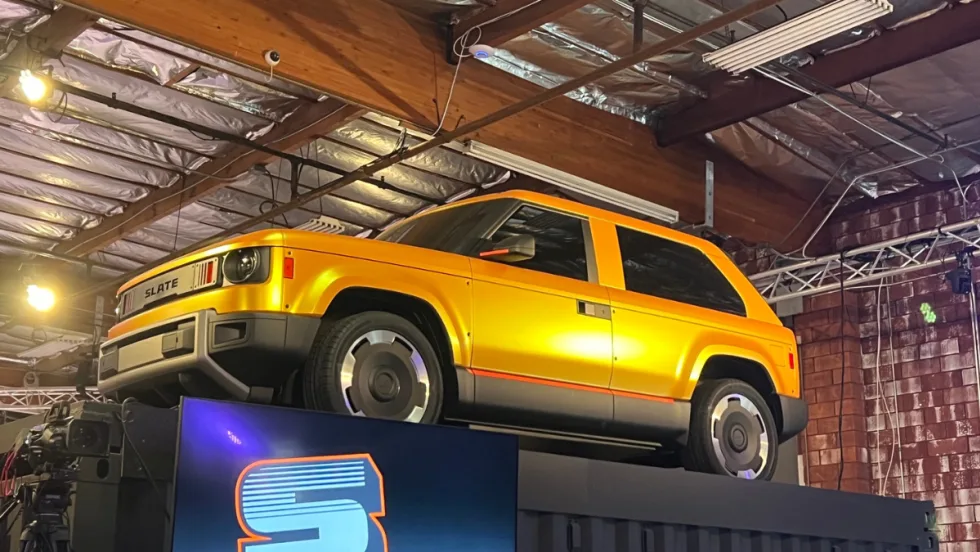
Slate Electric SUV, Pickup Switchable Model Aims For Light-Duty Fleets
Everything about this EV is counterintuitive and understated, making it stand out from the crowd.
Read More →
Inspiration Mobility Acquires Key Electrada Assets
Inspiration Mobility Group has acquired select assets of Electrada, adding the fleet electrification provider's team, technology, and charging infrastructure development capabilities to its energy management business.
Read More →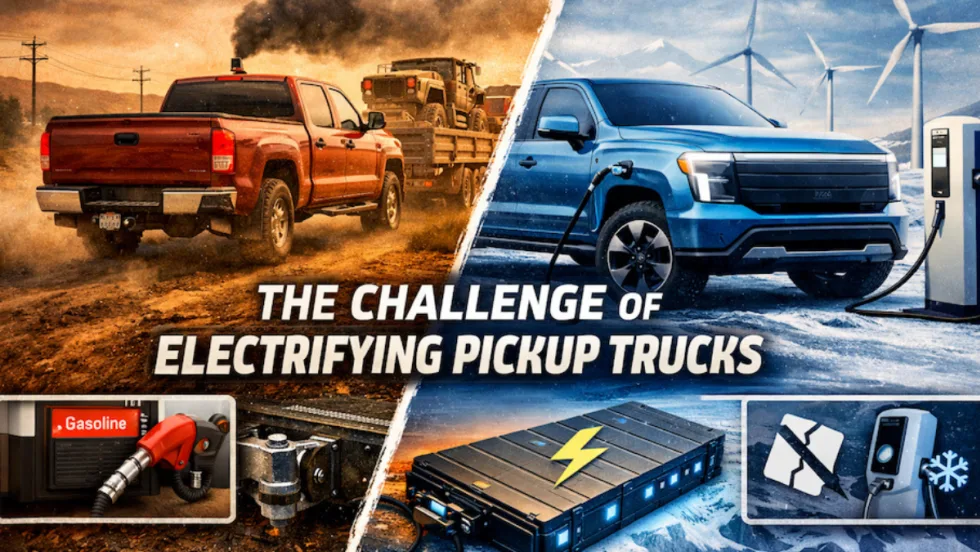
Why America’s Most Popular Vehicle is So Hard to Electrify
Turning America’s favorite workhorse electric means balancing range, payload, charging infrastructure, and price, an equation automakers are still trying to solve.
Read More →