




Want More? How Drivers Can Improve Fuel Efficiency
Fueling Savings: How Commercial Fleets are Lowering Fuel Spend
From creating a parts delivery service and a trip reporting app to monitoring drivers in real time, fleet managers are finding innovative ways to cut down on unnecessary trips and curtail costs.

Christy Grimes・Former Senior Editor
Cutting down on your fleet’s fuel spend often boils down to your ability to manage your drivers’ behavior and instilling in them a willingness to adapt to change.
Photo: Automotive Fleet
7 min to read
Fuel is a major money suck for commercial fleets, so managers are getting creative with fuel management to curtail those costs. Automotive Fleet had a chance to speak to three fleet managers with unique strategies to cut their fuel spend.
McKinstry: Trimming Vehicle Loads and Unnecessary Trips
McKinstry, a national construction and energy services firm with nearly 700 vehicles across the U.S., is testing a system to deliver supplies to job sites. The goal is twofold: to eliminate unnecessary trips, and to create more fuel-efficient vehicles by lightening vehicle loads. This leads to greater productivity on job sites as well.
“It helps us keep the construction workers on the job site and not driving around town,” McKinstry Director of Supply Chain Brian Fisher said.
This also allows McKinstry to have more control over mileage on certain types of vehicles. The team can now use a more fuel-efficient cargo van, for example, to make these deliveries as opposed to a construction worker picking up a box of screws in a Class 5.
McKinstry is also using its pilot of this service, called McKinstry Express, as an opportunity for the team to deploy a Ford E-Transit.
With McKinstry Express, the logistics team creates routes where supply chain team members deliver supplies and tools to various sites. The program, which is still in its early stages, is being used around Portland, Seattle, and the inland northwest area around Spokane.
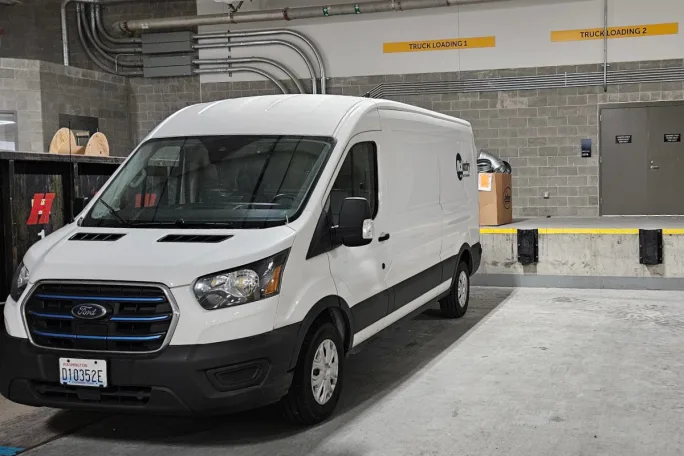
With McKinstry Express, the logistics team creates routes where supply chain team members deliver supplies and tools to various sites.
Photo: McKinstry
The team ended 2023 with around 10 deliveries per week and hopes to grow that by about 25% in the near future.
“We’re getting folks familiar with the idea that there's a dedicated team [that makes the deliveries so workers onsite] can stay where they’re at and do what they need. As we develop this service offering, we're working closely with our service department to get them up to speed,” Fisher said.
So far, one of the biggest hurdles with the program has been familiarizing the delivery employees with the supplies they need to pick up.
McKinstry has previously used third party providers to make these kinds of deliveries, but the drivers often brought the wrong box or supply.
“[Our] drivers need to have a baseline level of expertise in the kind of products that they're looking at,” Fisher added.
In the future, Fisher hopes to open up storage sites along interstate corridors to further cut down on mileage, so the McKinstry Express team can stock up on supplies for deliveries.
Fisher hopes to create a baseline for the kinds of equipment construction employees carry around. He has previously noticed that some workers haul around equipment they hardly use. Overloading their vehicles can lower fuel efficiency, and it can lead to more maintenance costs.
Breaking Old Habits to Improve MPG
Additionally, Fisher is putting employees in smaller, oftentimes more fuel-efficient vehicles, as a way to rightsize the fleet. This isn’t always an easy task for, let’s say, someone in a senior leadership position who is used to having a large pickup truck with a premium package doing a job that really only requires a compact pickup without the extra bells and whistles.
The service department team is helping bring people onboard with this idea, getting them to realize that they don’t need the extra space a larger vehicle has to offer, since they can now rely on a service like McKinstry Express to bring their supplies to them when needed.
For employees who do need a larger vehicle from time to time, Fisher has instead purchased heavy-duty vehicles that can be checked out. That way, there is not mileage put on less fuel-efficient vehicles on a daily basis, but only when needed.
Stanley Consultants: Tighter Trip Reporting with a Homemade App
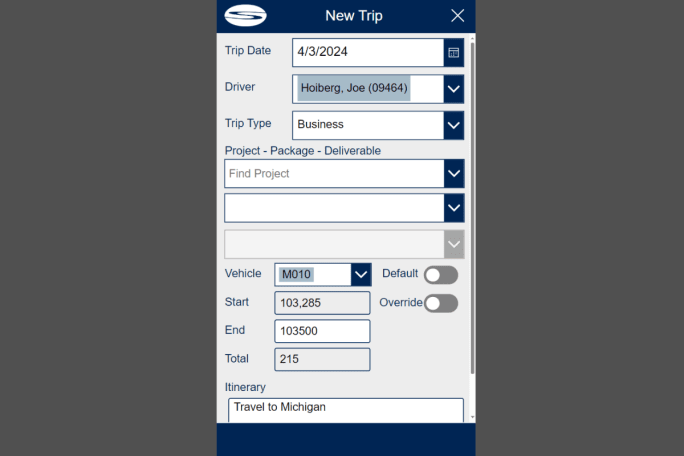
Through Stanley Consultants' in-house app, drivers can select not only the type of trip, but they can also connect each trip to an existing project.
Photo: Stanley Consultants
When Stanley Consultants Asset Manager Joe Hoiberg looked at his company’s trip reporting app, he realized it did not allow much customization for the kinds of details his drivers needed to track. Stanley Consultants is an engineering firm that helps clients with services in transportation, energy, water, and other industries.
There are 120 vehicles on the fleet. Because drivers bring their vehicles home every day, Hoiberg needed an efficient way to track the kind of trip drivers were taking (i.e. business or commute) for reporting purposes.
Stanley Consultants created the first iteration of the app in 2019, but it only had basic features, and the pandemic put further development of it on the backburner. Hoiberg’s team approached the company’s IT department about making a new app that allowed drivers to provide more details about their trips.
Reporting this data allows the team to know how much to bill their clients, and it gives Hoiberg an idea of how many non-work-related trips drivers are taking. Hoiberg can address drivers logging too many personal miles to curb that, leading to lower fuel costs and vehicle wear and tear.
Through the app, drivers can select not only the type of trip, but they can also connect each trip to an existing project. Drivers enter their ending mileage once they have completed a trip.
On their next trip, the app remembers the previous ending mileage, and converts it to starting mileage for the new trip. Each driver has a profile which logs all their trips. All of the information is then stored in a database, which Hoiberg can access.
The app saves the accounting department time. Previously, the team had to connect each driver’s data with the project they were working on, as part of the billing process for clients. Because the app automatically connects drivers to an existing project’s database, the accounting department no longer has to do this manually.
While the app did not cost the department any money to develop since it was created in-house, it does save multiple departments time. And as anyone in management across any industry will tell you, time is money.
Some advice from Hoiberg on this homegrown project: “Your first attempt isn’t your last attempt. We tried and implemented a trip log app in 2019. It was never designed to be permanent. It was designed to get our foot in the door to start moving us in a better direction. And over time, we were able to iterate to this and we're continuing to iterate as we move forward — adding features and functionality to what we have — to satisfy the needs for our drivers, as well as fleet administration and accounting and billing,” he said.
Rose Pest Solutions: Keeping Drivers on Track in Real-Time
Jason Rascoe, purchasing and fleet manager for Rose Pest Solutions, can see where his drivers are in real-time through telematics. The company operates 403 vehicles in Michigan, Ohio, and Indiana. Rascoe is alerted when drivers leave their preassigned routes and can then alert them to get back on track immediately.
In conjunction with telematics, the company utilizes route optimization software to create the most efficient routes. Before real-time tracking through telematics, Rose had to revisit the “passive” route data to see which drivers had strayed. In that more manual process, aberrations were missed, and driver follow-up wasn’t conducted.
The real-time benefit of telematics allows for immediate action. “It gives you more of a real-time, up-to-date picture of what's going on. You don't have to wait for the data. A lot of times, a technician will forget what [led them off their route] and will not be able to update you properly otherwise,” Rascoe said.
Similarly, Rascoe’s team receives alerts when drivers reach their maximum allotted idle time. While there are many allowable instances to idle — like keeping warm during the winter months, for example — the limit is about 11 minutes per idle session. Once a driver has surpassed that, the team is alerted.
Rascoe can then reach out and remind the driver not to idle for too long, so their fuel tank isn’t emptied out too quickly.
Bottom Line: Change Management is Crucial
Essentially, cutting down on your fleet’s fuel spend often boils down to your ability to manage your drivers’ behavior and instilling in them a willingness to adapt to change.
“Much like anything else in the change management space, you have to show people what's in it for them. You have to prove it makes the job easier than what they’re doing today," Fisher said.
Subscribe to Our Newsletter
More Fuel
Fuel Prices Surge in September | September Fuel Update
September brought major fuel price swings, including diesel crossing $6 a gallon. Here’s how gas and diesel prices changed throughout the month, and where they stood heading into October.
Read More →
Turning Fleet Payment Data into Executive Insights
Ramel Lindsay of U.S. Bank Voyager discusses how fleets can transform payment and transaction data into actionable intelligence to reduce costs, improve oversight, and support executive decision-making.
Read More →
Why the IRS Raised Its Mileage Rate in the Middle of 2026
Fuel-price volatility drove the rare increase to 76 cents per mile, the fifth midyear adjustment since 2000.
Read More →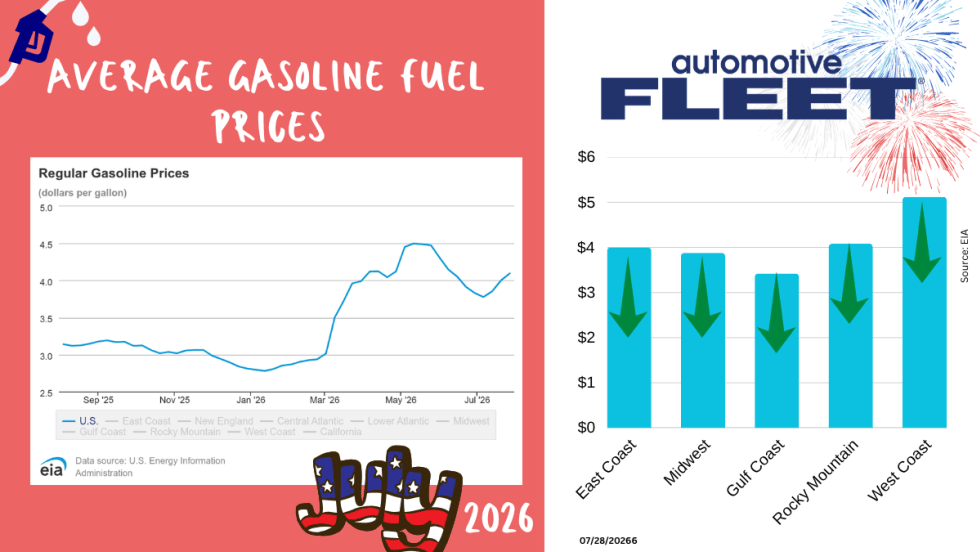
July Fuel Update: Prices Keep Rising in Light of More Conflict
Gas prices continue to rise as more and more conflicts do, too.
Read More →
Bob Adamsky on Fuel Volatility: "Don't Panic, Have a Plan."
When it comes to up and down fuel prices, Adamsky has a message for fleets: “Don’t panic.”
Read More →
How Fleets Can Gain Control of Non-Fuel Spend
Fuel often gets the spotlight, but non-fuel expenses can have a major impact on fleet costs. Ramel Lindsay of U.S. Bank Voyager discusses how fleets can gain better visibility and control over these often-overlooked expenditures.
Read More →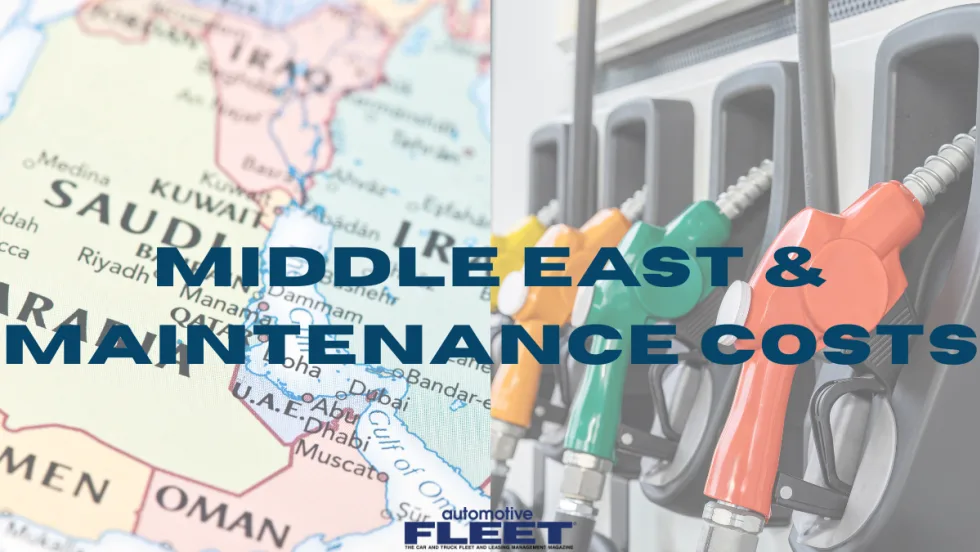
Fuel is Just the Start: How Middle East Tensions are Driving Up Fleet Maintenance Costs
The Middle East conflict is doing more than pushing up fuel prices. It’s also raising the cost of key maintenance products your fleet depends on, from motor oil to tires to windshield wipers. Here’s what you need to know about this budget-busting situation.
Read More →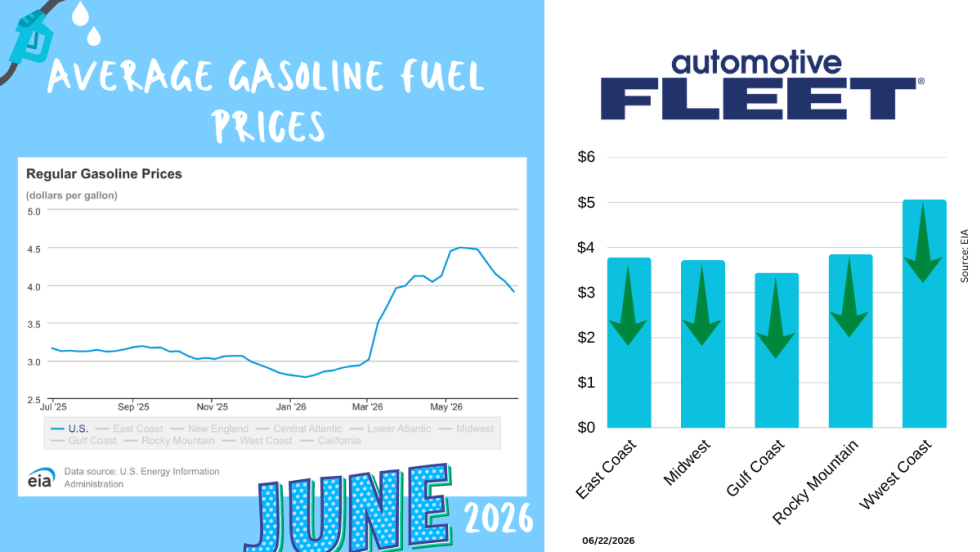
June Fuel Update: Prices Fall Below $4
Drivers are finally getting some relief at the pump. The national average gas price has dropped below $4 a gallon for the first time in months, with prices falling in 47 states as oil markets react to developments in U.S.-Iran negotiations.
Read More →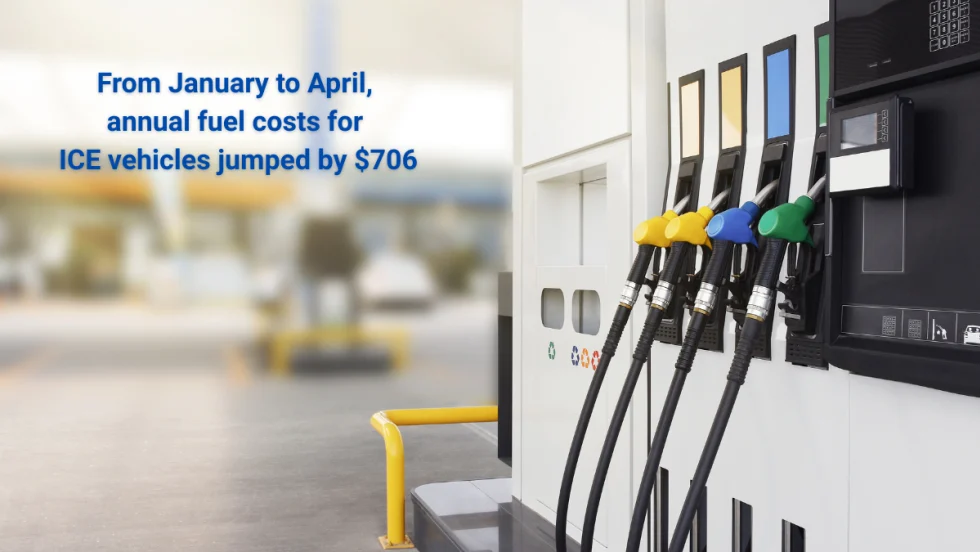
Study: How 2026's Gas Price Hikes Affect Different Vehicle Types
New data from iSeeCars reveals how rising fuel costs have affected different vehicle segments as gasoline prices climbed nearly 46% over the past four months.
Read More →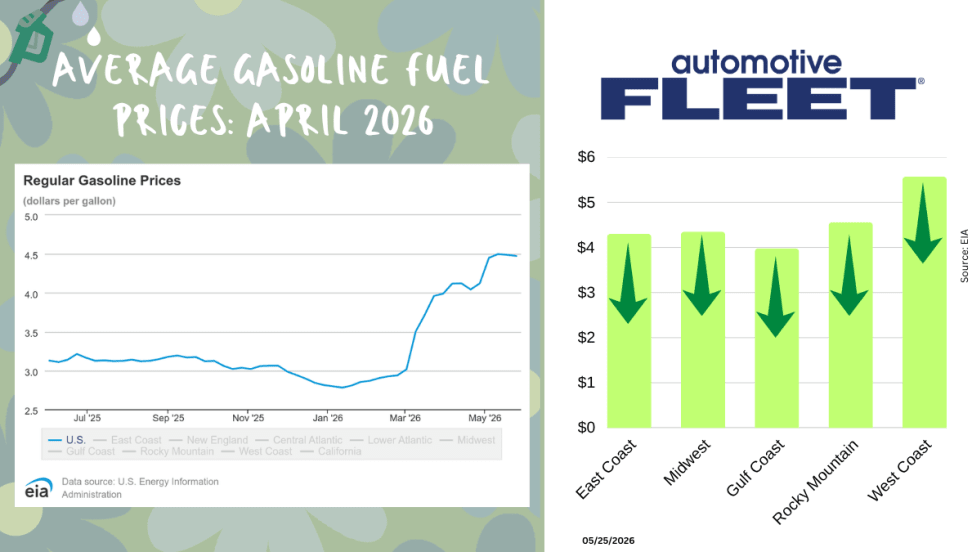
May Fuel Update: All Regions Experience Declines
Gas prices are finally easing in much of the country, but experts warn global tensions could quickly reverse the trend as the national average remains well above last month’s levels.
Read More →