




Ford Debuts 2008 Taurus and Taruus X
The best-selling car in the U.S. for five straight years, production of the original Taurus ended in October 2006 – but that wasn’t the “end of the line.”
Introduced in 1985, the Ford Taurus was a milestone in automotive design. As the best-selling car in the U.S. for five straight years, beginning in 1992, the Taurus experienced peak annual sales of more than 400,000 units. Production of the original Taurus ended in October 2006. Now it’s back, and with a new sister model.
The 2008-model Taurus X was introduced due to growing demand in the crossover segment and will complement the current Ford Edge. The new 2008-model Taurus will go on sale this summer, replacing the Ford Five Hundred. The Taurus X will go on sale in late summer, replacing the Ford Freestyle.
Both the 2008-model Ford Taurus and Taurus X feature Ford’s 3.5L Duratec V-6 engine, deliver an estimated 260 hp (an increase of nearly 30 percent from the previous engine) and 245 lb.-ft. of torque. The standard 6-speed automatic transmission provides 44-percent better acceleration, according to Ford.
New taillights, a signature three-bar chrome grill, crisp accent lines, and a new rear fascia give the 2008 Taurus a facelift, and according to Ford, give the vehicle the same appeal of the Ford Fusion. The Taurus has a large trunk at 21.2 cu. ft., and is available in two trims: Taurus SEL and Taurus Limited.
The new Taurus X crossover builds on the strength of its namesake. Crossovers have already surpassed SUVs in annual vehicle sales, and Ford predicts they will become the largest or second-largest segment in the U.S. by the end of the decade.
The three-row, seven-passenger Taurus X complements the Ford Edge. The exterior of the Taurus X picks up design cues from the Edge, including step-up headlamps and a three-bar chrome grille. Taurus X sports a new rear fascia, Fusion-inspired taillamps, and chrome dual exhaust tips. A new roof rack gives the Taurus X a tough, rugged design.
The structure of the Taurus is engineered with crush zones designed to direct excess energy around the passenger compartment into a high-strength safety cage.
The Taurus was rated America’s safest full-sized car by the National Highway Traffic Safety Administration (NHTSA) and received 5-star ratings in frontal-impact (driver and passenger) and side-impact (front and rear seats).
Both the Taurus and Taurus X have what Ford calls “SPACE” (Side Protection and Cabin Enhancement) Architecture — a cross-car beam under the front sear to reinforce the structure of the vehicle and further direct energy away from passengers.
More Operations
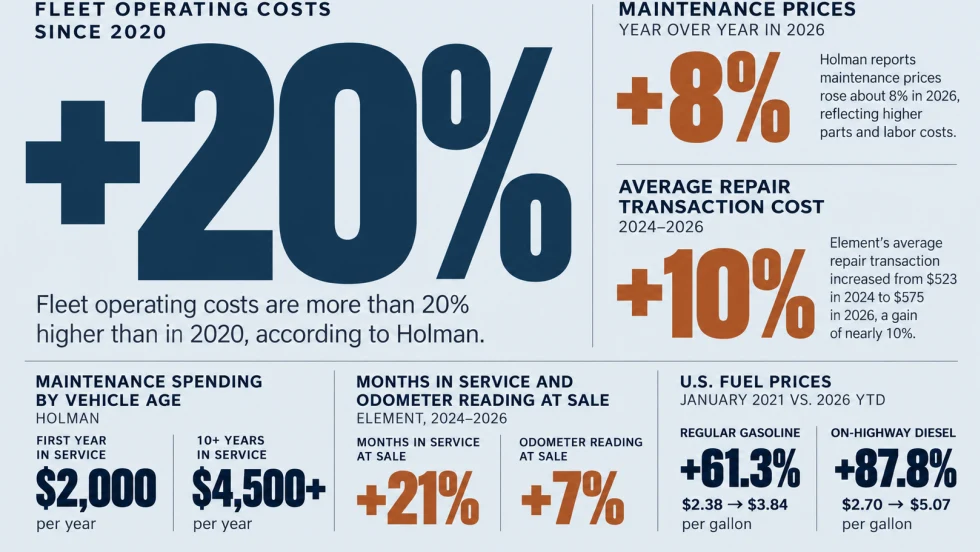
Managing Fleet Costs in an Era of Permanent Volatility
Fleet operating costs have risen more than 20% since 2020, raising a key question: When does extending a vehicle's service life stop making financial sense?
Read More →
The Next Evolution of Fleet Management: Autonomous Operations
This opening keynote session at the Fleet Forward Conference highlights the future of autonomous driving for fleets.
Read More →
How to Reduce the Total Cost of Risk From Catalytic Converter Theft
A stolen catalytic converter can cost fleets far more in downtime and lost productivity than in repairs. A total-cost-of-risk approach can help fleet managers quantify their exposure and prioritize theft prevention.
Read More →

Personal-Use Charges Rise as Vehicle Values Fall | AF News Recap
Personal-use charges are climbing, wholesale used-vehicle values are declining, and commercial fleet sales growth is slowing. This week, we're breaking down the latest fleet data, plus how Element Fleet Management is helping Waymo prepare for its first Canadian robotaxi market.
Read More →
Here's When You Should Make an Exception to Fleet Policy
Fleet policies are designed to create consistency, but not every driver or situation fits neatly within standard rules.
Read More →
AI-Native or AI-Acquired: What Should Fleet Managers Look for in an AI Platform?
Six questions can help fleet managers look beyond AI marketing claims to evaluate integration, data access, and real-world operational performance.
Read More →
A buyer's guide to fleet management software in 2027
Buying fleet management software in 2027 means looking beyond features and price. As fleet operations, technology and expectations evolve, this guide explores what today’s fleet professionals should consider when choosing a system that can deliver value now and adapt to what comes next.
Read More →
What Will Shape the Next Era of Fleet Management?
EVs, AI, and autonomous vehicles are reshaping fleet management. Discover what’s ahead—and how fleet leaders can prepare for the next era.
Read More →
How Fleets Can Recruit and Train Veterans for Technician Roles
Here's how the technician shortage has affected uptime for fleets, and what to do about it.
Read More →
Avis Budget Group Deploys Neology Toll Management Technology Across Major Brands
Neology’s neoFleet platform will manage toll transactions and toll-authority operations for vehicles across Avis, Budget, Payless, Budget Truck and Zipcar.
Read More →