Fleets Offer Best Practices for Preventing Winter-Related Vehicle Downtime
Pre- and in-season inspections, tire and fluid winterization, and safety equipment retrofits keep fleets on the road in icy and snowy conditions.
by Gregory Van Tighem
May 9, 2019
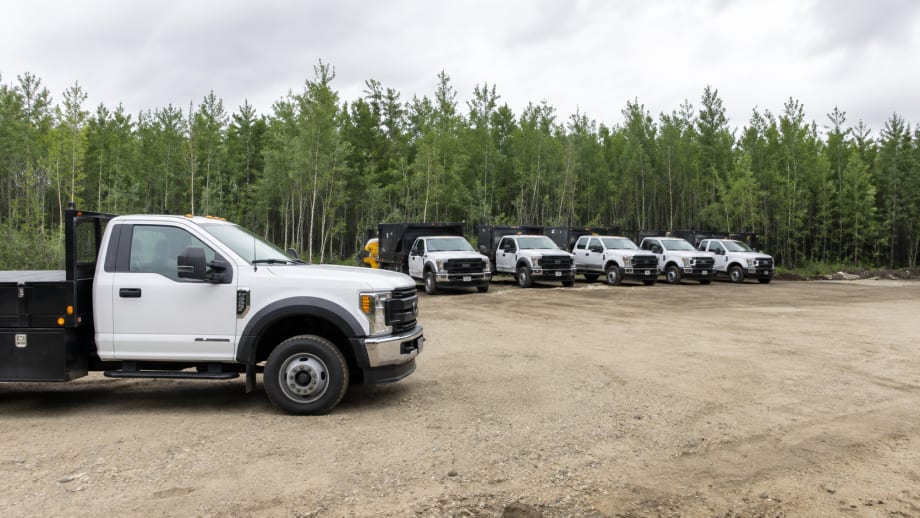
North Pole, Alaska-based BlackHawk Works operates a fleet of seven trucks, six F-series Ford models and a dump truck for its tree, grading, snow removal, and mobile welding services.
5 min to read
Regular pre- and in-season inspections are essential for maintaining fleet vehicles during winter conditions.
Ensuring proper tire and fluid winterization helps fleets navigate icy and snowy roads safely.
Retrofitting vehicles with appropriate safety equipment minimizes downtime during winter weather.
*Summarized by AI
When Jeff Hoeksema reflects on his snow removal business during the 2018-19 winter season, he doesn’t think about how snowfall accumulation was only several inches above normal.
Instead, the production manager at Summit Landscape Management recalls how three-quarters of the 75-plus inches of snow that accumulated in and around Grand Rapids, Mich., dropped in a span of just 44 days. Drivers worked nearly round the clock from February to early March plowing and salting driveways, parking lots, and private roads and then hauling accumulated snow to approved dump sites.
Ad Loading...
“It was all hands on deck,” says Hoeksema, who operated the company’s Caterpillar 938 wheel loader during the height of the storms.
Over the East Coast and much of the Midwest beginning in late January, this winter season was characterized by wildly unpredictable winter weather, from Winter Storm Jayden and the polar vortex to the ultra-rare “bomb cyclone” that struck Colorado.
Extensive Fleet Inspections
Summit Landscape Management controls a fleet of more than 60 vehicles, which the company typically leases for five years. The fleet includes Ford E-150 and E-250 vans and Ford F-150, F-250, and F-350 pickup trucks.
Summit also operates heavier Ford F-450, F-550, and F-650 pickups with dump bodies. The company, which installs irrigation systems and provides lawn care mostly from spring to fall and year-round tree services, also runs a few medium-duty trucks.
BlackHawk Works uses a special machine to cut small slits in a tire’s tread block. Siping opens the tread, giving it more gripping ability as it makes contact with the pavement or snow and ice.
To prepare Summit’s trucks, in-house mechanics start the winterization process with extensive pre-season inspections before the first snow falls, Hoeksema says.
Ad Loading...
“Before the season starts, our mechanics examine our trucks from top to bottom, paying close attention to the fluids, especially with the hydraulic systems on the snowplow attachments, and the brakes,” Hoeksema says.
Before the first snowfall, Summit’s snowplow drivers visit customers’ locations to familiarize themselves with where they will be plowing so they don’t inadvertently run into or over something during the winter. Hazards such as raised manhole covers, fire hydrants, and power and cable junction boxes are flagged.
With the first snowfall, usually in late November or early December, Hoeksema repurposes a number of the company’s trucks from landscaping and lawn-care duties to snow removal. He says the hydraulic-powered snowplows can be quickly reinstalled using a mounting system installed on several of its pickup trucks.
Throughout the winter season, the company’s in-house mechanics conduct routine inspections for common issues such as irregular tire wear, damage to the plow or the vehicle’s undercarriage, corrosion from plow salt, and cracked or broken bolts on the snowplows, Hoeksema says. When the bolts on the plows get damaged, drivers can easily overlook them, particularly when things get really busy, he adds.
Drivers and mechanics regularly check fluids and tire pressures since tires can lose 1 PSI for every 10-degree drop in temperature. They also watch for damaged mud flaps, broken taillights and running lights, and cracked or chipped windshields.
Ad Loading...
“Our trucks and equipment cost our company a lot of money,” Hoeksema says. “We try to keep them in top shape so we can continue to run them year-round and return them to the leasing company in relatively good shape so we don’t get dinged.”
Change Fluids, Equipment
Derek Broderick, owner of North Pole, Alaska-based BlackHawk Works, takes a similar approach to preventing vehicle damage and downtime.
Broderick recommends trucks carry parts that drivers can easily use for quick field repairs and emergency supplies such as extra fuel, hydraulic fluid, engine oil, blankets, flares, lights, first-aid kits, food, water, and tools, including a digital tire gauge.
While Broderick always prepares for cold and snowy winters, this year the weather in North Pole didn’t live up to the image of the community’s namesake. Much of the central and western parts of Alaska experienced well above-average temperatures and significantly below-average snow accumulations.
In addition to graders and loaders, BlackHawk operates a fleet of seven trucks, six F-series Ford models and a dump truck for its tree, grading, snow removal, and mobile welding services.
Ad Loading...
Even with the recent warmer- and drier-than-average winters, Broderick says he has his mechanics change out the hydraulic fluids in the snowplow systems, which he keeps on his trucks year-round. Because temperatures can typically drop well below 0 degrees in North Pole, BlackHawk’s mechanics switch out the hydraulic fluid for a lighter aviation grade so drivers can raise and lower their snowplows quickly in frigid temperatures.
Statistics Enumerate Risk of Being Unprepared for Winter
Being better prepared for winter not only makes sense from the standpoint of vehicle uptime, but also accident avoidance.
According to the Federal Highway Administration, an analysis of 10-year averages from 2007 to 2016 shows about 5.9 million vehicle crashes each year. Approximately 21% of those crashes — 1,235,145 — are weather-related. And of those 1.2 million weather-related crashes:
18% or nearly 220,000 occur during snow or sleet conditions, resulting in 54,839 people injured and 688 people killed;
13% or 156,000 occur on icy pavement, resulting in 41,860 people injured and 521 killed;
And 16% or 186,000 occur on snowy or slushy pavement, resulting in 42,036 injuries and 496 fatalities.
A study by University of Georgia researchers Alan Black and Thomas Mote published in the Journal of Transport Geography in 2015 examined federal motor vehicle crash data from 1975 to 2011 and compared the crash data to meteorological data from 1996 to 2010. The comparisons helped to determine how the expected number of deaths in 13 U.S. cities involving winter precipitation compared to the actual numbers.
Among their findings, Black and Mote determined that heavy snowfall regions in northern California, Nevada, and Arizona, the Upper Peninsula in Michigan, and near lakes Erie and Ontario in Upstate New York experienced higher-than-expected fatalities.
“In general, (the study found) crash risk increases 19% during winter weather,” Black said.
Black, who now serves as an assistant professor at Southern Illinois University’s Department of Geography, says that the risk of a crash is greater regardless of vehicle type or size.
Through their comparison, they also determined that the U.S. National Weather Service significantly underreports the threat posed by winter weather in its weather injuries and fatality report.
Among some of their other findings, Black and Mote note:
In terms of precipitation type, 84% of crashes could be attributed to snowfall, with the remaining 16% attributed to sleet or freezing rain;
January had the most fatalities and collisions, and December the second-most fatalities and crashes;
Only 45% of winter-related fatal accidents occur at night, which the researchers found surprisingly lower than expected since daylight hours are shortest in the winter months. By comparison, 51% of non-winter-related fatal crashes occur at night. Researchers surmised that the higher daytime fatality rate could be attributable to more adults commuting to work regardless of weather.
Because of its location in the Northern Hemisphere, North Pole remains dark nearly 24/7 from early October until early March. To help drivers see more clearly, the company installs racks with Vision X light bars on the rear of the trucks. Cold weather grille inserts limit cold air inflow through the truck radiator, which insulates the engine and helps accelerate warm-up time.
And rather than switch out the tires before winter, Broderick has the local tire dealer replace the OEM tires with all-season radials that are “siped.” Tire siping involves cutting small slits in the tire’s tread block. Siping opens the tire’s tread, giving it more gripping ability as it makes contact with the pavement, snow, or ice.
Mitigating Tire Expense
Corrosion can be a big concern, particularly when road maintenance departments use magnesium chloride as road de-icers.
Greg Katheiser, vehicle and maintenance operator for Colorado’s Gunnison County Electric Association (GCEA), says when the co-op’s drivers are not out on storm duty and when the weather allows it, they regularly wash association vehicles to avoid corrosion.
Ad Loading...
GCEA, a nonprofit, member-owned electric co-op, runs a fleet of 24 trucks and cars, including Chevrolet Bolts, Chevrolet Sparks, Nissan Leafs, Chevrolet Silverados, diesel-powered Chevrolet 3500s, and Dodge 5500 utility trucks.
Katheiser says all vehicles in the co-op’s fleet are parked in garages overnight with plug-in heaters to help avoid problems with cold engine starts and to maximize battery life and performance in the electric vehicles.
Katheiser says during winter storms, utility truck drivers will chain their truck tires to gain better traction in the deep snow and ice, particularly when roads have not yet been plowed.
With many vehicles traveling predominantly on dirt and gravel roads and with snow remaining on the ground in the higher elevations well into the spring, GCEA runs mud and snow tires year-round on nearly all its cars and trucks.
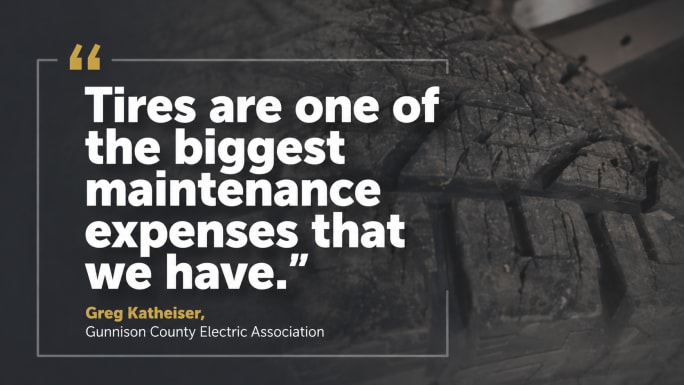
“Tires are one of the biggest maintenance expenses that we have,” Katheiser adds. “So, we do monthly inspections on tires — checking inflation, tread depth, and abnormal wear. We also look at the wipers, lights, and turn signals on a monthly basis.”
Fleetio’s Brianna Perry demonstrates how Service Advisor evaluates maintenance requests, identifies pricing anomalies, and provides the context fleet managers need to focus their attention on potential problems.
Fleet compliance isn't just about having policies — it's about consistently enforcing them. This practical guide reveals six hidden compliance risks common in public sector and shared fleet operations and outlines proven strategies to improve visibility, accountability, and audit readiness
Vincentric’s three-year, 60,000-mile projections reveal wide differences for both scheduled and unscheduled maintenance among selected vehicle categories. Projected maintenance visits also play a factor.
Keeping fleet vehicles on the road has become as important as buying them. Darren Bradshaw of Mopar North America explains how connected vehicle data, AI, and proactive service strategies are helping Stellantis reduce downtime and move closer to predictive maintenance.
Merchants Fleet has expanded its relationship with Pep Boys, increasing the service provider's role within its national maintenance network. The move is intended to enhance maintenance coordination and support commercial fleets through Pep Boys' nationwide footprint.
Fleet leaders have more data than ever, but turning that data into clear, actionable decisions remains a challenge. This white paper shows how leading organizations are using connected vehicle data to improve safety, reduce costs, and optimize fleet performance. Learn how to turn insight into action across your fleet.
Bobit Business Media surveyed 190 fleet professionals and found that while most fleets are tracking costs, fragmented systems and data gaps are keeping true TCO visibility out of reach. With rising pressure to control spend in an increasingly volatile environment, the gap between what fleets think they know and what the data actually shows is wider than you might expect. See how your peers are managing costs today and where the industry still has room to improve.