




Fleets Buying Sports/Utilities for Functionality, Not As Perks
Companies that have gone to SUVs use them when they are practical for the fleet application, for their sure-footedness in bad weather conditions, or their low depreciation. Some say SUVs give drivers a better sense of security.
Sport/utility vehicles (SUVs) may be taking the nation by storm but they're still just a trickle for fleets.
Fleets buy SUVs for more practical reasons - the utility part of the name, not the sporty part. SUVs go into a fleet to do a job, not present an image. That job may be to simply get from snowy point A to muddy point B in the field. Or it may be to get from an economic destination - a trek along the bottom line as a result of their low depreciation.
Needs of the job are the big consideration for a number of fleets.
"We don't arbitrarily offer SUVs -it's only on a specialized need basis," says one fleet executive who wished to remain anonymous. That includes winter driving conditions but only in those states with high snow accumulations. The one exception; drivers who work with Sun Belt farmers whose fields may be muddy.
What about image? "Not for this corporation," he snapped.
Dow Chemical, Midland, MI, buys SUVs "for the utility, not the sports side,' says Paul Zielinski, business travel manager. "We don't buy them for image. All are four-wheel drive," he says.
It's based on needs and utilization. If our salespeople serve folks in rural areas, then supervisors can authorize SUV acquisition. We don't really track cost comparisons,' Zielinski says.
Neither does Zeneca Inc. "It's the needs of the job that drive the decision, not image and not even costs," says Clive Armitage, manager of travel and transportation for the Wilmington, DE company. The SUVs are primarily in the agricultural products group.
Zeneca targets SUV use to areas where nothing else will do the job. Pickup trucks with four-wheel drive are offered for other applications.
"If a driver needs four-wheel drive, we provide him with a four-wheel-drive car rather than an SUV. We fleshed that out several years ago. We got smart on that a long time ago," Armitage says.
Cars with 4WD might be an alternative if larger vehicles become available, says Ron Sarno, manager of corporate services for Pfizer Inc., New York. Until then, Pfizer goes with mid-size SUVs.
"Drivers are not issued SUVS because they need more space. Nasty weather is the criteria," Sarno says.
"Actually, it's a combination of the terrain, the size of the territory, and weather for the pharmaceutical group," he says. The animal health group has drivers calling on far-flung ranchers and driving off the beaten path.
"The intent is to help our drivers get around safely and avoid being stranded. We buy SUVs for the four-wheel drive and functionality," Sarno points out.
So does Rhone-Poulenc Rorer. "We have limited use of SUVs to snowmobile territory," says Josie Sharp, fleet specialist for the pharmaceutical firm based in Collegeville, PA. "Image is not a primary consideration. The SUVs must be necessary for the territory or the job," she says.
Employees make the SUV call at Compaq Computer Corp. "We offer SUVs as a driver's choice. We see no real business need for them," says Joe Poznick, manager of worldwide fleet services.
"Our program offers a variety of vehicles to provide the driver with choice balanced with cost. It allows employees to get something that suits their business and personal needs. They share the cost of that," he says.
Even the higher operating costs associated with SUVs are factored in so that SUVs are "cost neutral" to Compaq. "Drivers make up the difference. That's fair because I believe it's more image for the driver than the company," says Poznick. "From the company standpoint, we're looking to fulfill a certain role to sell and service the customer and provide employees the right tools to do that. So we give the driver that flexibility from a selector point of view."
There are restrictions on how the SUVs are used. The biggest ban in on trailer hitches. "We don't allow them to tow things. There's extra wear and tear and incremental risk," he adds.
At McDonald's Corp., drivers are also expected to cover the additional expense of SUVs. "We charge the driver so the company remains whole," explains Sue Miller, senior fleet manager. "We don't give them SUVs for free. Drivers must upgrade to cover the expense difference between a standard company car and the SUV," she says.
On top of the SUV upgrade, there's also a provision to add options such as a sunroof and CD changer. Drivers can also opt for a V-8 instead of the standard V-6. Mercury Mountaineers are available instead of Ford Explorers. Most drivers take a highly contented Explorer, Miller says.
The SUVs are used mostly in the field making sales calls and checking on stores, real estate and construction. A solid 25 percent of the McDonald's fleet are sport/utilities.
There's a hidden advantage in the SUVs, McDonald's has found. "Drivers actually drive better in them. There's better visibility and people get a higher perception of safety. People feel more responsibility when they have to up upgrade with their personal money and they don't want to abuse that privilege and they care for them better. They want to buy them," Miller says.
A dissenter from the ranks of SUV admirers is David Lighthall, fleet and travel manager for Siemens Building Technologies in Buffalo Grove, IL.
"We're cycling through the SUVs we have but we're not acquiring any more. When a lot of different SUVs came on the resale market, values softened and we have other vehicles that are more cost-effective than SUVs," he says.
"We had been interested in them because they were cost-effective. Extremely high resale offset the acquisition and operating costs but resale values are not as good as they have been and SUVs are not as attractive.
"We stopped selecting them and will go back to full-size sedans," Lighthall says.
However, the SUVs were "extremely popular among drivers," Lighthall added. The full-size SUVs were equipped with four-wheel drive for resale considerations rather than for operational necessity. "The image was a nice byproduct."
Miller says one of the reasons for getting into the SUV business was the hot market for resale. "Quite some time age - in 1992 - we took that risk and it proved to be a very good one," she said.
As for that old devil image, Miller says, "Image is the overriding factor in providing a company car, period. That's why we allow drivers to select a specific vehicle and we limit how the vehicle is equipped."
What about the future? "SUVs will stay popular as long as gas prices stay low and you'll need a crystal ball to figure out how long that will be," opines Miller. "The market for SUVs hasn't totally peaked but we're cautious about future purchases. We try to watch publications and the market to adjust our selections."
More Operations
The Top 300 Commercial Fleets
The Top 300 Commercial Fleets: See the List
Read More →
Your Local Dealer Knows More Than You Think
Your local dealer can provide an information advantage that extends well beyond courtesy deliveries.
Read More →

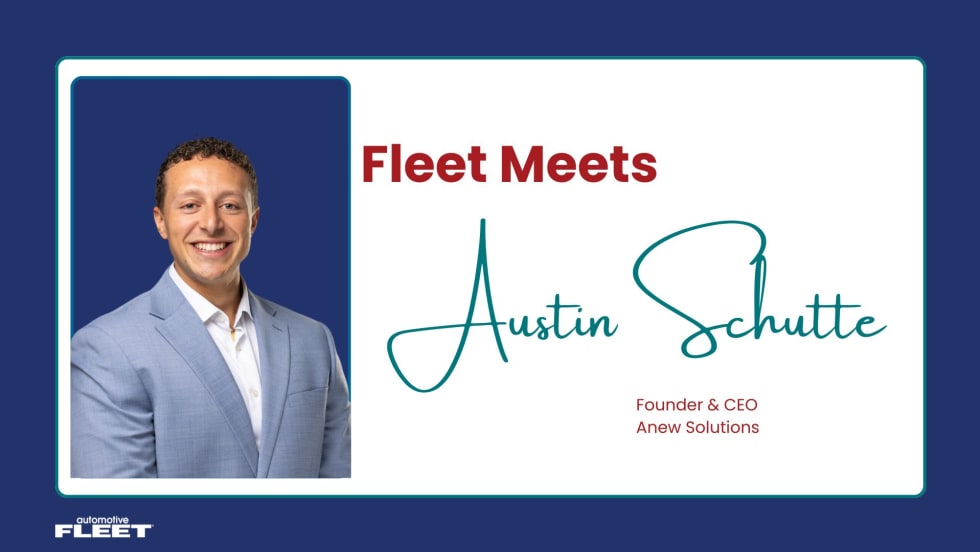
Fleet Meets: Austin Schutte
Here are some industry insights, personal touches, and words of advice from the CEO and Founder of Anew Solutions.
Read More →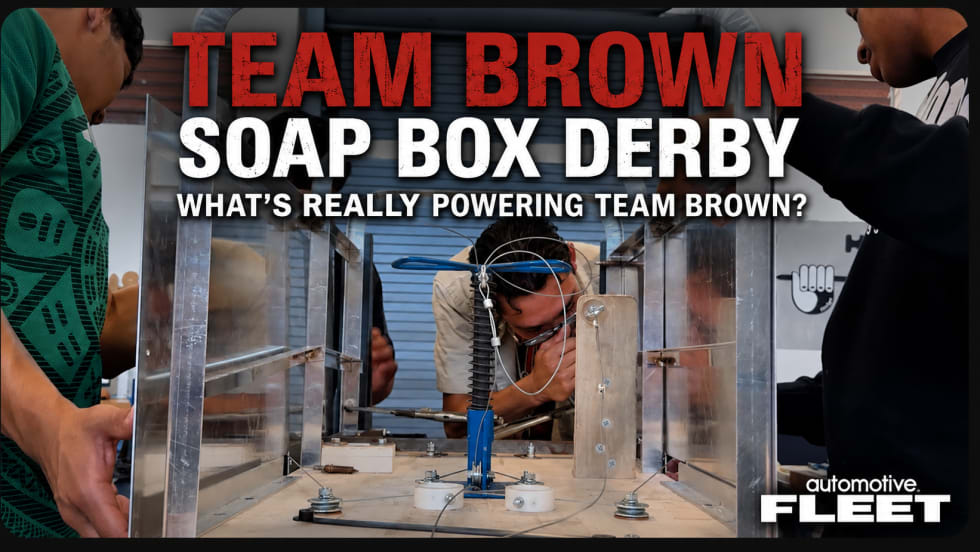
Soap Box Derby Challenge: What’s Powering Team Brown
The car is coming together, the students are solving real build problems, and the fleet industry is helping push Team Brown toward the starting line.
Read More →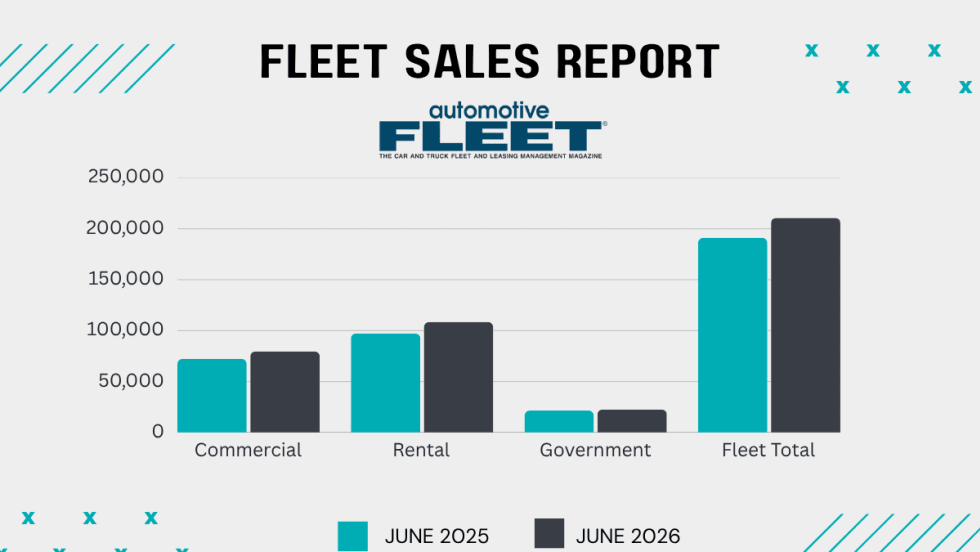
Commercial Fleet Sales Contribute To June, YTD Gains
The fleet sector has boosted its vehicle purchases at a reliable pace in the first half of this year compared with 1H 2025.
Read More →
What Fleet Managers Really Want From Vendors
From customer service frustrations and technology breakdowns to RFQs, change management, and the growing impact of turnover across the industry, this conversation pulls back the curtain on the real operational challenges fleet managers are navigating every day.
Read More →
Fleet Safety Masterclass: Industry Leaders on Storytelling, Strategy & Innovation
In this special masterclass episode, industry leaders break down what it really takes to build safer fleets in today’s increasingly distracted and data-driven world.
Read More →
Integrating Legacy Fleet Systems and Historical Data
In this episode, we bring together fleet and technology leaders to unpack the realities of data integration, system migrations, and the evolving role of AI in fleet management.
Read More →
From Resistance to Results: Change Management Strategies for Fleets
From new technologies and safety programs to evolving regulations, fleets are under constant pressure to adapt. But as Dr. Betz explains, success isn’t about the system you implement—it’s about whether your people actually use it.
Read More →