




Fleet Management Hasn't Changed
It’s an old adage, but believe it or not, it applies quite nicely to fleet management. Though sometimes it is tempting to say that the job of managing a fleet has changed dramatically, has it really?
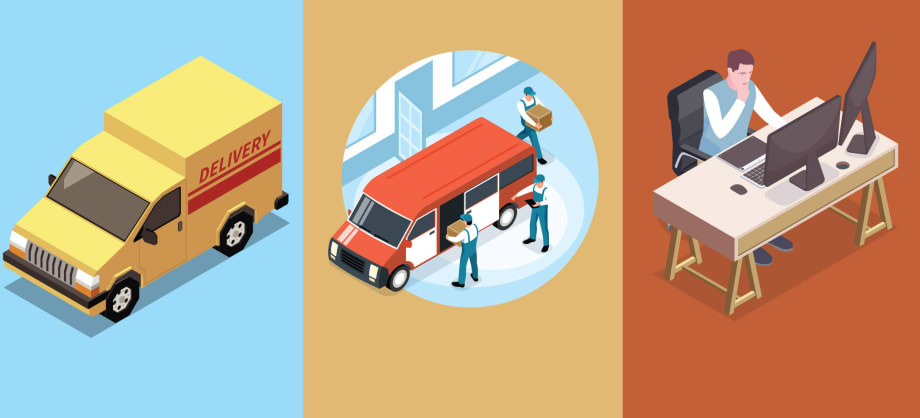
Developing a replacement policy, a budget, forecasting replacements, all of these basic fleet management functions are strategic, not tactical.
Photo via istockphoto.com/Marisvector.
The pace of technology as it applies to fleet management can sometimes be overwhelming. Telematics, alternative fuels, safety, and more seem to advance almost daily, and it’s no small task just to keep up. Much has been said and written about the “changing role of the fleet manager” — that somehow, the foundational mission of the fleet manager is undergoing change like never before, and that fleet managers today are facing change and new technology that past fleet managers didn’t have to deal with.
Well, I’m here to tell you that this is simply not true. And I have a sports analogy that helps explain why.
Bobby Jones was playing at his peak back in the mid to late 1920s. He is generally considered to be one of, if not the, greatest golfers in the history of the game. Jones played golf with clubs with shafts made of hickory wood, balls that were often not precisely round, clubheads made of persimmon wood, and grips that were strips of leather wrapped around the shaft.
Today, in 2019, Dustin Johnson plays golf with clubs with shafts made of graphite, club heads engineered out of titanium, irons with club heads half again larger than anything Jones used. Now let’s ask the same question we’re addressing here: has the game of golf changed? Has new technology changed it? No, to both questions. Golfers today, like Johnson, have the exact same goals Jones had nearly a century ago: hit the ball from tee to cup in as few strokes as possible.
Now, let’s apply that analogy to fleet management. Fleet managers today have access to technology, data, and other tools that fleet managers only 25 or 30 years ago could only dream of. Telematics gives them real time data, in detail that would boggle the mind of a fleet manager back then. Reporting? Creating reports is often just a matter of choosing what data to see, filtering for date range and other items, and clicking. Speccing vehicles is automated, as opposed to sitting down with a thick spec book, a green sheet, and a calculator.
Same questions: has the role of the fleet manager changed? Has modern technology changed it? As with our golf analogy, the answer is again, no. The goal of the fleet manager in 1980 is precisely the same as that in 2019: choose vehicles that are capable of completing the mission, and operating them in the safest and most cost efficient manner possible.
Tactical vs. Strategic
I’d like to start with the notion expressed by a number of fleet management experts that the role of the fleet manager is evolving from a tactical to a more strategic one. I’m not sure what the basis for this idea might be. Fleet managers have always, at least in my experience, been strategic in their outlook.
Long term planning has always been an integral part of the job. Developing and implementing fleet policy and processes; what fleet manager in any decade hasn’t had to address this challenge? As strategic as it gets, regular updating is a critical part of such activity. Developing a replacement policy, a budget, forecasting replacements, all of these basic fleet management functions are strategic, not tactical. And fleet managers have had to perform these tasks since the profession was in its infancy.
What today’s fleet managers have, however, that they didn’t have in the past is myriad data, information that simply wasn’t available back then, or that became available days, weeks, sometimes months after the fact. Today, data is available real time, or near real time, which makes managing a fleet more effective and immediate. But that is a good example of the idea that it is the tools that are available that have and will continue to change, not the role.
Indeed, one could make the case that the ability to outsource administrative and clerical functions, along with the new tools to capture and mine data, actually make the job easier than it’s ever been.
What’s More Important than Ever?
Sometimes, people tend to look at today’s challenges as the first time they’ve arisen. Dealing with challenges is only different, not new. In 2008, pump prices went from a July peak of $4.15/gallon for regular unleaded before plummeting to as low as $1.72/gallon by November. How on earth does a fleet manager budget for fuel, the No. 1 operating cost, with insane price swings like that?
Photo via Gettyimages.com/ysuel.
Recently, another fleet expert mused that rising vehicle costs and interest rates will force fleet managers to consider ‘rightsizing’ of their fleets to become more and more important. More important than what? Rising interest rates? Perhaps the speaker should look back to the early ‘80s, when interest rates were well into the double digits with prime rate hitting an astonishing 21.5% in December of 1980.
Changes in interest rates aren’t a new phenomenon, and fleet managers have had to deal with it for 50 years. Rising vehicle costs? Perhaps I’ve forgotten that period when fleet managers didn’t have to deal with rising vehicle costs.
Sometimes, people tend to look at today’s challenges as the first time they’ve arisen. Well, dealing with challenges is only different, not new. Take fuel prices, for instance. In 2008, pump prices went on a wild ride, from a July peak of $4.15 per gallon for regular unleaded before plummeting to as low as $1.72 per gallon by November. How on earth does a fleet manager budget for fuel, the No. 1 operating cost, with insane price swings like that?
Well, how about no gas at all? Fleet managers had to deal with the twin oil shocks of ’72 and ’79, the latter where stations ran out of supply regularly, and the government instituted the infamous “odd/even” license plate rules, where every other day, vehicles whose license plates ended with either odd or even numbers were able to purchase fuel. Lines for blocks, even violence at the pumps were not unusual. Fleet managers have had to deal with the challenges of fuel prices as long as gasoline has been sold. It isn’t anything new today.
Today, and for the past several years, interest rates have been relatively stable, as have fuel prices. With the U.S. now a net exporter of petroleum products, fleet managers have a much easier time budgeting and forecasting fuel costs.
No More Cars?
Along those same lines, it has been further thought that this rightsizing in the face of changing OEM product lines bring about new challenges for fleet managers, as they must attempt to fit these new products into their selector decisions. That begs the question “when haven’t they been?” Isn’t choosing the right vehicle for the job size wise and otherwise a fundamental job of fleet management? And haven’t fleet managers always had to deal with changing OEM product lines?
Harkening back to the 1979 OPEC embargo, OEMs came out with brand new transverse engine, front wheel drive compacts, and fleet managers had to consider rightsizing their selectors to address those higher fuel prices and lack of supply. Minivans made their appearance in the early ‘80s, and crossovers began to supplant traditional SUVs soon thereafter. How about new vehicle technology? Today, we have telematics, lane intrusion warnings, backup cameras, cocooning air bag systems, and passive braking systems. The introduction and enhancement of vehicle technology proceeds at a dizzying pace.
But what about the following, all new technology at one time or another, for fleet managers of the past?
Torsion bar suspensions
Electronic ignition
Fuel injection
Seat belts
Air bags
McPherson strut shocks
Four wheel disc brakes
Steel belted radial tires
At one point, fleet managers had to determine whether the new technology was worth the extra cost, and dealt with the possibility of added maintenance and repair costs. Yes, the list above sounds almost laughably antiquated but for a fleet manager in the ‘60s or ‘70s; dealing with them all was every bit as challenging as dealing with telematics data is today.
Is The Role Really Changing?
So we’ve essentially circled back to the original question: Is the role of the fleet manager truly changing? Let’s go back over the key points covered so far:
Are OEM product lines changing? Absolutely! At least two major OEMs have announced their moving product portfolios away from traditional automobiles to crossovers, trucks, and vans.
Must fleet managers learn to cope with such changes? Of course they do, as they always have since the profession was established. Does this challenge somehow change the role of the fleet manager? No, it does nothing of the kind.
Technology, vehicle as well as business technology, are advancing at a sometimes dizzying pace. Telematics, connected vehicles, real time data, all of these advances and more require fleet managers to keep up, and make decisions that may have to change almost daily.
Is this the first era of technology advances in automotive and fleet management history? Certainly not. Again, do advances in technology alter the basic mission of the fleet manager? No.
Basic variable and fixed costs vehicle pricing, interest rates, fuel and maintenance costs are changing.
But this is nothing new, either. Fleet managers have always had to deal with the challenge of cost variables changing. But having to do so has nothing to do with the basic mission of the fleet manager.
The purpose of this article isn’t to denigrate the challenges of today’s fleet managers; it is to point out that fleet management, and fleet managers, have always had to deal with challenges, have discovered new tools to help do the job, and that change isn’t new, it’s just different.
It isn’t unusual for contemporary business to sometimes view today’s challenges as somehow unique, or that dealing with change is something new, that alters the requirements of the job. But if we look at this carefully, it is quite clear that what is changing isn’t the basic job mission, but rather the tools used, and the vehicle technology advances that change.
Whether it’s four-wheel disc brakes, or telematics/connected vehicles that represents the change, the basic job remains the same today as it was decades ago; incorporating changes into the mission.
More Operations

Avis Budget Group Deploys Neology Toll Management Technology Across Major Brands
Neology’s neoFleet platform will manage toll transactions and toll-authority operations for vehicles across Avis, Budget, Payless, Budget Truck and Zipcar.
Read More →
Fleet Personal-Use Charges Edge Higher in 2026
Nearly eight in 10 surveyed fleets allow personal use of company vehicles, while just over half of respondents report charging employees for the privilege.
Read More →
The Future of Fleet + What’s Changing Right Now | AF News Recap
Could developments overseas offer a preview of what’s coming for U.S. fleets? This week, we’re looking at the future of AI, autonomy, and electrification, plus Ford Pro’s new certified pre-owned program, smarter vehicle offboarding, and a new way for fleets to manage toll expenses.
Read More →
How to Handle Vehicle Offboarding
What do fleet managers need to do when a driver leaves?
Read More →
Fleet Manager’s Ultimate Playbook: Navigating the New Standard in OEM Connectivity
Rising operating costs, driver safety concerns, and unplanned downtime are putting unprecedented pressure on modern fleets. Discover how fleet managers use embedded OEM connectivity and real-time vehicle data to cut TCO, prevent downtime, and protect drivers without aftermarket telematics hardware.
Read More →
U.S. Bank Adds Verra Mobility Toll Management to Voyager Fleet Platform
The integration allows U.S. Bank Voyager fleet customers to manage toll payments and violations alongside fuel, EV charging and maintenance expenses.
Read More →
ADAS Prevents Crashes. But Repairs Cost More | AF News Recap
ADAS-equipped vehicles may crash less often, but they can cost more when they do. This week, we’re breaking down what that tradeoff means for fleets, plus Subaru’s first Forester Wilderness Hybrid, Nissan’s new e-POWER Rogue, and why Calstart has become Catalyst Mobility.
Read More →
Moventum Fleet Management Names Mark Iorillo Head of Sales
Iorillo brings nearly 20 years of fleet management and sales experience to the role, including previous positions at Element Fleet Management, CEI, Donlen and Ryder.
Read More →
Fleet Has a Talent Pipeline Problem. What Comes Next? | AF News Recap
Where will fleet’s next generation of leaders come from? This week, we’re looking at the industry’s talent pipeline, what certification can add to a fleet career, how to build an award-worthy track record, and the return of Automotive Fleet’s Personal Use Survey.
Read More →
Smith System Launches Driver Risk Management Program
Fleets have more driver data than ever, but identifying risky behavior doesn't necessarily correct it. Smith System's new Driver Risk Management program combines monitoring, training, and follow-up coaching to help fleets connect risk signals with driver intervention.
Read More →