



Special Report
Fleet Management 2025 Forecast: Productivity Tools
Fleet Management 2025 Forecast: Vehicle Maintenance
Fleet Management 2025 Forecast: New Vehicle Purchasing
Fleet Management 2025 Forecast: Fleet Taxation
 MENU
MENU SEARCH
The industry consensus is that fleet license & title services will become more expensive in future years as vehicle registrations are blocked for unpaid tolls & violations. Transaction fees will increase to offset DMV budget shortages.
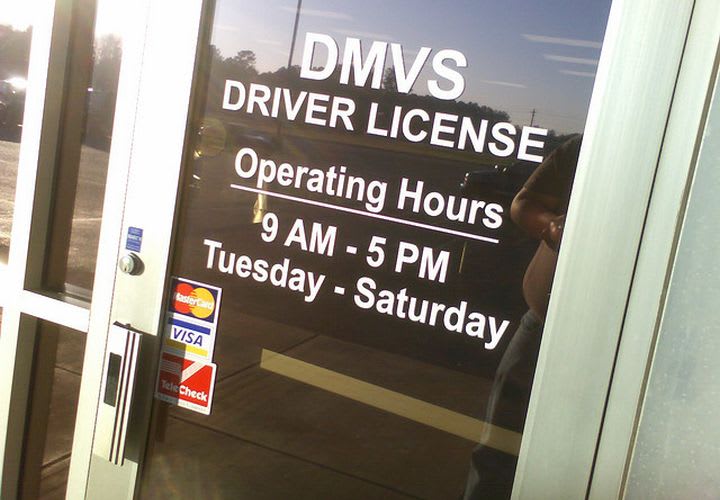
Photo via Chris Harrison/Flickr.
Photo via Chris Harrison/Flickr.
In the next 10 to 15 years, vehicle registrations will increasingly be used by states to leverage the collection of unpaid tolls, traffic violations, and personal property taxes.
As more DMV services migrate online, there will be increased challenges to obtain licensing information while safeguarding individual privacy and authorization verification to comply with security protections as specified by the Patriot Act.
Here are the top trends identified by subject-matter experts that will impact fleet license & title services in the next 10 to 15 years:
1. Increase in Required DMV Documentation
“In response to growing concerns around fraudulent transactions, DMVs are requesting additional documentation from fleet companies and drivers. Depending on the state, DMVs request various forms of address and identity verification, including driver licenses, business cards, utility bills, and leasing licenses. In an era of increased security threats, government offices are taking extensive precautions to protect against falsified information. The past few years have brought an influx of requests from across the country, with additional jurisdictions likely to follow suit,” said April Music, senior operations leader at GE Capital Americas.
2. Increased Security
“There will be increased focus on security and authorization verification,” said Brad Kacsh, director of licensing services at Donlen.
3. Increased Privacy Safeguards
“There will be more stringent regulations around release of vehicle licensing information. The Patriot Act presents new challenges in obtaining licensing information, which means FMCs could become more reliant on customers to gather vehicle information,” said Melissa Hess, director, licensing & compliance at ARI.
4. More States Blocking Registration
“It is becoming more and more common for states to block registrations for unpaid tolls and violations, as well as unpaid personal property taxes. With continued enhancements in data sharing and the importance of additional revenues, states and jurisdictions will continue to gain more leverage in the collection of fines, fees, and taxes,” said Hess of ARI.
Other subject-matter experts similarly see increased use of registration renewal blocks.
“There will be increased registration renewal blocks or registration suspension due to unpaid violations, particularly tolls,” said Kacsh of Donlen.
5. Enhanced Enforcement of Tolls and Traffic Violations
“We expect that recent trends in toll and violation enforcement will continue. We are seeing stiffer fines that escalate much more quickly. We are also seeing increases in registration renewal blocks, booting, and more extreme enforcement, such as the impounding and banning of vehicles on toll roads until outstanding fines are resolved. We would also expect to see states share toll and violation data more efficiently along with legislation that will allow enforcement of unpaid tolls across state lines,” said Hess of ARI.
6. Enhanced Red-Light Cameras
“In addition to the current use for red light and toll violations, cameras, and monitoring systems will track speeding, cell-phone use, and other on-the-road violations,” said Eric Crooks, director of operations, license and title at LeasePlan USA.
7. Toll Road Interoperability
“Toll road interoperability will continue to progress as more and more states figure out ways to share data that allows drivers to travel through several states using only one transponder or tolling account,” said Hess of ARI.
8. Increased DMV Turnaround Times and Fees
“Transaction fees will continue to rise as DMVs work to offset budget deficiencies. State shortfalls have decreased DMV funding, a trend expected to continue in the years ahead. Cutbacks result in compressed business hours, staffing shortages, office closures, longer lines and wait time. While simpler processes, including registration renewals, have remained generally unaffected, complex transactions require additional processing time. Holidays and government furloughs add to these delays, as DMV personnel work through backlogs. Fleet management companies are proactively adjusting internal processes to accommodate new turnaround times with minimal impact to the customer,” said Music of GE Capital Americas.
9. International Fuel Tax
Agreement (IFTA) & International Registration Plan (IRP)
“There will be an increase in electronic mileage and driver reporting platforms. Paper driver logs are quickly becoming a thing of the past. We expect to continue to see clients convert to telematics solutions to manage both vehicle trip reporting and driver hours-of-service,” said Hess of ARI.
10. Increased Electronic Transmittal of DMV Information
“As we look into the future of fleet, we’ll see the electronic transmittal of all information. This dramatic shift will eliminate registration cards and stickers, speeding violations, and perhaps even the physical tollbooth. This move to electronic transmittal will most likely increase road taxes, and enable scanning of license plate for red-light violations or road infractions. It also means the ability for agencies in various states to easily communicate with one another.
“The electronic transmittal of information may happen through vehicle identification number (VIN), which allows license plate information to be stored in a vehicle device, which communicates to the DMV. This device will also have a database of pertinent information such as vehicle owner address, taxes paid, last inspection, oil change, registration information, etc.
This will eliminate the need for drivers to have to carry registration cards or stickers. The driver will need to keep his or her information updated via the input device in the vehicle. The DMV will know when the registration expires and can either notify the driver via a smartphone, allowing the driver to pay via credit card or corporate account. This technology will also allow law enforcement to scan a license plate and know if a vehicle’s registration has expired. Electronic authorization of prerequisites will eliminate the need for paper.
“This functionality will also automate state-to-state transfers. By keeping information updated within the vehicle, the driver will be prompted if a state-to-state transfer should occur. If the driver indicates that a transfer should take place, all of the transferring of information and prerequisites would happen without driver involvement or long waits at a DMV. If a VIN inspection or some other physical check is needed, the system within the vehicle would notify the driver, similar to the oil change notification within cars today.
“Another area of evolution includes traffic violations. The data within a vehicle’s telematics device will recognize the posted speed limit on the road and if necessary, issue the violation.
“Lastly, physical tollbooths will be a relic of the past. Through license plate information alone, toll agencies will be able to bill a personal credit card or corporate credit card without needing a transponder or needing a driver to pay cash,” said Kim Iwanowski, director – licensing and regulatory compliance at Element Fleet Management.
11. Expansion of Online Services, DMV Kiosks & Mobile Locations
“In an effort to combat overcrowding at DMV offices, states are turning to technological solutions.Web-based programs provide an online option for registration and license renewals. Self-service kiosks are another tool for reducing DMV wait time and congestion. State-of-the-art kiosks examine driver license photos using biometric technology for facial recognition, thereby reducing fraud and identity theft. Mobile DMVs bridge the gap for communities impacted by office closures. Mobile offices provide relief to main DMV branches, cost savings, and convenience for customers who otherwise would travel for services,” said Kathy Damson, state relations specialist for GE Capital Americas.
12. All Vehicle Titling Done Online
"With the growth of electric processing, all titles will be done online. Lien releases, title amendments, and state changes will be handled through an automated system in all 50 states," said Cheryl Horn, director of fleet resources at Merchants Fleet Management.
"This will help reduce fraud as well as the paper trail that needs to be traced when a duplicate title is needed or the purchase of a company has taken place. This will reduce DMV expenses in the long run and allow fleets to stay up-to-date on their state changes in a quicker and more efficient fashion. The purchase and remarketing of vehicles will happen much faster as well, which will help reduce violation fees. As the tolling authorities merge and have interstate toll record keeping up to date, this will assist in fighting disputed tolls," Horn said.
13. Goodbye License Plate Decals
“We may see an elimination of the annual decal sticker on license plates and an automation of on-the-road systems to track validity of vehicle registrations,” said Crooks of LeasePlan USA.
14. More States will Transition to Electronic Titles
“In lieu of the traditional paper title, state DMVs are transitioning to electronic titles for convenience and cost savings. Nineteen states participate in an Electronic Lien & Title system (ELT), and 10 have ELT initiatives underway. Nine states have made ELT mandatory for lenders, with others soon to follow. The American Association of Motor Vehicle Administrators (AAMVA) discussed ELT benefits, including fraud reduction, ease of processing, and potential cost savings. The AAMVA is working towards an electronic lifecycle, a change that would eradicate paper titles altogether. Budget constraints and variances in DMV systems pose challenges and will delay the realization of this concept for years,” said Damson of GE Capital Americas.
This forecast was also made by Kacsh of Donlen, who cited the “increasing number of states offering or requiring electronic lien and title.”
15. New Registration Rules for Autonomous Vehicles
“California is already looking at new registration rules and regulations for autonomous vehicles. We are already starting to see vehicles equipped with this technology hit the road. Taxes on these vehicles will change as will the registration laws but these regulations are still under review,” said Horn of Merchants Fleet Management.

Neology’s neoFleet platform will manage toll transactions and toll-authority operations for vehicles across Avis, Budget, Payless, Budget Truck and Zipcar.
Read More →
Nearly eight in 10 surveyed fleets allow personal use of company vehicles, while just over half of respondents report charging employees for the privilege.
Read More →
Could developments overseas offer a preview of what’s coming for U.S. fleets? This week, we’re looking at the future of AI, autonomy, and electrification, plus Ford Pro’s new certified pre-owned program, smarter vehicle offboarding, and a new way for fleets to manage toll expenses.
Read More →
What do fleet managers need to do when a driver leaves?
Read More →
Rising operating costs, driver safety concerns, and unplanned downtime are putting unprecedented pressure on modern fleets. Discover how fleet managers use embedded OEM connectivity and real-time vehicle data to cut TCO, prevent downtime, and protect drivers without aftermarket telematics hardware.
Read More →
The integration allows U.S. Bank Voyager fleet customers to manage toll payments and violations alongside fuel, EV charging and maintenance expenses.
Read More →
ADAS-equipped vehicles may crash less often, but they can cost more when they do. This week, we’re breaking down what that tradeoff means for fleets, plus Subaru’s first Forester Wilderness Hybrid, Nissan’s new e-POWER Rogue, and why Calstart has become Catalyst Mobility.
Read More →
Iorillo brings nearly 20 years of fleet management and sales experience to the role, including previous positions at Element Fleet Management, CEI, Donlen and Ryder.
Read More →
Where will fleet’s next generation of leaders come from? This week, we’re looking at the industry’s talent pipeline, what certification can add to a fleet career, how to build an award-worthy track record, and the return of Automotive Fleet’s Personal Use Survey.
Read More →
Fleets have more driver data than ever, but identifying risky behavior doesn't necessarily correct it. Smith System's new Driver Risk Management program combines monitoring, training, and follow-up coaching to help fleets connect risk signals with driver intervention.
Read More →