




Fleet Liability for Add-On Equipment
Employers put themselves and others at great risk when they fail to train their employees on the proper use of equipment. Failure to ensure that employees fully comply with equipment use policies can compound the liability risk.
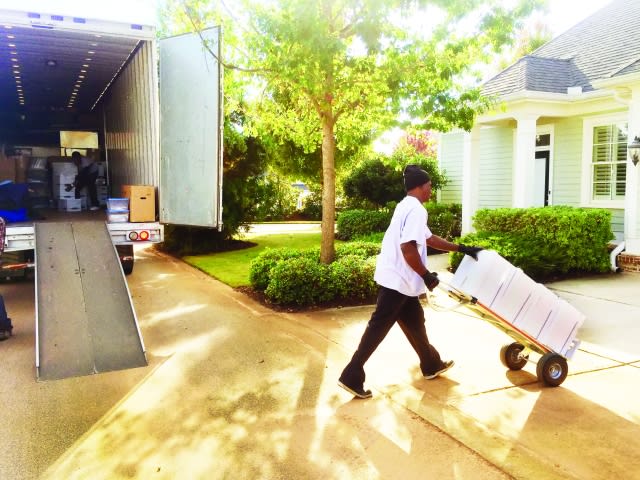
One way to reduce the liability of add-on equipment is to regularly review how equipment is used and whether it is needed. (Photo: Getty Images)
Statistics support the fact that driving a truck continues to be one of the most dangerous occupations in the United States. Snowy conditions, rain, and long hours can combine to create a variety of hazards. While weather conditions cannot be controlled, companies and drivers often create other significant risks, which could be avoided.
Improper use and malfunctions of add-on equipment can and often do cause injuries that can easily be avoided. Companies can face negligent entrustment, negligence, workers’ compensation claims, and other liability when someone is injured by faulty or improper use of equipment.
Enforcing Equipment Procedures
Failure to follow established procedure is one of the most common ways in which liability is created. In Bush v. Mid-South Baking Co. LLC, a recent case before the United States Court of Appeals for the 5th Circuit, a driver failed to follow the proper procedures in using the truck’s ramp, a common piece of add-on equipment.
Two drivers were attending the truck. One of the drivers was setting up traffic cones while the other driver made the delivery. As the driver placed one of the cones, a red Camaro hit the ramp, resulting in serious injuries to the passenger in the car.
The court upheld the lower court’s finding that the company was 25% liable for the accident while the driver of the Camaro was 75% liable. That 25% liability could have been avoided if the drivers had simply followed company protocol. The drivers failed to complete the process of placing the cones as required by company policy before beginning the actual delivery.
Dealing with Defective Equipment
Equipment that is known to be malfunctioning or failing to fix broken or damaged equipment is another common cause of liability. In Gregory v. Pearson, a worker was acting as a spotter at a landfill. Another employee drove a mobile trash compactor near the worker in violation of the landfill policies, which required a minimum 20-foot distance between mobile compactors and spotters.
The backup camera on the vehicle did not provide sufficient visibility to the driver. In fact, the defect from the camera had previously caused the mobile compactor to collide with other equipment.
While backing up, the driver ran over the spotter with the mobile compactor and drove the worker into a pile of trash. The spotter later died from the injuries. The administrator of the spotter’s estate filed a workers’ compensation claim against the employer, a temporary employment agency, and a negligence and wrongful death claim against the county that contracted with the agency.
This tragedy was preventable. A policy requiring the reporting of equipment malfunctions promptly and following procedure would have saved the spotter’s life and protected the county and agency from liability.
A great deal of risk and potential liability can result from improper use of add-on equipment or ignoring faulty add-on equipment. Employers put themselves and others at great risk when they fail to train their employees on the proper use of equipment. Failure to ensure that employees fully comply with equipment use policies will compound the liability risk.
Accidents in the Trucking Industry
According to the Occupational Safety and Health Administration (OSHA), workers in the trucking industry experience the most fatalities of all occupations and account for 12% of employee deaths.
Truck drivers also have more nonfatal injuries than workers in any other occupation. Half of these injuries are serious strains and sprains most frequently caused by the loading and/or unloading of goods.
Employer Responsibilities
OSHA’s General Duty Clause requires employers “to provide a safe and healthful workplace that is free from serious recognized hazards.” While add-on equipment can often help promote a safe workplace environment, malfunctions and human error can easily transform these useful tools into hazards.
To avoid liability and attempt to provide a safe work environment, employers should consider:
Periodically reviewing the need for all add-on equipment. Employers, managers, and drivers must be aware of how add-on equipment should be used and any conditions under which the equipment is not considered safe to use. If management does not understand how or why a piece of equipment is safely used, then it cannot create effective policies and procedures regarding that equipment.
Developing and/or updating policies concerning equipment use. All companies should have policies about the proper and improper use of add-on equipment. These policies should be regularly updated to ensure that they are applicable to the equipment that is actually in use.
Creating a reporting system for faulty equipment. Employees should be able to clearly and promptly report that equipment is malfunctioning and how it is malfunctioning. Immediate reporting should be required. Likewise, prompt repair should be a priority for the shop staff or any outside vendor.
Instruction on and proper use of add-on equipment. Having policies is pointless if they are not publicized or if they are ignored. Toleration of violations of these policies without correction virtually assures injuries and probably liability in any subsequent lawsuits. Regularly update employees on policies for use of equipment and clearly explain any changes in procedure. Document the fact that employees have been trained. Discipline employees that do not follow procedure. Employees should not modify equipment as any modifications may invalidate manufacturers’ warranties and release them from liability for injuries.
These simple steps to assure that all drivers are knowledgeable about add-on equipment use and the danger of improper use or ignoring faulty equipment can help companies avoid the risk of legal liability.
Originally posted on Work Truck Online
More Global Fleet
GeoFencing Adds to Your Truck Security Arsenal
Geofencing is a familiar fleet tool today, but its early adoption marked a major shift in vehicle tracking, route monitoring, and the debate over employee privacy.
Read More →
Holman Takes Full Ownership of ARIZA in Mexico
Holman is bringing its Mexican fleet management operation fully under its own brand after more than 30 years as a joint venture. The change gives multinational fleet customers a single Holman operation across the U.S., Canada, and Mexico.
Read More →
5 Tire Maintenance Tips to Help Prevent Work Truck Downtime
Regular tire checks can do more than extend tread life. These five maintenance practices can help work truck fleets catch problems early, reduce costs, and prevent downtime.
Read More →

Proven Ways to Reduce Work Truck Downtime
The age-old problem of downtime will always be a reality, but with new strategies at hand, fleets have more ways to keep trucks on the road longer.
Read More →


Cameras, Safety and Insurance: From Reactive Claims to Real-Time Prevention (Part 2 of 2)
Part Two: Commercial auto remains one of the most challenging and costly lines of coverage for fleet operators and insurers alike. Continue learning more about how to effectively address these issues from Onur Aksan, Enterprise Business Development Executive, Geotab
Read More →
Cameras, Safety and Insurance: From Reactive Claims to Real-time Prevention
Commercial auto remains one of the most challenging and costly lines of coverage for fleet operators and insurers alike. Learn more about how to effectively address these issues from Onur Aksan, Enterprise Business Development Executive, Geotab.
Read More →
Fleet Costs Are Rising: Here’s How Leaders Are Responding
Fleet leaders are under pressure to reduce costs, adapt to economic uncertainty, and make smarter decisions. See how peers across North America are responding with real data, proven strategies, and forward-looking insights. Download the 2026 Market Pulse Report to benchmark your strategy and uncover where you can gain an edge.
Read More →
Enterprise Fleet Management Surpasses 900,000 Vehicles in U.S. & Canada
Enterprise Mobility connects with mobility solutions around the globe
Read More →