




Fleet Helps Safelite Foster Profitable Growth and Satisfaction
An environment of mutual respect and cohesiveness allows Safelite AutoGlass to effectively handle a $50 million fleet expense budget. The company reduced its accident rate by 45 percent and cut costs as much as $4.5 million per year in spite of a 66-percent fleet growth.

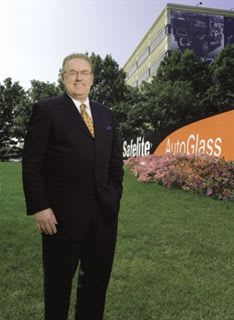
Founded in 1947, Safelite AutoGlass has served fleets across the country for more than 60 years. The company has grown from a single store in Wichita, Kan., to a national vehicle glass provider that serves more than 3.5 million customers per year with a focus on constant improvement.
Safelite's primary goal is to be America's "natural choice" for vehicle glass repair and replacement services. Through 24-hour instant scheduling, in-shop or mobile service, top-of-the-line materials, well-branded vehicles ("mobile billboards"), and SafeTech certified technicians, Safelite AutoGlass strives to maintain a leadership role in offering superior customer service, value, and quality.
The company's fleet of 5,100 vehicles, as well as its bailment pool of 200 units, are primary tools to achieve its service goals.
The fleet is comprised of cargo and express vans (80 percent) used for vehicle glass replacement, repair, and delivery; delivery trucks (5 percent) for large capacity windshield deliveries to company and wholesale locations; and sedans (15 percent) for field associates in the areas of sales, operations, and windshield repair. In the repair and distribution segment, the company also has a small percentage of compact pickups.
"Our culture is one that fosters teamwork and collaboration among all associates at every level to achieve goals," said Tom Feeney, president and CEO of Belron US, the parent company of Safelite AutoGlass. "Associates understand company goals and their part in achieving them."
Management support is evident at Safelite, beginning with an open-door policy and a willingness to listen to all associate ideas. All associates are treated with dignity and respect. Safelite promotes from within, and the company encourages associates to try new things to expand job knowledge and satisfaction.
[PAGEBREAK]

Safelite's fleet team includes Erin Gilchrist, fleet manager; Chris Armstrong, lead fleet administrator; Dea Lobdell, fleet administrator; and Gypsie McManus, fleet administrator.
Gilchrist, who heads the team, is responsible for fleet vendor relations and oversight of all fleet operations. She oversees the company's leasing agreements, fuel program, vehicle registration renewal, maintenance, reporting, vehicle deposition, annual budget process, fleet tracking, vehicle order process, and field communication/training.
"Our environment is one of mutual respect," Gilchrist said. "We work together effectively and efficiently to service our customers. We divide the workload, yet still work together to communicate progress and achieve our goals."
Safelite's annual fleet expense budget is more than $50 million, which supports leases, maintenance, fuel, collision, and vehicle registration and renewal. The team meets weekly to discuss overall workload progress, including day-to-day activities, monthly tasks, and short- and long-term project status.
[PAGEBREAK]
The fleet team views its relationship with senior management critical to ultimate success.
"Our fleet team has an open and comfortable relationship with our senior managers," Gilchrist said.
The team's communications are informative and pointed, and members optimize time with senior management to keep them informed and achieve buy-in and support for the team's goals.
Fleet also works closely with the finance and accounting teams to manage and prepare their annual budget.
"This partnership is a good combination of their expertise and our industry experience to tackle both our strategic and tactical workload," Gilchrist said.
Another key partnership for fleet is with the risk department. Gilchrist serves on the risk department's Safety Council, and the director of risk to whom Gilchrist reports, serves on the Fleet Council.
"This combines critical fleet and safety initiatives, driven by the members of these councils, our customers, who are the users," she said. "Users are defined as field managers at all levels, from fulfillment operations, sales, distribution, and security."
Other key internal fleet partnerships include all levels of field management and human resources.
Externally, fleet's relationships with vendors for leasing, maintenance, fuel, and vehicle upfitting are all critical to the company's growth and success.
"We are very proud of and excited about the relationships we have with these companies and continue to work on key initiatives with each of them to achieve our goals," Gilchrist said.
Feeney wholeheartedly agrees and believes senior management should advocate for fleet initiatives, especially to drive process compliance.
"Processes create consistency, consistency drives compliance, and compliance drives a culture of success," Feeney said. "Senior managers have the respect and attention of the field managers and drivers they manage; therefore, they should consistently push for a culture of safety and process compliance. We all have a stake in this, and endorsements from senior management to achieve the goals of the risk and fleet teams go a long way."
[PAGEBREAK]
Safelite's business is 80-percent mobile and a national footprint covering more than 90 percent of the United States. Belron, its parent company, operates in 28 countries and four continents, and is the largest vehicle glass repair and replacement company in the world.
Belron's acquisition of Safelite in early 2007 positively impacted Safelite's fleet operations.
"Belron provides global operations with resources unparalleled in the industry," Feeney said. "The company provides financial support for investments and is passionate about sharing best practices throughout the world — a process that fosters associate satisfaction, profitable growth, and most importantly, customer delight."
Safelite's mission is to become the "natural choice" for vehicle glass repair and replacement services in the United States. "To do that, our company must continue to grow both organically and through targeted acquisitions, and as a result, our fleet will continue to expand," Feeney said.
To help facilitate this growth effectively, the fleet team has implemented the following best practices:
■ Open communication.
■ Excellent customer service.
■ Fleet Council: a customer user group from all levels of the organization, as well as vendor representation, led by the fleet manager.
"We tackle a variety of topics to increase efficiency, reduce costs, and drive continuous improvement," Gilchrist said. "A different facility hosts the quarterly meeting to increase our exposure to our customers' needs and include a different field management team to add to the experience of our core members, who agree to a three-year term."
■ Planning and organization concerning workload and customer needs support.
"One key best practice in this category is our bailment pool that ensures we have units on hand, ready for dispatch, to handle our growing and ever-changing fulfillment operation's needs," Gilchrist said.
■ A focus on continuous improvement and moving toward a more sophisticated approach to communication, service and reporting.
■ A mechanism that allows drivers to provide feedback on fleet operations.
"We post a 'How is my driving?' message on all our retail and wholesale vans to solicit feedback on how the fleet is being operated," said Gilchrist. "We use the calls that come in to help reinforce our driver and customer service training."
[PAGEBREAK]
Another key best practice involves safety. Safelite's fleet drives in excess of 100 million miles annually, and a large percentage of its operators are certified vehicle glass technicians first and drivers second.
The company understands the importance of emphasizing safe work practices. Approximately five years ago, the risk management and fleet teams created and implemented new initiatives to improve driver selection, require driver's training for all drivers, and put into place amended vehicle specifications to reduce vehicle accidents.
Even though Safelite's vehicle count has increased from 3,000 to 5,100, safety program results show a 45-percent decrease in the company's vehicle accident rate.
Other major factors that have contributed to reducing accident rates include:
■ Incorporating more stringent criteria on motor vehicle checks to maintain or achieve driving privileges.
■ Strict enforcement of standards.
■ Online driver training programs that include automated completion/refreshment tracking.
In addition, vehicles have been equipped with backing sensors and/or cameras. Distribution vehicle driving routes in areas with high deer population have been equipped with deer whistles and brush guards to reduce the frequency and severity of deer strikes.
These combined programs have reduced costs as much as $4.5 million per year in spite of a 66-percent growth in vehicle count.
"Our key metrics include total fleet cost, maintenance cost per unit, miles per gallon, miles driven, gallons used, and cost per gallon for all segments of our fleet," Feeney said. "We benchmark against ourselves as we grow through sales and acquisitions and measure improvements year over year."
Feeney also points out the company's safety initiatives are first when it comes to driver safety and productivity. "We cannot improve on our 'Customer Delight' scores if our drivers are late or miss appointments because of incidents and accidents."
In a number of test markets, the company has introduced an onboard diagnostics monitor to record driver behaviors to compel safe driving behaviors and productivity reactively. Officials are also considering other onboard technologies to proactively reduce incidents, drive safe behaviors, monitor engine diagnostics, and reduce fuel usage and cost.
"Given that safety is an important part of our culture from the top down, the decisions our fleet department makes are almost solely a result of customer (associate) feedback," Feeney said.
[PAGEBREAK]
Critical programs for Safelite's fleet in the recent past include green initiatives and smart vehicle upfitting.
In 2005, the company began a "Turn it Off — Idling Gets You Nowhere" fuel-saving initiative, which resulted in an average fleet increase from 10 mpg to a current average of 13.9. The program was established to retrain technicians to turn off vehicle engines when not driving.
Previously, technicians were required to keep vehicle engines running to keep the urethane, an important component in the windshield installation process, at the proper temperature. Today, company vehicles are designed and equipped to keep the urethane at the needed temperature and operate electrical equipment without engine idling.
"Even though the cost of fuel is still a concern, we have experienced significant reductions in fuel usage while reducing engine wear on our fleet and our carbon footprint," Feeney said.
Safelite's Risk Management Department's safety initiatives include pre-employment and post-incident drug screens, pre-employment background checks, a tough internal point system for incidents, annual and post-incident driver MVR evaluations, an accident review panel, online and hands-on driver training, the Safety Council, a variety of reporting for field management, and evaluation and implementation of new and safer tools for vehicle glass repair and replacement technicians.
The fleet department also strives to provide exceptional service to internal customers. Fleet associates look for feedback to improve. One example of this quest for improvement was a recent shift in who designs the upfit for the company's fleet. Upfit designs are now created by a recently formed Fleet Council, made up of 15 frontline operations supervisors and managers from all parts of the country and key corporate service departments.
The team recently worked to redesign Safelite's service vehicle to enhance work flow, ergonomics, comfort, and storage/delivery capabilities. This change also allows field managers to easily move vans from one technician to another to manage vehicle mileage and lifecycle.
"The group meets at the off-site locations of our upfitting partner to review and make changes to configurations and incorporate new components. This has have resulted in a highly efficient vehicle capable of improving production rates and reducing product waste," Gilchrist said.
Last year, the team also developed an ordering process to allow recycling of inverters and glass racks from turn-in units to new units, saving a significant amount of money and materials. The team continues to look for new opportunities in the way the company recycles vehicle upfit components.
[PAGEBREAK]
The fleet department has also renegotiated its lease contracts to reduce overall vehicle acquisition cost and recently outsourced vehicle registration and renewal process to increase the fleet team's efficiency and reduce field management time spent on this process.
The company has also identified an outside source for its new fleet tracking and asset management system and is in the process of moving data and developing metrics.
The team has been working on publishing several vehicle maintenance reports on its Intranet site for field management access to assist in identifying cost savings opportunities, such as non-national account usage reporting and new oil change exception reporting.
"This new system will provide us a sophisticated engine by which to report on a variety of metrics, combined from many sources," Feeney said.
The team previously performed this work manually with an antiquated system, but is now looking forward to consolidating the data into one source to report on critical data such as total cost of ownership.
According to Gilchrist, the company has made tackling continual rising fuel prices a top priority of late.
"One key initiative is improved reporting and management training on our reporting Web site to reduce consumption and theft, as well as increase awareness to our fuel metrics," she said. "And, as already mentioned, we are expanding selectors to reduce fuel consumption and greenhouse gas emissions and increase vehicle engine life."
In addition, the company's "Turn it Off — Idling Gets You Nowhere" program relaunched with a new green logo and environmental focus, and is expected to significantly reduce consumption and harmful emissions.
"Our new custom retail van upfit also includes Blue Heat technology that will heat the vehicle and tools in cold climates using very little fuel," Gilchrist said. "This will drive the affected technicians to turn off the vans."
[PAGEBREAK]
Fleet has also taken advantage of fuel hedging programs.
The fleet department now has a monthly training course geared toward new managers or those who want a refresher course. And, the team consistently communicates with drivers on fuel-saving tips such as modifying driver behaviors, saving at the pump, and the importance of preventive vehicle maintenance.
"We have introduced new-vehicle selectors, such as diesel engine Sprinters for the distribution group," Gilchrist said. "This has increased mpg for trucks that distribute glass units from 6-8 mpg to 17-22 mpg, reducing fuel cost and increasing engine life, both environmentally responsible outcomes."
The team also continues to evaluate lifecycle cost on a variety of selectors to reduce fuel consumption and emissions across all fleet segments.
Moving into the future, Safelite will continue to focus on reducing fuel consumption and carbon emissions, and improving mpg.
"To parallel our external commitment to reduce our environmental impact, we are planning to launch an associate carpool program to assist our associates in reducing commute costs while supporting a reduction of carbon emissions," said Gilchrist. "Additionally, we will continue to seek improvements in vehicle selection to reduce fuel consumption while meeting operation standards, improving vehicle upfit designs to seek a higher rate of recyclable components while reducing cost and, again, reducing disposal of components."
Safelite also sees use of telematics and improved vehicle management software as tremendous opportunities to improve fleet performance down the road in the areas of safety performance, fuel consumption, operating schedules, and public/customer image.
Gilchrist noted the challenge in doing this will be to manage all available data to channel the company's efforts effectively.
In addition, the company will continue to adhere to its foundation of focusing on ways to constantly improve the business for its customers and associates.
"We pride ourselves that we have a collaborative management style and an openness to improve that resides at our core," said Feeney. "We are constantly evaluating our business to seize opportunities to provide even greater levels of customer service and make things better for our associates." ■
More Operations

Avis Budget Group Deploys Neology Toll Management Technology Across Major Brands
Neology’s neoFleet platform will manage toll transactions and toll-authority operations for vehicles across Avis, Budget, Payless, Budget Truck and Zipcar.
Read More →
Fleet Personal-Use Charges Edge Higher in 2026
Nearly eight in 10 surveyed fleets allow personal use of company vehicles, while just over half of respondents report charging employees for the privilege.
Read More →
The Future of Fleet + What’s Changing Right Now | AF News Recap
Could developments overseas offer a preview of what’s coming for U.S. fleets? This week, we’re looking at the future of AI, autonomy, and electrification, plus Ford Pro’s new certified pre-owned program, smarter vehicle offboarding, and a new way for fleets to manage toll expenses.
Read More →
How to Handle Vehicle Offboarding
What do fleet managers need to do when a driver leaves?
Read More →
Fleet Manager’s Ultimate Playbook: Navigating the New Standard in OEM Connectivity
Rising operating costs, driver safety concerns, and unplanned downtime are putting unprecedented pressure on modern fleets. Discover how fleet managers use embedded OEM connectivity and real-time vehicle data to cut TCO, prevent downtime, and protect drivers without aftermarket telematics hardware.
Read More →
U.S. Bank Adds Verra Mobility Toll Management to Voyager Fleet Platform
The integration allows U.S. Bank Voyager fleet customers to manage toll payments and violations alongside fuel, EV charging and maintenance expenses.
Read More →
ADAS Prevents Crashes. But Repairs Cost More | AF News Recap
ADAS-equipped vehicles may crash less often, but they can cost more when they do. This week, we’re breaking down what that tradeoff means for fleets, plus Subaru’s first Forester Wilderness Hybrid, Nissan’s new e-POWER Rogue, and why Calstart has become Catalyst Mobility.
Read More →
Moventum Fleet Management Names Mark Iorillo Head of Sales
Iorillo brings nearly 20 years of fleet management and sales experience to the role, including previous positions at Element Fleet Management, CEI, Donlen and Ryder.
Read More →
Fleet Has a Talent Pipeline Problem. What Comes Next? | AF News Recap
Where will fleet’s next generation of leaders come from? This week, we’re looking at the industry’s talent pipeline, what certification can add to a fleet career, how to build an award-worthy track record, and the return of Automotive Fleet’s Personal Use Survey.
Read More →
Smith System Launches Driver Risk Management Program
Fleets have more driver data than ever, but identifying risky behavior doesn't necessarily correct it. Smith System's new Driver Risk Management program combines monitoring, training, and follow-up coaching to help fleets connect risk signals with driver intervention.
Read More →