




FedEx Sets New Environmental Goal
The package delivery giant exceeds its initial 2020 sustainability goals nearly eight years early through a combination of rightsizing, eco-driving techniques, and innovation. The company has upped its environmental ante by 50 percent.

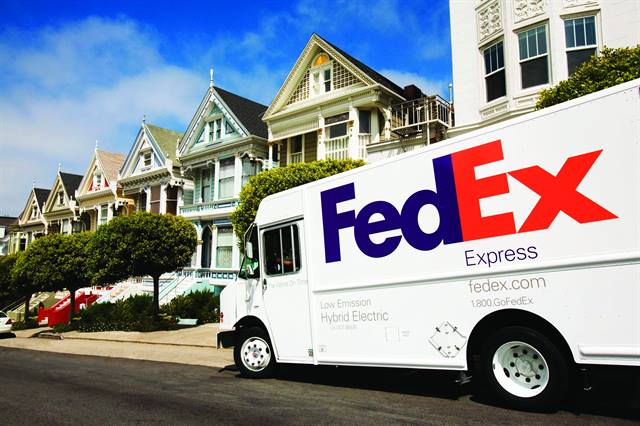
FedEx is using hybrid-electric and other alt-fuel vehicles to achieve its 2020 sustainability goals of 30-percent increased fuel efficiency.
In 2008, FedEx Express set itself a double-digit sustainability goal of 20-percent improvement in fuel efficiency by 2020.
Through a multi-pronged approach the global package delivery company exceeded its initial goal seven years early. However, instead of resting on its laurels, the company has upped its goal by 50 percent to a 30-percent fuel efficiency improvement by 2020.
“We follow a philosophy of what we call practical environmentalism, and that is defined as strategic and transformational environmental stewardship that adds value in the efforts to be more responsible,” said Mitch Jackson, vice president of environmental affairs & sustainability for FedEx Corporation. “We look at four building blocks as a part of that: performance, transparency, leadership, and innovation.”
The company’s vehicle fleet was not the only part of the transportation side of the business that had significant sustainability goals. According to Jackson, the delivery fleet will now have the same goal as the company’s air fleet — 30-percent fuel efficiency improvement by 2020. The company has a third vehicle-related environmental goal: a target 30 percent of its jet fuel being from alternative sources by 2030.

Mitch Jackson, vice president of environmental affairs & sustainability for FedEx Corporation.
Implementing the Three Rs
With its commercial vehicle fleet, the company set its original 20-percent goal in 2008 using a baseline of 2005 fuel efficiency statistics. The new 30-percent goal was revised in March 2013.
While rightsizing of vehicles was a big part of the fast-track success of the FedEx Express fleet fuel efficiency goal, this was just one aspect of a multi-pronged approach by the company.
“We call it the reduce, replace, revolutionize strategy for our vehicle refresh plan,” Jackson explained. “Basically, what we’re doing is reducing the number of vehicles we need by routing efficiency improvements and the like, and then replacing the vehicles we have on the road — the right vehicle for the right application. For longer mileage, lower density routes, we’re implementing smaller more fuel-efficient vehicles. In the urban dense routes where they don’t have many miles, we need more cube space, more cargo space, so we’re able to use the larger vehicles for that. And, the revolutionize part of it is finding those technologies that are going to be the answers for the future that are more fuel efficient, less polluting, and new innovative technologies. That’s the three-pronged approach we’ve taken since we’ve established the goal, and it’s paying off very well.”
The numbers speak for themselves. Since 2008, the company has saved the equivalent of 86 million gallons of fuel, which is the equivalent of avoiding driving more than 775 million unnecessary miles.
Eco-Driving for Success
Rightsizing and routing were a big factor in meeting the fleet sustainability goal early. The human factor was another reason for success, according to Jackson.
“We do driver training. We have a program that is part of our EarthSmart @ Work initiatives. It’s our EcoDrive program, and is designed to help the courier drive not only from a perspective of safety, but also from fuel efficiency and environmental responsibility — such as not to accelerate rapidly [and] to brake sparingly and in the right manner,” Jackson explained. “All of these techniques taken together are indicative of that approach to try to do this in a better, smarter, more responsible way.”
Implemented by FedEx Express in Japan in 2010, the EcoDrive program had experts from Isuzu Motors teach FedEx drivers how to operate their vehicles more efficiently. The EcoDrive program involves five principles: start slow, maintain constant speed, use the accelerator more gently, reduce air conditioning use, and don’t idle.
According to the company’s 2012 Sustainability Report, the program was so successful in Japan that it was expanded to 10 other Asian countries in 2011, eventually being implemented in 24 countries in the Europe-Middle East-Africa (EMEA) region. While all markets have experienced about 5-percent fuel efficiency improvements, drivers in Dubai have recorded 18-percent efficiency improvements since launching there.
Achieving a Group Effort
While FedEx Express’ fleet sustainability efforts have improved the bottom line and made it more efficient, Jackson said that the company’s goal is also to serve as an example to other commercial fleets.
“What’s gratifying to me is that we did this in a way that just didn’t focus on FedEx operations alone,” Jackson said. “We were using this approach to push for a standard, a regulatory standard on both fuel efficiency and greenhouse gases that wouldn’t just apply to our vehicles, but to all commercial vehicles.”
The regulations that FedEx helped spearhead will be coming into effect next year and are aimed to make all commercial vehicles more efficient and more environmentally sustainable, according to Jackson.
Going Hybrid
FedEx Express achieved its goals on the rightsizing side of the equation by adding about 10,000 clean diesel Sprinter vans. These vehicles currently account for about 35 percent of the fleet.
But, as part of its revolutionize strategy, the company also uses hybrid-electric and other alt-fuel vehicles for fleet implementation.
“We see the need to focus on electric and hybrid-electric vehicles because work had not been done, at least in the commercial vehicle sector, so we thought that was a viable alternative for a segment of commercial vehicles as well, and somebody needed to take the leadership and have that developed in the commercial vehicle space,” Jackson said.
The company has partnered with XL Hybrids, and has tested 10 hybrid-electric vans, which are ideal for dense traffic deployment.
“Our hybrid solution can be a cost-effective way to continue to reduce fuel consumption,” said Tod Hynes, founder and president of XL Hybrids. “We’ve identified vehicles in FedEx’s fleet that are a good fit for hybrid technology, and we did conversions of those vehicles. One of the big advantages for fleets that own their vehicles is they can get a significant benefit even if they’ve had the vehicle on the road for a few years. A conversion can help to accelerate the reduction of fuel consumption without relying on the fleet to turn over.”
All of the vehicles that XL Hybrids converted were retrofits of older vehicles, according to Hynes. XL Hybrids currently offers conversions of Ford E-Series, GMC Savana, and Chevrolet Express vans.
In addition to hybrid-electric and electric vehicles, FedEx is also testing compressed natural gas (CNG) and liquefied natural gas (LNG) models, including a next-generation LNG engine that is spark-ignited.
The company will also be adding 1,900 Spartan Utilimaster composite vehicles to the fleet. The new vehicles will be joining a group of 400 Utilimaster composite vans already in service that were part of an initial test group. These new vehicles will build on the foundation already in place and will allow the vehicle fleet to reach its next sustainability goal, according to Jackson.
Although the original goal has been met, it’s clearly not a “one-and-done” process.
“It’s an ongoing issue to always be looking for ways to be more efficient,” Jackson said. “If you think about what FedEx does each day, it’s connecting the world, and we strive to do that responsibly and resourcefully to minimize our environmental impact.”
More Green Fleet
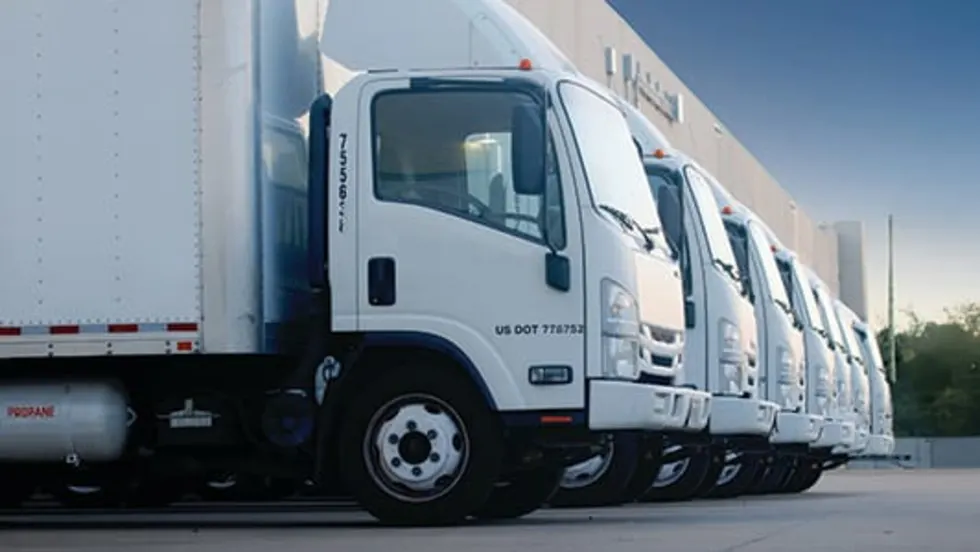
New Propane Autogas Program Offers Fleet Compensation
Qualified commercial fleets can receive $7,500 per eligible propane autogas vehicle and up to $10,000 for new refueling site prep. Learn how the program works and see whether your fleet qualifies.
Read More →
EV Charging Use Is Outpacing Infrastructure Growth
ChargePoint’s 2026 Charging Forward Report points to rising charger use, higher-powered charging, commercial vehicle electrification, and energy-management technology. Here’s what fleets should know.
Read More →
Merchants Fleet Reports 290M EV Miles as Fleets Navigate Changing Electrification Market
From millions in operating savings to hundreds of millions of EV miles, Merchants Fleet’s latest report reveals what’s working and what’s changing in fleet electrification.
Read More →
The EV Breakdown Nobody's Talking About: Why Most Electric Vehicle Roadside Calls Aren't Mechanical Failures
Here's why EV breakdowns are widely misunderstood.
Read More →
ChargePoint Now Available in Energy Pass
ChargePoint and additional planned charging network integrations were added to GM's Energy Pass.
Read More →

First Look: Slate Auto's Electric Fleet Pickup
Could an affordable, modular EV pickup make electrification more practical for fleets?
Read More →
Slate Debuts Colorful, Unique EV Models
A recent media and client event, studded with electric vehicles dressed up on platforms, planted a new position for the manufacturer in the wider EV market. Fleets will find cost-saving advantages.
Read More →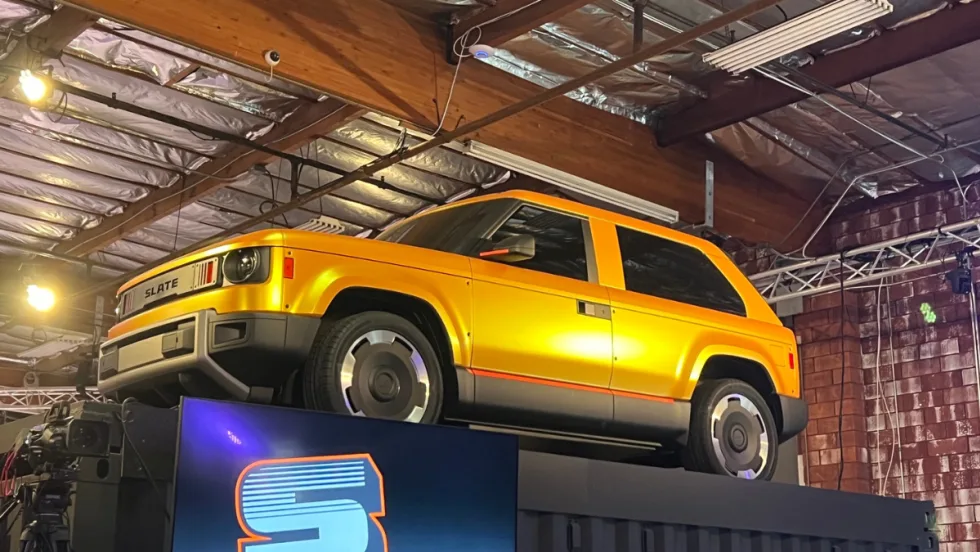
Slate Electric SUV, Pickup Switchable Model Aims For Light-Duty Fleets
Everything about this EV is counterintuitive and understated, making it stand out from the crowd.
Read More →
Inspiration Mobility Acquires Key Electrada Assets
Inspiration Mobility Group has acquired select assets of Electrada, adding the fleet electrification provider's team, technology, and charging infrastructure development capabilities to its energy management business.
Read More →