




FCA US Strategy to Increase Commercial Fleet Sales
Since taking on the leadership role of fleet sales for FCA US in 2015, Jeff Kommor has been committed to making commercial customers a priority.

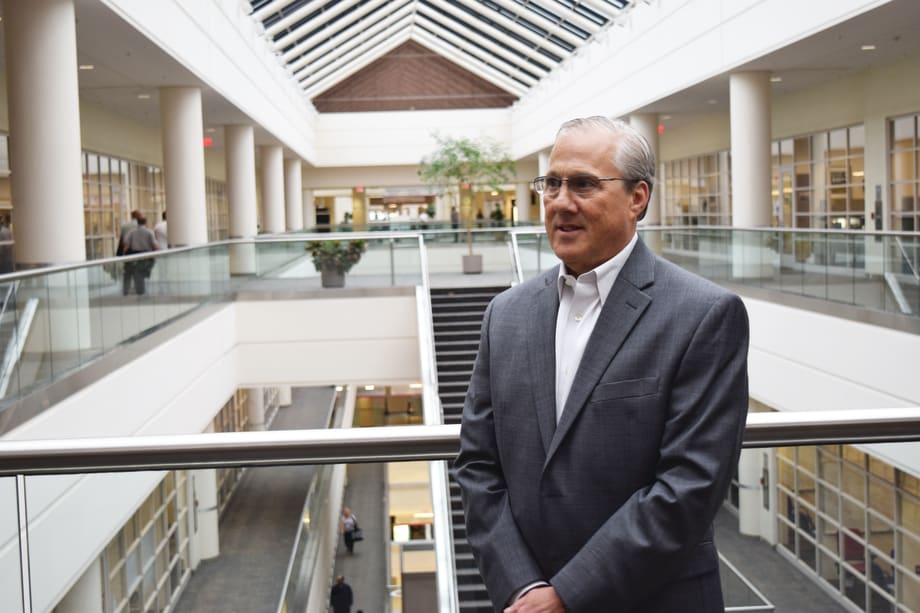
Photo of Kommor courtesy of FCA.
Photo of Kommor courtesy of FCA.
Jeff Kommor was appointed vice president - U.S. Sales Operations, Fleet and Small Business Sales for FCA US LLC in October 2015. In addition to U.S. fleet sales operations, Kommor is also responsible for sales planning and incentives, retail sales promotions, dealer relations, field operations for sales, small business sales, and Certified Pre-Owned Vehicle sales for all FCA US brands. Kommor recently spoke with Automotive Fleet about a wide variety of fleet-related topics ranging from his fleet philosphy, FCA’s commercial outlook, and issues affecting the entire industry. The following are excerpts from the interview.
AF: What message would you like to convey to fleet managers about yourself and your philosophy toward fleet sales?
Kommor: I’ve been visiting and talking with a lot of fleet customers since taking over this job six months ago, and the one message I have for all of them is simply this: FCA is committed to your business. I’m responsible for both retail and fleet sales at FCA, so I have a very personal interest in making sure the fleet side of the house gets treated fairly and equally. The old saying, "the buck stops here" has never been more true. FCA is “all in” when it comes to our commercial fleet business, and I’m in a pretty good spot to make things happen for our fleet customers.
AF: What are your short- and long-term goals to grow commercial fleet sales for FCA?
Kommor: My biggest goals are to achieve competitive advantages in three key areas: industry-best OTD, world-class service support after the sale, and leading-edge product features tailored to commercial customers. These are attributes that will meaningfully set us apart from the competition. The purchase decision process for today’s commercial fleet customer takes into account a lot more than just TCO. I think we’re doing a good job of addressing the full spectrum of their needs, but we can always get better — and we will.
AF: What is FCA’s outlook for the commercial segment of the fleet market for 2016 and beyond?
Kommor: Certainly for the balance of 2016, the outlook for the commercial fleet market is positive. At FCA we are running significantly higher than last year’s sales, led by our Ram, Jeep, and Dodge brands. Demand for our Ram ProMaster Cargo van continues to grow at a rapid pace — to the point where we are now adding a second shift at our production facility to keep up. Our ProMaster City cargo van sales are also well ahead of target, and our Dodge Grand Caravan commercial sales are up more than 100% versus this same time period last year. Best of all, we’re experiencing the same success with our government fleet sales. The Dodge Charger Pursuit essentially owns the police sedan market.
Beyond 2016, I see the commercial fleet market continuing at a healthy sales pace for at least the next year or so. All the right factors are in place for our customers: low interest rates, affordable fuel prices, increasingly more capable vehicles designed specifically for the commercial market, and a trend toward stable TCOs despite the addition of significant new safety and fuel-saving technology features. I really like FCA’s chances for continued commercial fleet market share growth in this type of environment.
AF: What do you see as being the top trends currently facing the commercial fleet market, and how are these trends going to play out in the future?
Kommor: The commercial fleet market is constantly evolving, but cost-containment and driver safety are always at or near the top of our customers’ list of concerns. The end result is a steady march toward the deployment of more vehicle technology related to these concerns — particularly active safety systems and fuel management systems. FCA has these technologies available now, and we believe they make our products very attractive.
A second and more recent trend — and one that’s putting a lot of wind into FCA’s sails — is the shifting fleet preferences between vehicle segments. Five years ago, a lot of skeptics wondered about our focused investment in crossover vehicles. Today, we’re reaping the benefits of that decision as a growing number of fleet managers are considering and choosing crossovers instead of mid-size sedans. With crossovers now achieving comparable fuel efficiency, TCO, and even higher levels of driver protection, they’re becoming a smart choice for more and more fleets. I can personally tell you that our Dodge Journey, Jeep Renegade, and Jeep Cherokee are three of the most often tested vehicles at our fleet customer ride & drive events.
A similar example of preference shifts seems to be happening in the cargo van segment where — as a result of the massive fleet migration to Euro-style cargo vans — we’re starting to sense a void for minivan-sized vehicles, and we’re now happily be able to fill that need with our all-new Chrysler Pacifica. Even with 37 segment-first innovations on this new vehicle, fleet buyers have been very pleased to learn that the Pacifica’s TCO is very competitive.
Another movement that’s receiving a lot of fleet managers’ attention these days is the electrification of vehicle powertrains. No one is quite sure how this will all play out in the fleet world, especially with relatively affordable prices for gasoline and diesel fuels continuing for the foreseeable future, but all OEMs including FCA have to keep an eye on developments in this area and build products that can meet the changing needs of the fleet market. I’m not sure too many of the electrified vehicles currently offered for sale can truly say they are designed with fleet buyers in mind. Our all-new Chrysler Pacifica will finally offer fleet managers a viable option for a full-sized electric vehicle that can address their people and their cargo-carrying needs.
AF: What are the strengths of FCA in the commercial fleet market? What areas are you looking to enhance?
Kommor: Fortunately, I feel like we’re strong across all of the things that matter most to our customers: product, people, and processes. Having said that, I know we’re far from perfect. To me, the exciting part is that we can build on our existing strengths to grow into an even better organization. I spent time in our Mopar service and parts organization, so my team will not just make a sale and move on. We know how important it is to be there for our customers during the entire length of their ownership experience. This is true for every deal, whether it’s with a small, mid-size, or large fleet. They are all our partners and we intend to keep them by earning their trust and respect every day.
AF: What initiatives is FCA developing to make it easier for fleet managers to do business with FCA?
Kommor: Improving the way we do business has really been an obsession of mine since I took over fleet operations, and it’s a hot topic at every one of my staff meetings. All departments are represented at the table, and we collectively figure out what we can do better from a customer perspective. One example is the way we recently simplified the vehicle re-invoicing process so our customers receive their incentive payments in a much more timely and accurate manner.
Another action we took in response to customer requests — and it’s been very successful in driving faster OTD — is the inventory pool we established at the Baltimore port of entry for our Ram ProMaster City Class 1 vans. This really separates us from the competition, and with a number of our upfitter partners located within 10 miles of the port, we ensure a smooth process from selection to upfit to delivery for our customers. Depending on the upfit, we have the potential to deliver a ProMaster City to a customer within 30 days of its arrival in Baltimore.
From an after-sale perspective, our Mopar Servicenet invoicing system has been a home run since the day it was introduced. Fleet customers can have all of their maintenance and repair order billings from FCA dealerships across the country consolidated into a single monthly invoice. We also offer 0% financing and convenient payment schedules to help our customers manage their cash flow. We were the first OEM to provide this package of services, again at the request of our customers, and we recently made some improvements to keep us ahead of the pack. For example, we now provide participating fleet management companies with electronic purchase order processing via Auto Integrate, the online maintenance authorization tool.
Another item that often gets overlooked because it’s become an expected delivery at the beginning of every June, is our new model year Fleet Buyer’s Guide. Our 2017 model-year edition contains 244 pages of absolutely every possible product detail our fleet customers are looking for. Having seen several, I can tell you no other OEM guide is more comprehensive. Based on customer feedback, we recently added sections dedicated to Green Technology, Safety & Security, and Engines & Transmissions. Everything is arranged for quick reference, and customers can easily access it online from anywhere or download it as an iPad app.
AF: What initiatives does FCA have in place or will be introducing to address the needs of small- to mid-size fleets?
Kommor: Within a few weeks after I took office, we revamped our fleet and small business sales organizations to reflect a true customer perspective. Whether a commercial fleet customer has five vehicles in his or her fleet or 5,000 vehicles, the vast majority of his or her purchase process takes into account the same factors, just maybe in a little different proportion. So, starting this year, our sales teams share common performance goals. No more confusion about who should handle which customer. Now that we’re properly organized and have a commercial product lineup that can meet any customer’s needs, our objective is to make sure no fleet customer leaves our dealerships or our sales meetings without wanting to purchase an FCA vehicle, or at least putting it in their final set of RFP candidates. We’ve aligned our people, our processes, and even our incentives to make sure we maximize value for any sized fleet: small, mid, or large.
AF: As an industry-wide issue affecting all OEMs, what is FCA doing to make its dealers more fleet-minded in terms of fleet maintenance turnaround times and fleet driver satisfaction during the courtesy deliveries process?
Kommor: We fully realize that 95% of our customer relationship occurs after the sale. During that time, fleet managers are primarily focused on maximizing uptime and minimizing operational costs, so, after a full year of talking with fleet customers and benchmarking the competition, we just launched what we think is the most comprehensive preventive maintenance and service solution of all OEMs. We call it the “Fleet Preferred Mopar Express Lane Program.” By offering our fleet customers and fleet management companies what they appreciate from the aftermarket shops today, namely convenience and nationwide pricing, we can now provide a world-class “One Stop Shop” experience for the fleet driver at our dealerships — performed by factory trained technicians using OEM parts. And, thanks to our Magneti Marelli parts brand, our dealerships are fully equipped to service all makes and models, further streamlining the fleet manager’s ability to manage their business. Plus, if any warranty work is needed, it can be performed at the same time and location as the preventive maintenance — something the aftermarket shops can’t offer.
Also, our 1,000 certified BusinessLink dealers offer fleet customers priority access with their Next Available Service Bay experience. For fleet customers, getting their vehicles serviced at our dealerships should be like making a pit stop during a race. Our goal is to get them back on the road in record time.
Regarding courtesy deliveries, we have ongoing dealership training which stresses the importance of a proper courtesy delivery process. A growing trend is for our dealership service managers to take charge of the courtesy delivery, which enables them to personally introduce the fleet driver to all of the dealership’s service facilities and personnel that are specifically trained and dedicated to support fleet customers.
What keeps our customers coming back is when they fully realize the combined commitment our Mopar service and parts organization and our dealerships have made in facilities, tools, personnel, and processes to service the fleet customers in the unique and urgent manner they require, versus trying to fit them into a retail service operation.
AF: Some of your competitors have publicly stated the automotive industry is in the midst of a revolutionary transformation. Do you agree with this assessment and what affect might it have on fleets?
Kommor: I always have to smile when asked about this. Having been in this business for more than 20 years, I can’t recall a time when this industry hasn’t been in the midst of a transformation! Whether it’s as the result of more sophisticated vehicle performance technology or perhaps even driver-replacement technology, I think the automobile as a mobility platform in both the retail and fleet markets has a very bright future. People and goods will still need to be transported from point A to point B, and automobiles will have a key role to play in this future. What the vehicles might look like and how the driver interface evolves remain to be seen, but my hunch is that the fleet industry is, and will continue to be, among the forerunners in detecting, evaluating, and adapting whatever transformations are headed our way. It’s going to be an exciting ride.
More Operations

Fleet Has a Talent Pipeline Problem. What Comes Next? | AF News Recap
Where will fleet’s next generation of leaders come from? This week, we’re looking at the industry’s talent pipeline, what certification can add to a fleet career, how to build an award-worthy track record, and the return of Automotive Fleet’s Personal Use Survey.
Read More →
Smith System Launches Driver Risk Management Program
Fleets have more driver data than ever, but identifying risky behavior doesn't necessarily correct it. Smith System's new Driver Risk Management program combines monitoring, training, and follow-up coaching to help fleets connect risk signals with driver intervention.
Read More →
Automotive Fleet Opens 2026 Personal Use Survey for Commercial Fleet Managers
Less than two weeks left! Commercial and corporate fleet managers are invited to share how their organizations handle company vehicle personal-use policies, charges, and driver eligibility.
Read More →
From AI Prompts to AI-Generated Safety Songs | AF News Recap
Can better prompts make AI more useful for fleet managers? This week, we’re breaking down smarter fleet analysis, an AI-assisted experiment that turned safety training into music, and what happened to fuel prices in August.
Read More →
How to Write Better AI Prompts for Fleet Analysis
Include these six elements in your fleet prompts to generate more relevant analysis and accurate answers.
Read More →
Fleet Meets: Eric Kilgore
This edition of the Fleet Meets series features one of the industry's best leaders driving multi-market and national operations.
Read More →
Why Reactive Fleet Management Is Becoming Too Expensive to Sustain
Research highlights a growing need for proactive management strategies to address rising costs in fleet operations effectively.
Read More →
What Your Fleet KPIs Aren’t Telling You
Tracking fleet metrics is only useful when the data leads to better decisions. This guide helps fleet leaders assess cost, utilization, and downtime more accurately, identify performance gaps, and prioritize the actions that can improve operational results.
Read More →
Hidden in Plain Sight: Fleet Compliance Risks
Fleet compliance isn't just about having policies — it's about consistently enforcing them. This practical guide reveals six hidden compliance risks common in public sector and shared fleet operations and outlines proven strategies to improve visibility, accountability, and audit readiness
Read More →
Turning Fleet Payment Data into Executive Insights
Does data alone drive results in operations?
Read More →