




Executive Privilege: Dealing with Customizing Requests
It takes talent and hard work to move up to the executive suite. Does that mean fleet managers must acquiesce to executive requests to customize a company vehicle?
A company car is one of the most sought-after perks for just about every executive. It can mean the difference in recruiting and hiring top-notch management talent.
Managing an executive fleet is not all that difficult, for the most part, if the fleet manager has taken the time to lay out policy and procedures. However, no matter how carefully this is done, most fleet managers at some point face executives who "request" upgraded models, equipment, or other customization of their company car.
Should a fleet manager go along? Is there a way to say no, without creating ill will that can damage a career?
In general, companies use two methods to provide executives with vehicles:
■ Selector: the executive chooses from approved makes and models in the same manner as other fleet drivers.
■ Dollar limit: the company provides whatever vehicle the executive desires within a dollar cap.
Keep in mind that a third method, a monthly stipend, is simply additional income an executive uses personally to acquire a vehicle and would not be subject to fleet policy.
In the first method, the fleet manager provides approved models, usually high-line, luxury, or sport models, and the executive selects a vehicle. A certain level of equipment is also provided — similar to what's offered the fleet in general, only with higher-line vehicles and a broader list of company standard equipment.
The second method allows the executive to select any vehicle, provided the cost (either capitalized or the monthly lease payment, depending upon what the program dictates) remains below the limit set by policy.
In the same manner as regular fleet drivers, executives are usually permitted to upgrade vehicles or equipment at their own expense. Also similar to fleet in general, executives are asked to certify they have no interest in the upgraded equipment, unless they purchase the vehicle when it is taken out of service. In such cases, if the equipment adds resale value, that value is not added to the purchase price.
Sometimes, an executive attempts one way or another to convince or coerce the fleet manager to "customize" his or her company vehicle.
Executives don't reach the highest levels of the corporate hierarchy without a high level of self-confidence. Sometimes, unfortunately, that self-confidence can morph into a sense of entitlement, prompting the executive to bully subordinates to receive "special" treatment. Company vehicles are very personal items for regular fleet drivers, but especially for employees whose vehicles are compensatory. The combination of a sense of "executive privilege" and that personal connection to the vehicle can result in a potentially toxic mix.
The first step in dealing with such potential conflicts lies in fleet policy. A written fleet policy should be readily available to all drivers — not only sales/service (or whatever function the general fleet encompasses), but executives as well.
Availability should be backed by an endorsement from the highest level possible. Management endorsement is a real key to avoiding the problem. When the policy is implemented, it should be prefaced with a memo or other statement, preferably from the CEO or other "C-level" executive, similar to the following:
"The following policy has been developed to provide the rules and processes by which the company provides transportation to employees, both those whose job function requires such transportation as well as to those whose employment compensation permits it. I have reviewed and approved this policy, and have charged (the fleet manager, by name) with executing and enforcing the policy. He/she will report to me on a regular basis on the fleet's performance, as well as on any issues or conflicts arising from the policy."
Including a name and signature, this statement or something similar should be the first page any employee sees when reading the policy.
Although a management approval statement will go a long way toward "short-circuiting" attempts at executive privilege, it is a good idea to maintain a level of communication with any senior executive whose compensation includes a company vehicle. This group particularly includes executives whose function makes them a stakeholder in the fleet operation and/or policy, such as:
■ Sales/service.
■ Risk management.
■ Treasury/finance.
■ Sourcing.
■ Administration.
■ Human resources.
■ Operations.
■ Legal.
A particular executive might have more than one of the above under his or her purview, i.e., risk management and treasury are often under the CFO's supervision.
While the head legal counsel is not directly interested in seeing monthly fleet cost reports, communicating, for example, the occasional policy change to develop a relationship based on communications is a good move.
The same holds true for any and all executives driving compensatory executive vehicles. Simple familiarity will help avoid claims of privilege when a new vehicle is ordered.
Finally, consistent, across-the-board application of fleet policy will assist a fleet manager in either avoiding customization requests in the first place or handling those requests should they arise.
Once an exception is made, it is difficult for the fleet manager to refuse additional such requests. For example, take the "he's our best salesman" defense, which often arises when a fleet manager attempts to sanction policy-violating behavior. Multiple chargeable accidents or MVR violations often come with policy consequences, from suspension of personal use privileges to revocation of company car assignment.
A manager or executive, in an attempt to avoid such consequences levied on a favored performer, will claim the salesperson, for example, will leave the company and would be very difficult to replace. Most fleet managers face this exception request at one time or another.
If the policy exception is granted, the fleet manager will face difficulty in refusing an executive who attempts to upgrade or customize a company vehicle in violation of policy. Applying policy consistently, backed by top senior endorsement, provides significant support in both avoiding these requests and handling them when they arise.
Attempts by executives to customize or upgrade their company cars are relatively rare; however, they can be difficult and awkward to handle unless the fleet manager has taken steps to deal with them:
■ Policy: A specific written policy endorsed in writing at the highest level possible.
■ Communication: Develop and maintain relationships with executives who drive company-provided vehicles.
■ Application: Apply company vehicle policy consistently and strictly at all levels of the organization. ■
More Operations

Top 50 Executive Fleets
It is that time of year again! Time for the 2026 list of the Top 50 Executive Fleets, presented by Automotive Fleet and Volvo as part of its annual Fleet 500. Download now to see this year's list of companies!
Read More →
Gary Van Orden Retires After Nearly Four Decades in Commercial Fleet
From answering customer calls at Ford Motor Company to leading fleet sales across multiple OEMs and a fleet management company, Gary Van Orden's career reflects nearly four decades of leadership in commercial fleet.
Read More →
How Stellantis Plans to Get Ahead of Fleet Downtime
Vehicle acquisition may grab the headlines, but fleet uptime increasingly determines operating success. Darren Bradshaw of Mopar North America gives the details.
Read More →
Hyundai Releases 2027 Commercial Program Incentives
The 2027 Model Year "Fleet Street Incentives" are available to commercial and government fleets.
Read More →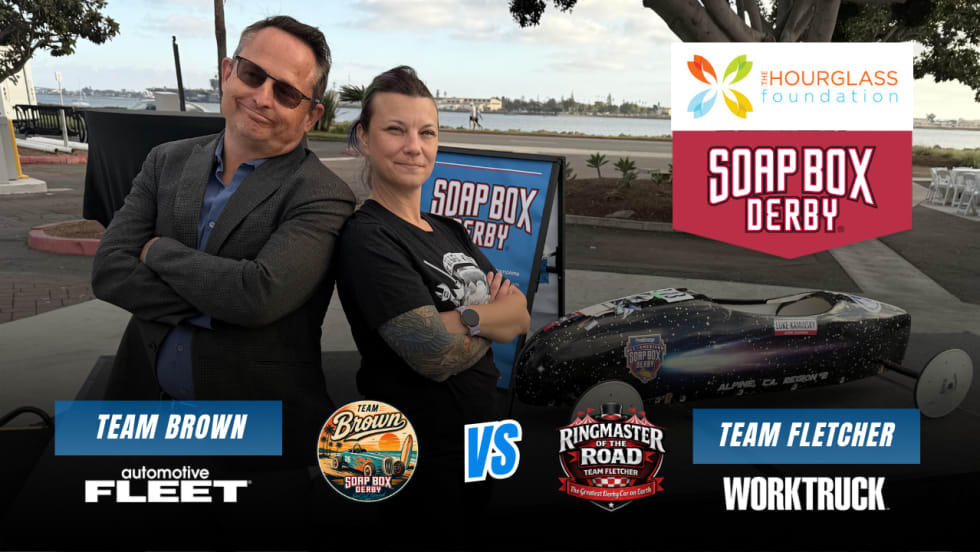
It's All Downhill from Here! Fleet Industry Raises $22,000 for Skilled Trades Scholarships
Work Truck’s Lauren Fletcher and Automotive Fleet’s Chris Brown turned a friendly racing rivalry into $22,000 for automotive technology and skilled trades scholarships.
Read More →
The Top 300 Commercial Fleets
The Top 300 Commercial Fleets: See the List
Read More →
Your Local Dealer Knows More Than You Think
Your local dealer can provide an information advantage that extends well beyond courtesy deliveries.
Read More →
Fleet Meets: Austin Schutte
Here are some industry insights, personal touches, and words of advice from the CEO and Founder of Anew Solutions.
Read More →
Soap Box Derby Challenge: What’s Powering Team Brown
The car is coming together, the students are solving real build problems, and the fleet industry is helping push Team Brown toward the starting line.
Read More →