




Executive Fleet Transporation: Limousines as a Corporate Tool
As time becomes an increasingly precious commodity, executives must use every tool available to use that time wisely and efficiently. Catching up on paperwork and making telephone calls from the back seats of limousines is becoming more common.
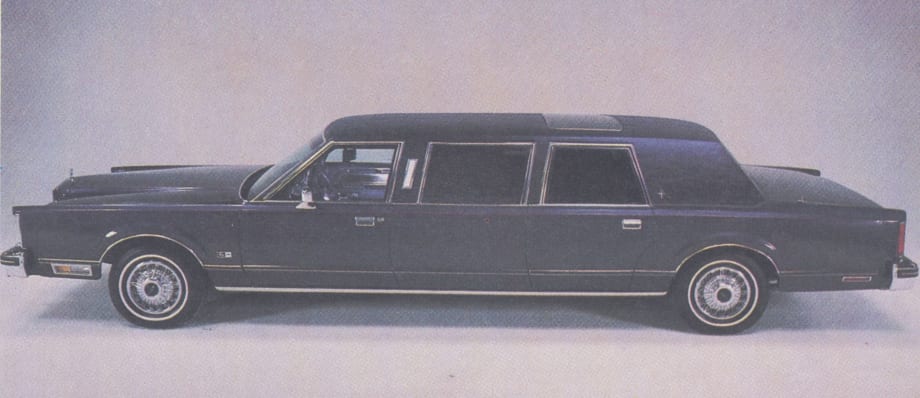
Lincoln Flagship series from Moloney Coachbuilders.
As time becomes an increasingly precious commodity, executives must use every tool available to use that time wisely and efficiently. Catching up on paperwork and making telephone calls from the back seats of limousines is becoming more common.
Bolstered by the advent of cellular telephone systems currently available in Chicago, and soon to operate in Los Angeles and New York, executives have the technology to remain in constant communication with their office and clients.
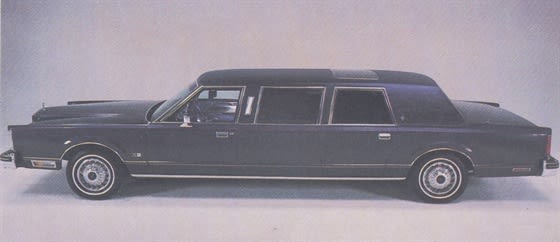
Lincoln Flagship series from Moloney Coachbuilders.
Although coachbuilders today are installing all the comforts and luxuries that the mind can conjure-hot tubs and beds, for example-these amenities are generally found inside limousines operated by livery services rather than Fortune 500 corporations. Major corporations tend to shy away from these excesses, opting instead for simpler, more business-like appointments. Most corporate executives find it difficult to justify extravagances such as bars and stereo systems to stockholders.
Matt Baines, vice president of Moloney Coachbuilders, headquartered in Schaumburg, IL, says limousines purchased by large corporations are, as a rule, not loaded with all the available options. "They are more of a work-type vehicle, a people-mover," Baines says. "Fleet buyers are looking for comfort and legroom more than they are the frills and extras," he adds. Still, 50 percent of the time, televisions are installed in fleet limousines, according to Baines, versus a livery installation rate closer to 80 percent. Occasionally, clients will purchase a sunroof as an option.
Fleet business accounts for about 25 percent of Moloney's sales, he says, with orders generally totaling somewhere between one and 12 limousines. Moloney's Flagship model, a single-cut Cadillac with a 46-inch extended wheelbase, is described as a corporate-image car. Generally painted black or gray, the Flagship connotes business-like dignity and quiet efficiency.
R.A. Keckeissen, corporate fleet manger for Schering/Plough Corp., in Madison, NJ, manages a fleet of 1,000 vehicles, seven of which are limousines. Their two Lincoln-Mercury limousines, stretched by Executive Coach Builders, located in Springfield, MO, are not loaded up with options, in keeping with the unwritten rule about no-frills. The vehicles do, however, have radiotelephones, and chauffeurs are issued beepers. Two Cadillac formals and three Sedan Devilles augment the limousine fleet.
Limousine use is specifically for corporate officers, as opposed to divisional officers. Keckeissen says Limoushines receive the same preventive maintenance as the remainder of the fleet. When a chauffeur indicates a needed repair, the vehicle is moved directly to the repair shop.
It is not uncommon for limousine costs to be lumped together with total fleet costs. This is because limousines are generally considered executive perks. True to form is American Can Co., a highly diversified packaging and financial services operation in Greenwich, CT.
American Can leases two limousines from Peterson, Howell & Heather, Inc., and the company's president and chairman are the primary users. The two Cadillacs, one a factory formal and the other stretched by American Pullman Coachbuilders, of Brooklyn, NY, are kept for two years or 60,000 to 80,000 miles before disposal, according to JoAnne Scaglia, director of facility services. Both limousines are equipped with cellular telephones in anticipation of New York City's eventual cellular hook-up.
The company, however, does not keep separate operating cost figures for the limousines. In fact, one is hard pressed to find a company that does. However, one Hollywood record company, using tow Rolls Royces in its fleet, compares average monthly operating costs with an Oldsmobile Cutlass. The figures are $1,700 for the Rolls and $300 for the Cutlass, according to a fleet department spokeswoman who wished to remain anonymous.
St. Regis Corp., a diversified paper company based in West Nyack, NY, ordered two stretched Lincoln Town Cars from New York Custom Coach, of Hollis, NY. The 34-inch stretched limousines include stereo/radio/cassette and climate control, as well as a custom-made cabinet in one. Dave Chu, fleet administrator, says the stretches are outstanding. Chu also has the limousines equipped with a cellular telephone, replacing the original Harris UHF/VHF model, anticipating New York City's eventual connection to a cellular system. St. Regis reserves the limousines for use by the chairman and the president, saying they are in use every day "Our plans are to dispose of the leased vehicles after approximately 85,000 miles," Chu says, but adds that determining the means of disposal will be a tough decision.
Running counter to the tide of no or few backseat options, O'Gara Coachworks finds that most of its sales to Fortune 500 corporations come complete with bars and stereos.
"O'Gara limousines are aimed at the corporate market," says Robert Harrell, western regional sales manager. "We've captured the market for the high-end car."
O'Gara's Essex models, which are double-cut 48-inch Cadillac Fleetwood Broughams and 52-inch Lincoln Town Cars, are sold complete with burled elm consoles housing stereo and bar. The cabinets are hand-crafted at the company's Simi Valley, CA, plant. O'Gara's East Coast plant, in Bound Brook, NJ, opened last year to better serve the Atlantic market.
The Essex comes complete with all the interior amenities as standard equipment, Harrell says. Bars and stereos are not out of the ordinary in a corporate fleet order. In fact, Harrell says, many corporations go the extra step and order a sunroof.
O'Gara markets between 30 and 35 percent of its inventory to corporate fleets, he adds.
Many times it is more economically acceptable to hire limousines from livery services on an as-needed basis. Major livery services, such as Dav-El Livery, a nationwide franchise network, caters primarily to officers of major corporations.
Dav-El Livery President David Klein says limousine use continues to grow in the corporate executive market. Klein cites the efficient use of an executive's time while riding in limousines: "You can't have executives wasting 15 minutes or a half-hour of valuable time at $100,000 plus salaries a year. The have got to be working while they're moving," Klein says.
At Dav-El, catering to executive needs specifically means allowing executives to communicate while traveling. Again, the cellular telephone hook-up, Klein says, "We just go one step further for the corporate market, where New York is hooked up to cellular. Every Dav-El vehicle, not just the stretches, but every sedan will have a telephone in it. The corporate executive needs a telephone while he's moving."
More and more corporations are learning just how cost-effective limousines are for transporting their chiefs. For example, if a corporate executive costs a company $200,000 per year for wages, benefits, and other forms of transportation, is allowed four weeks vacation, weekends off, 10 holidays and two sick days, that executive works 228 days per year.
If he puts in an average of 10 hours per day, the company is spending $200,000 per year for this individual's working 2,280 hours. That works out to approximately $88 per hour. If the price of a chauffeured limousine costs $40 per hour, then for every hour that executive spends comfortably in a limousine catching up on his work rather than being driven in a taxicab or driving himself, the company is saving itself $48 by having the executive work and travel simultaneously.
Most industry experts agree: The cost-effectiveness of having executives work as they ride will continue to find favor with both fleet and accounting departments.
More Operations

Managing Fleet Costs in an Era of Permanent Volatility
Fleet operating costs have risen more than 20% since 2020, raising a key question: When does extending a vehicle's service life stop making financial sense?
Read More →
The Next Evolution of Fleet Management: Autonomous Operations
This opening keynote session at the Fleet Forward Conference highlights the future of autonomous driving for fleets.
Read More →
How to Reduce the Total Cost of Risk From Catalytic Converter Theft
A stolen catalytic converter can cost fleets far more in downtime and lost productivity than in repairs. A total-cost-of-risk approach can help fleet managers quantify their exposure and prioritize theft prevention.
Read More →

Personal-Use Charges Rise as Vehicle Values Fall | AF News Recap
Personal-use charges are climbing, wholesale used-vehicle values are declining, and commercial fleet sales growth is slowing. This week, we're breaking down the latest fleet data, plus how Element Fleet Management is helping Waymo prepare for its first Canadian robotaxi market.
Read More →
Here's When You Should Make an Exception to Fleet Policy
Fleet policies are designed to create consistency, but not every driver or situation fits neatly within standard rules.
Read More →
AI-Native or AI-Acquired: What Should Fleet Managers Look for in an AI Platform?
Six questions can help fleet managers look beyond AI marketing claims to evaluate integration, data access, and real-world operational performance.
Read More →
A buyer's guide to fleet management software in 2027
Buying fleet management software in 2027 means looking beyond features and price. As fleet operations, technology and expectations evolve, this guide explores what today’s fleet professionals should consider when choosing a system that can deliver value now and adapt to what comes next.
Read More →
What Will Shape the Next Era of Fleet Management?
EVs, AI, and autonomous vehicles are reshaping fleet management. Discover what’s ahead—and how fleet leaders can prepare for the next era.
Read More →
How Fleets Can Recruit and Train Veterans for Technician Roles
Here's how the technician shortage has affected uptime for fleets, and what to do about it.
Read More →
Avis Budget Group Deploys Neology Toll Management Technology Across Major Brands
Neology’s neoFleet platform will manage toll transactions and toll-authority operations for vehicles across Avis, Budget, Payless, Budget Truck and Zipcar.
Read More →