




Learn More: New Study Shows EV Owners' Thoughts on Cost of Home Charging
EV Charging at Home: Taxable Benefit or Work Tool?
In-kind employee benefits are generally viewed as taxable, yet home EV chargers might be classified as a work tool. How will the IRS rule?
by David Lewis
May 2, 2023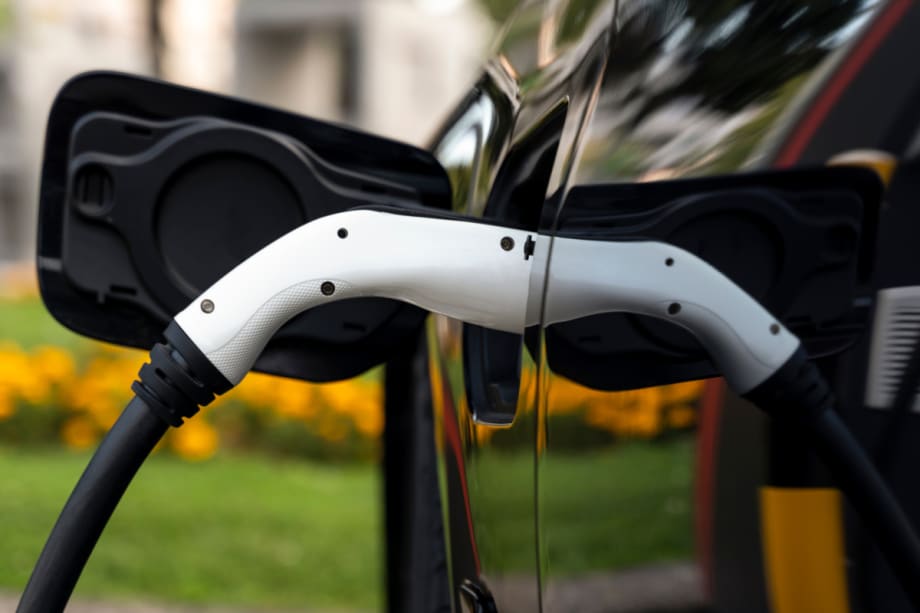
Classifying a home charger as a taxable benefit provides simplicity and clarity, but disincentivizes EV adoption.
Photo: Canva/Automotive Fleet
4 min to read
As electric vehicles (EVs) become more popular for fleet use, businesses are faced with a new question: Is a home charger for an EV considered a taxable benefit or an untaxed work tool? This issue has been debated for years, and the IRS has yet to provide guidance. As a result, businesses are left to try to interpret the law themselves.
In-Kind Benefits are Fully Taxable
Under general tax principles, the provision of an in-kind benefit to an employee is fully taxable in the absence of a specific tax code-based exclusion.
According to Ethan Severance, a Clean Transportation Expert and Attorney at Foley Hoag LLP, “Since there is no provision of the Internal Revenue Code that specifically excludes the value of at-home EV charging stations from an employee’s taxable income, the IRS is likely to view the employee as realizing taxable compensation equal to the value of the charger and the cost of installation.”
Defining a Work Tool
That said, a home charger might be classified as a work tool if it meets certain criteria. A work tool is defined as any property or service provided to an employee that is necessary for business use.
Criteria for classifying a home charger as a work tool include the necessity for business use such as whether an employee is required to have a vehicle for work purposes and whether the business owns and controls use of the charger.
What About EV Charging at Work?
Many employers are also wondering whether offering employees charging at work creates a taxable event.
“There is an open question as to whether an employee’s use of a workplace EV charger could be excludable from the employee’s taxable compensation as a de minimis benefit,” Severance explained.
A de minimis benefit is any property or service provided to an employee that has so little value that accounting for it would be unreasonable or administratively impracticable.
In 2015, U.S Senator Ron Wyden (D-OR) requested that the IRS issue guidance explicitly include complimentary workplace EV charging as a de minimis fringe benefit.
The IRS responded that it might issue guidance on the question in the future, but until then it would determine the taxability of free workplace EV charging on a case-by-case basis, depending on individual facts and circumstances.
“This means that employers need to consider how often employees use the workplace charging stations and the cost to the company of providing the benefit. Historically, the IRS has limited the value of a de minimis benefit to $100 a year,” Severance noted.
NAFA is Lobbying for Change
In 2022, the National Association of Fleet Administrators (NAFA) requested that the IRS issue guidance to address the fringe benefit implications of at-home charging of an employer-provided EV.
NAFA argued that all costs associated with a Level 2 charger for take-home work EVs, including installation, be considered a non-compensatory business cost with reimbursement excludable from an employee's income as a fringe benefit.
Furthermore, NAFA contended that the kWh cost of at-home charging also be excludable from an employee's income as a fringe benefit. The IRS has yet to respond, but a response is expected sometime this year.
Home Charger as Taxable Benefit: Clarification Needed
“Unfortunately, until the IRS issues guidance or Congress acts to exclude such benefits from taxable income, the analysis is heavily fact-dependent, and there is no one-size-fits-all answer,” Severance concluded.
There are advantages and disadvantages to classifying a home charger as a taxable benefit or a work tool. Classifying it as a taxable benefit provides simplicity and clarity, but disincentivizes EV adoption.
Classifying it as a work tool, by contrast, provides tax relief and cost savings, but it could lead to inaccurate tax returns, penalties, and interest charges from the IRS if found to be a misclassification.
In order to clarify this gray area and promote the accelerating EV adoption necessary to meet the United States’ climate goals, the IRS should issue guidance adopting NAFA’s positions. Until then, businesses should consider the factors discussed above and consult with tax or legal professionals before making a choice.

David Lewis is the founder and CEO of MoveEV.
Photo: MoveEV
David Lewis is the founder and CEO of MoveEV, an AI-driven green tech solution designed to make it easy for companies to accelerate electric vehicle (EV) adoption.
Subscribe to Our Newsletter
More Green Fleet

Sponsored•October 1, 2026
New Propane Autogas Program Offers Fleet Compensation
Qualified commercial fleets can receive $7,500 per eligible propane autogas vehicle and up to $10,000 for new refueling site prep. Learn how the program works and see whether your fleet qualifies.
Read More →
EV Charging Use Is Outpacing Infrastructure Growth
ChargePoint’s 2026 Charging Forward Report points to rising charger use, higher-powered charging, commercial vehicle electrification, and energy-management technology. Here’s what fleets should know.
Read More →
Merchants Fleet Reports 290M EV Miles as Fleets Navigate Changing Electrification Market
From millions in operating savings to hundreds of millions of EV miles, Merchants Fleet’s latest report reveals what’s working and what’s changing in fleet electrification.
Read More →
The EV Breakdown Nobody's Talking About: Why Most Electric Vehicle Roadside Calls Aren't Mechanical Failures
Here's why EV breakdowns are widely misunderstood.
Read More →
ChargePoint Now Available in Energy Pass
ChargePoint and additional planned charging network integrations were added to GM's Energy Pass.
Read More →

First Look: Slate Auto's Electric Fleet Pickup
Could an affordable, modular EV pickup make electrification more practical for fleets?
Read More →
Slate Debuts Colorful, Unique EV Models
A recent media and client event, studded with electric vehicles dressed up on platforms, planted a new position for the manufacturer in the wider EV market. Fleets will find cost-saving advantages.
Read More →
Slate Electric SUV, Pickup Switchable Model Aims For Light-Duty Fleets
Everything about this EV is counterintuitive and understated, making it stand out from the crowd.
Read More →
Inspiration Mobility Acquires Key Electrada Assets
Inspiration Mobility Group has acquired select assets of Electrada, adding the fleet electrification provider's team, technology, and charging infrastructure development capabilities to its energy management business.
Read More →