




Related Content: Will ‘Big Brother’ be Watching
EOBR 101: What it Means for Your Fleet
By 2014, the FMCSA must issue a final rule to mandate the use of electronic onboard recorders in commercial vehicles. Will your fleet be ready?
by Jason Rudinoff, ARI
December 18, 2012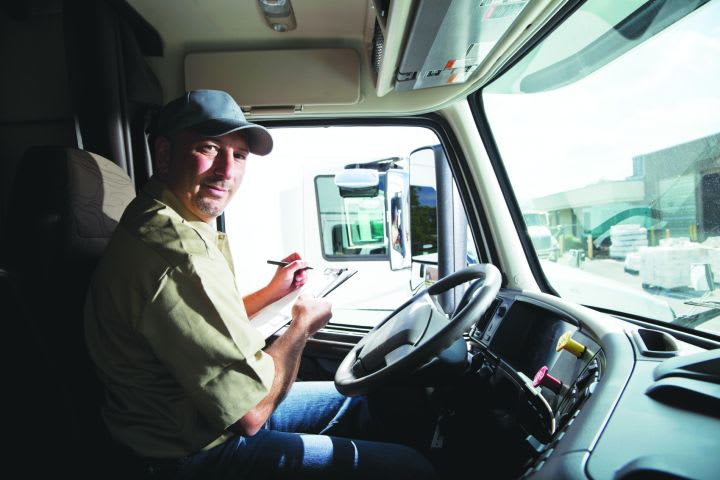
FMCSA’s rulemaking is expected to focus on standards for data transfer, enhanced security, and driver accuracy.
Photo: Work Truck
4 min to read
The first onboard recorder, the tachograph, a device fitted to a vehicle that automatically records its speed and distance, was originally introduced to the railroad industry as an effective way to document and correct irregularities in the late 1800s. A digital version of this innovation is still used today — in fact, it is a requirement for all commercial vehicles in the European Union. In the U.S., however, electronic onboard recorders (EOBRs) have been an optional tool to measure and monitor driver patterns and compliance. But, that is all about to change.
Legislation Breakdown
In July 2012, President Obama signed Moving Ahead for Progress in the 21st Century (MAP-21), a congressional highway bill that was passed in June. It became law Oct. 1, 2012. MAP-21 is a multifaceted law that includes a line item requiring the Federal Motor Carrier Safety Administration (FMCSA) to create a regulation mandating the use of EOBRs in all commercial fleet vehicles. In other words, there is no regulation at this time, but there will be.
Mandatory EOBRs is a topic that has been addressed by the federal government several times over the past few years. The FMCSA made recommendations on device technical standards in late 2011, and weighed in again in early 2012 when the organization’s Motor Carrier Safety Advisory Committee convened a panel to address concerns regarding devices and driver harassment. The committee made a number of recommendations to the FMCSA to mitigate this risk, conceivably in preparation for this mandate.
FMCSA’s rulemaking is expected to focus on standards for data transfer, enhanced security, and driver accuracy. And, although the EOBR mandate is eminent, it will not be immediate.
FMCSA leaders expect to release a proposed final rule in the first quarter of 2013, but that is only the beginning of the process. Once the proposed rule is released publicly, there must be a formal comment period. While MAP-21 directs the FMCSA to issue the final rule one year after MAP-21 became law (Oct. 1, 2013), the FMCSA is obligated to evaluate and provide feedback on all comments. As a result, a more realistic estimate for the FMCSA to issue the final rule would be in mid-2014.
Fleet Takeaways
While 2014 seems far off, the implications of mandated EOBRs need consideration today. This controversial provision clearly has both pros and cons, but the potential benefits could easily outweigh the disadvantages.
Several disadvantages of mandated EOBRs include:
Lack of driver acceptance. Since EOBRs transmit data automatically about the vehicle location, driver, speed-limit adherence, and other compliance issues, some drivers may view the mandate as an invasion of privacy. It is considered by many to be another way for “Big Brother” to monitor them or as a symbol of an employer’s distrust of their drivers.
Costly investment. It is also perceived by some as an extravagance. With shrinking fleet budgets, a required investment of this size is substantial, which could be difficult to manage, especially in a short time frame.
Unreliable data. EOBR technology also has raised concerns regarding information security. Not from hackers, but rather from loss and misrepresentation. EOBRs can vary, and, as a result, consistency and information flow glitches have some managers worried.
As in all things, with every disadvantage comes an advantage. Several pros include:
Improved compliance. The automation of the driver log process would create new administrative efficiencies. EOBRs take data logging out of drivers’ hands and put it into an automated system that would improve compliance — an especially important benefit considering many companies are currently not in compliance.
Increased driver and fuel efficiencies. The same telematics data that an EOBR would collect is what many fleets use to uncover efficiency gaps and cost-saving opportunities within their fleet. If all fleets were armed with this same data, the industry, as a whole, could significantly increase driver and fuel efficiency.
Technological improvements. Additionally, a regulation of this kind would drive innovation within the telematics space. For traditional fleets, the existing technology is more than sufficient; however, for some fleets that have multiple drivers in a single vehicle, devices capable of accurately tracking individual drivers are few and far between. This regulation would require EOBR manufacturers to create technology to address this and other device limitations.
Unfortunately, there isn’t a clear-cut answer to whether this rule will be a benefit or a burden for fleets, at least not yet. But, one thing is clear: This regulation is coming down the pipeline and fleet managers need to be aware of it and prepare in advance. Managers cannot afford to wait until the eleventh hour to make decisions on solutions, training, and implementation. In fact, proper research and planning are the only steps to mitigate the risks and realize the benefits surrounding this mandate.
Originally posted on Work Truck Online
Subscribe to Our Newsletter
More Global Fleet
GeoFencing Adds to Your Truck Security Arsenal
Geofencing is a familiar fleet tool today, but its early adoption marked a major shift in vehicle tracking, route monitoring, and the debate over employee privacy.
Read More →
Holman Takes Full Ownership of ARIZA in Mexico
Holman is bringing its Mexican fleet management operation fully under its own brand after more than 30 years as a joint venture. The change gives multinational fleet customers a single Holman operation across the U.S., Canada, and Mexico.
Read More →
5 Tire Maintenance Tips to Help Prevent Work Truck Downtime
Regular tire checks can do more than extend tread life. These five maintenance practices can help work truck fleets catch problems early, reduce costs, and prevent downtime.
Read More →

Proven Ways to Reduce Work Truck Downtime
The age-old problem of downtime will always be a reality, but with new strategies at hand, fleets have more ways to keep trucks on the road longer.
Read More →


Cameras, Safety and Insurance: From Reactive Claims to Real-Time Prevention (Part 2 of 2)
Part Two: Commercial auto remains one of the most challenging and costly lines of coverage for fleet operators and insurers alike. Continue learning more about how to effectively address these issues from Onur Aksan, Enterprise Business Development Executive, Geotab
Read More →
Cameras, Safety and Insurance: From Reactive Claims to Real-time Prevention
Commercial auto remains one of the most challenging and costly lines of coverage for fleet operators and insurers alike. Learn more about how to effectively address these issues from Onur Aksan, Enterprise Business Development Executive, Geotab.
Read More →
Fleet Costs Are Rising: Here’s How Leaders Are Responding
Fleet leaders are under pressure to reduce costs, adapt to economic uncertainty, and make smarter decisions. See how peers across North America are responding with real data, proven strategies, and forward-looking insights. Download the 2026 Market Pulse Report to benchmark your strategy and uncover where you can gain an edge.
Read More →
Enterprise Fleet Management Surpasses 900,000 Vehicles in U.S. & Canada
Enterprise Mobility connects with mobility solutions around the globe
Read More →