




Environmental Survey Highlights Growing Interest in Voluntary Programs
A fleet survey by PHH Arval finds that companies are increasingly volunteering to reduce greenhouse gas emissions for strategic reasons.
Some companies have made a point to reduce greenhouse gas emissions as a demonstration of social responsibility and a commitment to “do the right thing.” Others see such steps as a strategic move to place them in a stronger economic and market position, especially when working for government agencies. Some companies have modest goals; others are more aggressive. And many are looking to fleet to help reach greenhouse gas emissions reduction goals.
Environmental Survey of Fleet Management Executives
PHH Arval, a fleet management company based in Sparks, Md., has recently conducted an environmental survey of its commercial fleet manager clients as part of its “green” program. The survey includes responses from commercial fleet managers and executives. The following is a synopsis of the results. Click Here to view Chart 1
Fleet executives and managers share a high interest in improving the energy efficiency or environmental performance of their fleets. However, fleet executives viewed their company’s overall prioritization of environmental issues much higher than did fleet managers.
As expected, government regulations top the list of reasons why corporations have made the environment a business priority. However, corporate responsibility and the opportunity to enhance a company’s image among investors, the community, and its customers are also key motivators. Click Here to view Chart 2
While nearly all commercial fleet managers consider environmental factors when selecting which vehicles to include in their fleets, most still focus on fuel economy ratings. A growing number are expanding their criteria to include “Green Scores” from the American Council for an Energy-Efficient Economy (ACEEE), available on PHH InterActive, the company’s Web-based fleet management system.
Interest in Alternative-Fuel and Hybrid Vehicles Grows
More than one quarter of commercial fleet managers surveyed say they already have or are seriously considering adding alternative-fuel vehicles to their fleets, with another 40 percent somewhat interested.
Company image and reduced fuel costs, the second largest fleet expense, were leading motivators in the decision to add more environmentally friendly vehicles. Hybrid electric vehicles, such as the Toyota Prius, Ford Escape, GM’s flex-fuel pickups, and Honda Civic, are of particular interest to many fleets, primarily because of availability and proven fuel costs savings.
Only 4 percent of fleet managers felt they were very knowledgeable about alternative-fuel trends and vehicles. While information regarding alternative fuel is becoming more readily accessible, for most commercial fleet managers, the subject remains a confusing one. As commercial fleet managers continue to view alternative-fuel vehicles as a way to address corporate environmental goals and manage fleet expenses, continued education on industry trends, as well as available fuel and vehicle options are critical. {+PAGEBREAK+} Click Here to view Chart 3Click Here to view Chart 4Click Here to view Chart 5Click Here to view Chart 6Click Here to view Chart 7Click Here to view Chart 8
Fleet Managers are Thinking Green
Based on the results of this survey, commercial fleet managers are increasingly focusing attention on their fleets’ environmental impact.
Ed Capasso, vice president & general manager for Henkel Corporation’s Industrial Division, influences vehicle policy for a fleet of more than 800 vehicles. “Our corporate values include a commitment to sustainable development,” he says. “Environmental responsibility is one of the three pillars of sustainability, and all of our employees are involved and committed to ‘green’ thinking and problem solving.” Capasso and PHH have created a selector guide for Henkel drivers that rates vehicles based on ACEEE Green Scores. “While it’s essential we provide vehicles that meet the needs of our employees, such as trunk size and passenger space, we encourage selection of the most environmentally mindful vehicles. Vehicle gas consumption guidelines are currently in place and we are evaluating new hybrid vehicles.”
George Kilroy, president and CEO of PHH, says, “Many of our clients are altering the types of vehicles they use in their fleets and implementing better management practices to reduce fuel costs and dramatically reduce greenhouse gas emissions. For instance, a fleet of 1,000 vehicles produces about 14,000 tons of greenhouse gas emissions. By shifting from full-size to mid-size cars, from SUVs to mid-size or introducing hybrids into the fleet, these emissions can be reduced by as much as one third.” Click Here to view Chart 9
More Operations
Top 50 Executive Fleets
It is that time of year again! Time for the 2026 list of the Top 50 Executive Fleets, presented by Automotive Fleet and Volvo as part of its annual Fleet 500. Download now to see this year's list of companies!
Read More →
Gary Van Orden Retires After Nearly Four Decades in Commercial Fleet
From answering customer calls at Ford Motor Company to leading fleet sales across multiple OEMs and a fleet management company, Gary Van Orden's career reflects nearly four decades of leadership in commercial fleet.
Read More →
How Stellantis Plans to Get Ahead of Fleet Downtime
Vehicle acquisition may grab the headlines, but fleet uptime increasingly determines operating success. Darren Bradshaw of Mopar North America gives the details.
Read More →
Hyundai Releases 2027 Commercial Program Incentives
The 2027 Model Year "Fleet Street Incentives" are available to commercial and government fleets.
Read More →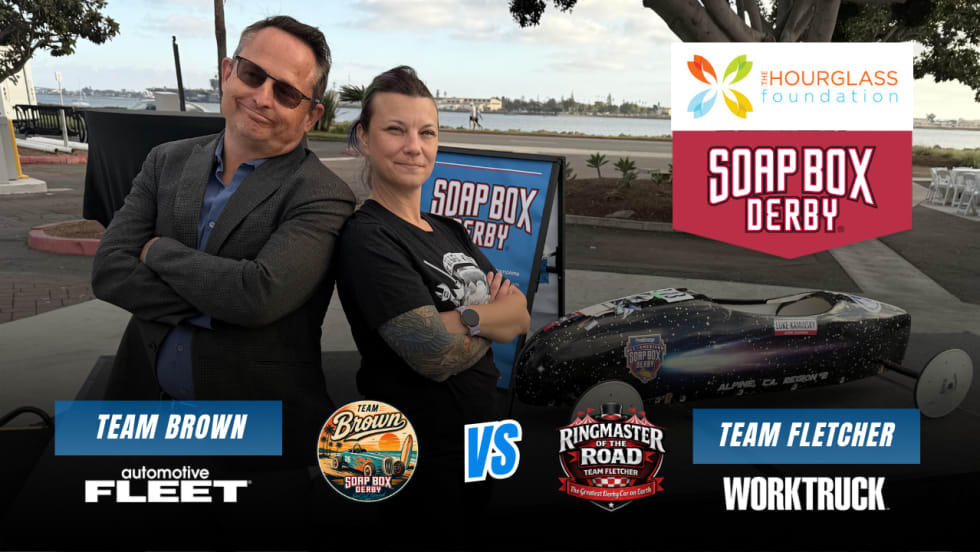
It's All Downhill from Here! Fleet Industry Raises $22,000 for Skilled Trades Scholarships
Work Truck’s Lauren Fletcher and Automotive Fleet’s Chris Brown turned a friendly racing rivalry into $22,000 for automotive technology and skilled trades scholarships.
Read More →
The Top 300 Commercial Fleets
The Top 300 Commercial Fleets: See the List
Read More →
Your Local Dealer Knows More Than You Think
Your local dealer can provide an information advantage that extends well beyond courtesy deliveries.
Read More →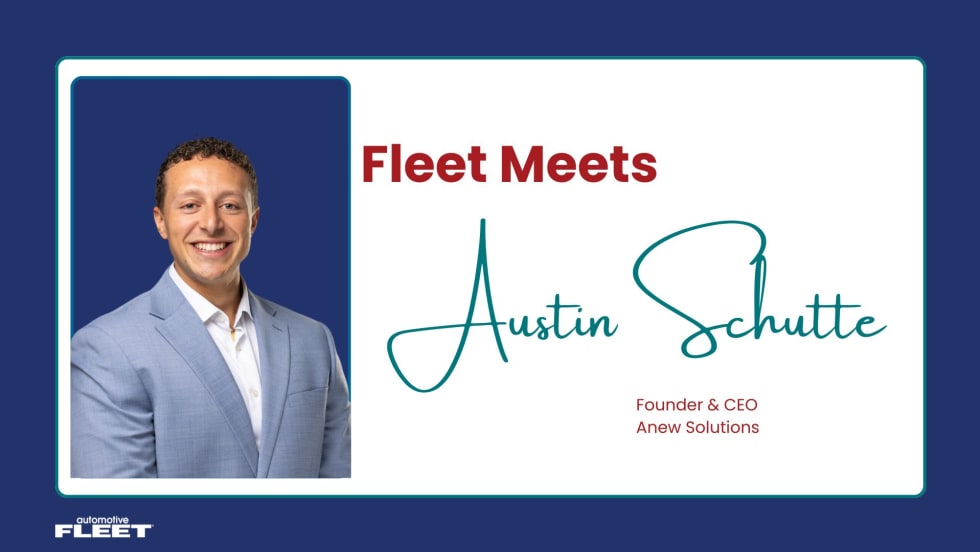
Fleet Meets: Austin Schutte
Here are some industry insights, personal touches, and words of advice from the CEO and Founder of Anew Solutions.
Read More →
Soap Box Derby Challenge: What’s Powering Team Brown
The car is coming together, the students are solving real build problems, and the fleet industry is helping push Team Brown toward the starting line.
Read More →