




Ensuring the Safety of a Mobile Sales Force
At Boehringer-Ingelheim Pharmaceuticals, driver safety is a partnership between the company and its employees. The three-year old fleet safety program has significantly reduced the number of claims and preventable crashes.

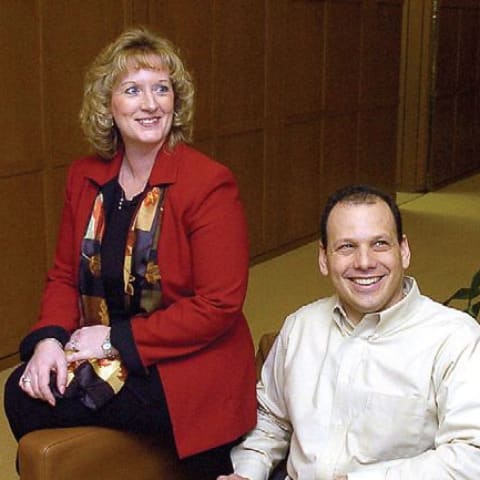
Lee Miller (l), fleet, sales operations and David Redalieu, associate director, environmental, health & safety work together to maintain a safe working environment.
In the pharmaceutical industry, fleet vehicles are a critical component of business. Field representatives must make sales calls to busy doctors. Pharmaceutical company Boehringer-Ingelheim Pharmaceuticals Inc. (BI) is no exception. Operating 2,700 vehicles, fleet is a valuable component of BI's business. With so many employees on the road, safety is clearly a concern, both in terms of caring for employees and maintaining the flow of business.
Changes at BI led to a need for consistency in the company's safety policies. BI took this opportunity to get key stakeholders on the same page and provide consistent, easily understood safety policies and procedures to employees. As a result, the BI Fleet Safety Program was launched in February 2006. Three years later, BI had significantly reduced the number of claims as well as the number of preventable accidents.
Prevention and Monitoring: Key Program Elements
Prevention is the first component of BI's risk management program. Before drivers take fleet vehicles on the road, BI performs motor vehicle record (MVR) checks for both drivers and their spouses or domestic/civil union partners. The checks are performed annually.
"Annual MVR checks are a crucial first step. Identifying drivers with suspended, expired, or restricted licenses quickly is extremely important to ensuring limited liability exposure," said Lee Miller, manager of fleet services. "The goal is to ensure we have only drivers with valid licenses out on the road."
Driver performance is monitored to ensure the safety of employees and other drivers on the road. Partnering closely with its accident services provider, Fleet Response, and AlertDriving.com, BI determines low-, medium-, and high-risk drivers using a driver history profile database. This system captures all authorized drivers' MVR histories as well as accident claim frequency.
Regardless of accident history, every driver is required to take six modules of online driver safety training annually, which keeps drivers abreast of safe driving guidelines.
"Because driving the company vehicle is an essential part of the employee's job, we stress the importance of using the vehicle in a safe and compliant manner and make the safety training modules a mandatory component of their ongoing learning plan," Miller said.
[PAGEBREAK]Overview Committee Process Streamlined
BI's Fleet Safety Committee is another important part of the risk management program. Team members represent all sectors of the company, including sales, fleet, HR, legal, safety, and risk. The team meets every two months to review and update policies and procedures and assess high-risk drivers. As each high-risk case is reviewed, the committee provides recommendations to management and HR when employees need further coaching to correct driving habits and behaviors, ensuring fair and equitable direction for every case.
"We have a committed and knowledgeable team that is familiar with many of the unique nuances that arise as a result of having a diversified workforce out on the road," Miller said.
While some businesses may see an overview committee as a time-consuming effort, BI has streamlined the process, making it efficient and beneficial to management and employees. Using agendas distributed to committee members in advance, BI's safety committee can focus on the task at hand.
"Everyone's time is precious, so it is important the meeting agenda content is shared prior to the actual meeting day. This allows everyone time to review and absorb the content," Miller said. "At the meeting, we are able to quickly address issues, provide clarity, and make decisions because of the preparation prior to the meeting."
Making Safety Easy for Employees
Ultimately, BI's goal is providing a safe workplace for employees; when much of their time is spent on the road, fleet safety guidelines are key. In addition to asking employees to play their part in ensuring safety, BI does its part. All fleet vehicles include safety options, such as front/side airbags, traction/stability control, anti-lock brakes, and daytime running lights. Policies - and further tips for safety - are easily referenced through BI's Fleet Services Web site.
"We are always looking for ways to communicate reminders on driving safely and ensure the content is valuable and informational. Our fleet services Web site provides comprehensive policy and procedures and is accessible to all drivers for quick reference," Miller said. The Web site links to BI's sales I-Net portal, allowing sales force drivers easy access to fleet services updates and safe driving reminders.
"BI has a long-standing commitment to the safety of all employees," David Redalieu, associate director, environmental health and safety stated. "Our values for safety and environmental protection were founded in our manufacturing operations, which include both chemical and pharmaceutical manufacturing where safety cannot be compromised. Beyond manufacturing, BI has realized that its employees are its most valuable asset and that we are all members of the same community. By working together to maintain a safe working environment, we are protecting the employees who work together to make BI successful."
As BI's mobile sales force continues to interface daily with customers, well-established safety policies help keep drivers safely on the road. As Miller puts it, "BI is an employer that not only cares about the bottom line, but also about the well being of its employees."
More Safety

Fleet Manager’s Ultimate Playbook: Navigating the New Standard in OEM Connectivity
Rising operating costs, driver safety concerns, and unplanned downtime are putting unprecedented pressure on modern fleets. Discover how fleet managers use embedded OEM connectivity and real-time vehicle data to cut TCO, prevent downtime, and protect drivers without aftermarket telematics hardware.
Read More →
From Driver Well-Being to EV Charging | AF News Recap
Mental health belongs in the fleet safety conversation. This week, we’re looking at five ways fleets can support employee well-being before a crisis, plus Holman’s expansion in Mexico, new one-day Fleet Forward passes, and why EV charging demand is outpacing infrastructure growth.
Read More →
Nexar-Nauto Merger Aims to Give Fleets Better Safety Intelligence Through Larger Driving Dataset
Stefan Heck tells Automotive Fleet that combining more than 10 billion miles of driving history with Nexar's AI models will give fleets deeper insights into driver risk and roadway conditions than either company could provide independently.
Read More →
Don't Wait for a Crisis: 5 Ways to Build Mental Health Into Your Fleet Safety Program
For Suicide Prevention Month, fleet and safety leaders have an opportunity to put mental health where it belongs: at the center of workplace safety.
Read More →
How Camera Data Can Strengthen a Fleet’s Insurance Renewal
Insights from a commercial insurance carrier and a broker show how fleets can turn video telematic data, driver coaching, and improved claims results into a stronger case at insurance renewal.
Read More →
The Safest Fleets Aren’t the Ones with the Most Technology
You’ve made the telematics investment. Here’s how to capture the other half of its value and build the safest fleet on the road.
Read More →
Hidden in Plain Sight: Fleet Compliance Risks
Fleet compliance isn't just about having policies — it's about consistently enforcing them. This practical guide reveals six hidden compliance risks common in public sector and shared fleet operations and outlines proven strategies to improve visibility, accountability, and audit readiness
Read More →
NETS Sets 2026 Fleet Safety Benchmark Conference for Indianapolis
The Sept. 15–17 program will feature fleet benchmarking data, case studies, emerging technologies, and implementation strategies while running alongside the NSC Safety Congress & Expo.
Read More →
Off-the-Job Crashes Account for 43% of Employers’ $61.7 Billion Crash Burden
NETS quantifies costs dispersed across fleet, risk, HR, and other departments while providing new per-crash benchmarks for employers.
Read More →
Ram Recalls More Than 1.27 Million 1500 Pickups for Seat Belt Anchor Issue
The recall affects certain 2019-2026 Ram 1500 pickups that may have improperly attached second-row seat belt buckle anchors.
Read More →