





The GDPR is an acronym for General Data Protection Regulation, which is a legal framework that sets guidelines for the collection and processing of personal information from individuals who live in the European Union.
Emerging Legal and Privacy Issues for Fleets
With policies such as the GDPR, the issue of potential regulatory, legal, and privacy issues associated with the collection and use of Big Data promises to grow in the future.
February 12, 2020

The presentation of actionable data is forcing managers to respond to it. What is the potential liability exposure if they do not respond to actionable data?
Image by Darwin Laganzon from Pixabay.
3 min to read
Data generated by a connected vehicle includes information that is identifiable to the driver — this becomes a concern for multinational corporations operating fleets in different global regions that may have more stringent privacy regulations than the U.S.

[EMPTY CREDIT]
“As the world becomes more unified in so many ways the need for protection of employee personal data becomes a stronger need. With the enactment of GDPR across the globe, how will you ensure that your drivers’ data is protected,” said Michael Bieger global fleet manager for Catholic Relief Services.
With policies such as the GDPR, the issue of potential regulatory, legal, and privacy issues associated with the collection and use of Big Data promises to grow in the future.

Bret Watson,
Sprint
“On the horizon will be the new laws that could be passed around data generated from the newer cars and concerns about privacy. The state of California has a new law that went into effect in January 2020. This has caused some fleets to update communication to employees in California with respect to the new law. Commercial fleets have one year until they are impacted, but many of us are already having discussions on how to communicate to our California drivers,” said Bret Watson, Lifetime CAFM, manager, corporate fleet for Sprint.
Another potential issue is that the presentation of actionable data is forcing managers to respond to it. What is the potential liability exposure if they do not respond to actionable data, especially if it is discovered after-the-fact during litigation.
“As the more actionable information gets in the hands of fleet administrators and managers, the more it will be necessary to act on it. Bold and courageous decision making will need to take place to put into action the information obtained to keep people safe, optimize vehicle use, save money, and tailor solutions that benefit everyone that we serve,” said one anonymous fleet manager.
The question asked by other fleet managers is whether senior managers will be willing to act on actionable data that may be perceived as being controversial within the company.
“In particular, is there enough buy-in from key stakeholders to make uncomfortable decisions?” said a fleet manager who did not wish to be identified in the article.
Eliot Bensel, vice president of account development at CEI Fleet Driver Management had more to say about that topic.

[EMPTY CREDIT]
“Are your fleet leaders prepared to make an uncomfortable decision once data is presented that proves that a process in play is not working? Will the fleet be willing to take corrective action on employees evenly? In today’s highly litigious society, the fleet must be able to move swiftly when a program is not doing enough to protect its employees, and corrective action against drivers must be handed out evenly, regardless of their position in the company. Am I prepared to do that? The answer has to be yes,” said Bensel of CEI.
Subscribe to Our Newsletter
More Operations
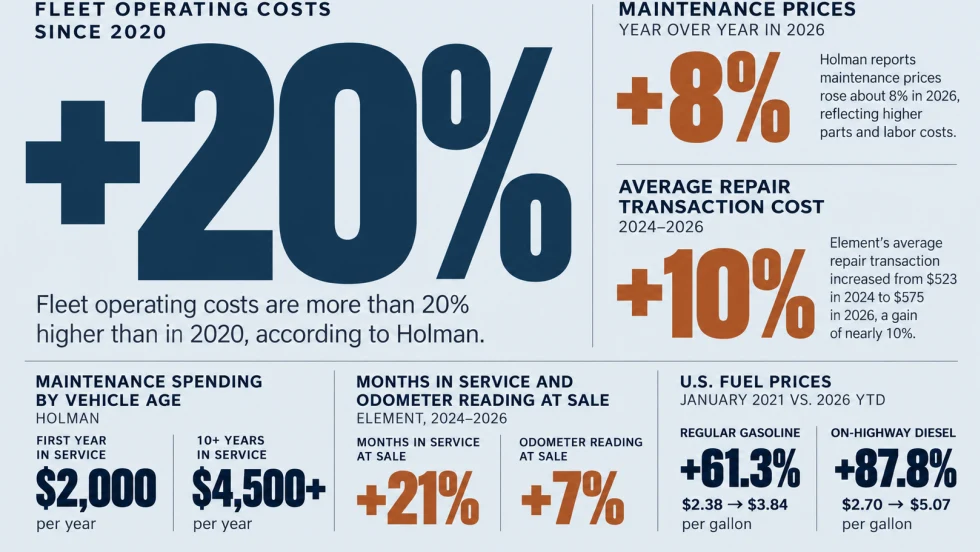
Managing Fleet Costs in an Era of Permanent Volatility
Fleet operating costs have risen more than 20% since 2020, raising a key question: When does extending a vehicle's service life stop making financial sense?
Read More →
The Next Evolution of Fleet Management: Autonomous Operations
This opening keynote session at the Fleet Forward Conference highlights the future of autonomous driving for fleets.
Read More →
How to Reduce the Total Cost of Risk From Catalytic Converter Theft
A stolen catalytic converter can cost fleets far more in downtime and lost productivity than in repairs. A total-cost-of-risk approach can help fleet managers quantify their exposure and prioritize theft prevention.
Read More →

Personal-Use Charges Rise as Vehicle Values Fall | AF News Recap
Personal-use charges are climbing, wholesale used-vehicle values are declining, and commercial fleet sales growth is slowing. This week, we're breaking down the latest fleet data, plus how Element Fleet Management is helping Waymo prepare for its first Canadian robotaxi market.
Read More →
Here's When You Should Make an Exception to Fleet Policy
Fleet policies are designed to create consistency, but not every driver or situation fits neatly within standard rules.
Read More →
AI-Native or AI-Acquired: What Should Fleet Managers Look for in an AI Platform?
Six questions can help fleet managers look beyond AI marketing claims to evaluate integration, data access, and real-world operational performance.
Read More →
Sponsored•October 14, 2026
A buyer's guide to fleet management software in 2027
Buying fleet management software in 2027 means looking beyond features and price. As fleet operations, technology and expectations evolve, this guide explores what today’s fleet professionals should consider when choosing a system that can deliver value now and adapt to what comes next.
Read More →
What Will Shape the Next Era of Fleet Management?
EVs, AI, and autonomous vehicles are reshaping fleet management. Discover what’s ahead—and how fleet leaders can prepare for the next era.
Read More →
How Fleets Can Recruit and Train Veterans for Technician Roles
Here's how the technician shortage has affected uptime for fleets, and what to do about it.
Read More →
Avis Budget Group Deploys Neology Toll Management Technology Across Major Brands
Neology’s neoFleet platform will manage toll transactions and toll-authority operations for vehicles across Avis, Budget, Payless, Budget Truck and Zipcar.
Read More →