




Emcor Retains Vehicles Beyond Usual Replacement
If your company policy is to keep fleet vehicles in service for a long time, is there a way, besides direct purchase, to fund them? There is. Emcor uses an open-end lease as a “bridge” to ultimate ownership.
It has almost become an article of faith in the industry for fleets to replace vehicles on a regular cycle, most commonly within three years. Such time/mileage replacement policies are very nearly gospel. However, some exceptions to the rule do exist. Some fleets have found that squeezing every possible mile of use can be a cost-effective policy.
Emcor, a diversified contracting and facility management/services business, runs a fleet of approximately 5,000 vehicles worldwide. The company is one of those that have determined that keeping vehicles in service beyond what is considered “normal” fleet life best fits their needs. Dan Davis, Emcor’s fleet manager for three years, says that the policy has worked well. “We generally keep our vehicles in service longer than most other fleets,” he explains. “It’s a policy that seems to fit our mission very well.”
Job Site Vehicles
Emcor’s fleet (mostly domestic makes) consists primarily of trucks, vans, and SUVs. The mission is a utilitarian one; the company’s core business is contracting, split among three primary groups:
Construction - electrical and mechanical contracting.
Service - primarily maintenance and repair of HVAC (heating, ventilation, and air conditioning) and electrical systems.
Facility services - broad-based building and facility services, ranging from grounds keeping to custodial services (Emcor provides such services, for example, to Hewlett- Packard and London’s Heathrow Airport).
“We do have some automobiles for sales and management roles that involve customer contact,” Davis notes. But overall, the fleet is a “work” fleet.
Vehicles are leased in an unbundled arrangement. “We’ve negotiated to purchase vehicles directly through a fleet dealer, and then fund them via a fleet lessor,” explains Davis. Rather than using a leasing transaction in its pure sense (that is, leasing for the “useful” life of the vehicle), Emcor views leasing as a financing means and, in some cases, as a “bridge” toward long term service.
“We find that the open-end, fleet-type lease is a good instrument for the purposes of procuring vehicles which we will ultimately keep in service for a long time,” Davis says. While it is not unusual for a company, under an open-end lease, to occasionally keep a vehicle in service until it is fully amortized, this tends to be the exception rather than the rule. Most companies whose fleet mission requires keeping their vehicles in service beyond normal replacement own the fleet vehicles. Emcor’s use of a finance lease to bridge that gap is unusual and creative.
Field locations are given responsibility for all expense so that replacement decisions are made at the level closest to the job and the customer. “Not only can field-level staff make the replacement decision,” Davis says, “but they can also choose to depreciate vehicles faster if they choose.” The standard depreciation rate is five years (60 months).
Vehicle life is longest in the construction division, where units are used as long as possible. “Job-site vehicles are strictly utilitarian,” Davis says. “They don’t accumulate many miles, and usage can be tough.” It is not unusual for construction job-site vehicles to remain in service for six years or longer, since they do not accumulate very many miles.
Bucking Common Wisdom
Emcor is aware that the choice to keep vehicles in service for such long periods goes against the grain. However, a good maintenance schedule and local control help make the policy cost effective. “We handle maintenance at the field location level as well,” Davis comments. “Some locations have their own mechanics and perform some preventive maintenance and repairs themselves.” These locations, as well as those without mechanics, can also contract with local shops for the balance of the work. “We also use the maintenance programs offered by our lessors,” Davis says, describing one of the advantages of a decentralized fleet.
Overall, the policy has been successful. “The key is making certain that preventive maintenance is performed on schedule,” Davis concludes. “If it is, there is no reason why a fleet vehicle cannot be kept in service for many years.” Although the “common wisdom” in the fleet industry is to replace vehicles more often, Davis and Emcor prove that, with the proper focus on maintenance and condition, and alternative uses for older vehicles (transferring them to job-site functions), useful life can be extended.
More Operations
Here's When You Should Make an Exception to Fleet Policy
Fleet policies are designed to create consistency, but not every driver or situation fits neatly within standard rules.
Read More →
AI-Native or AI-Acquired: What Should Fleet Managers Look for in an AI Platform?
Six questions can help fleet managers look beyond AI marketing claims to evaluate integration, data access, and real-world operational performance.
Read More →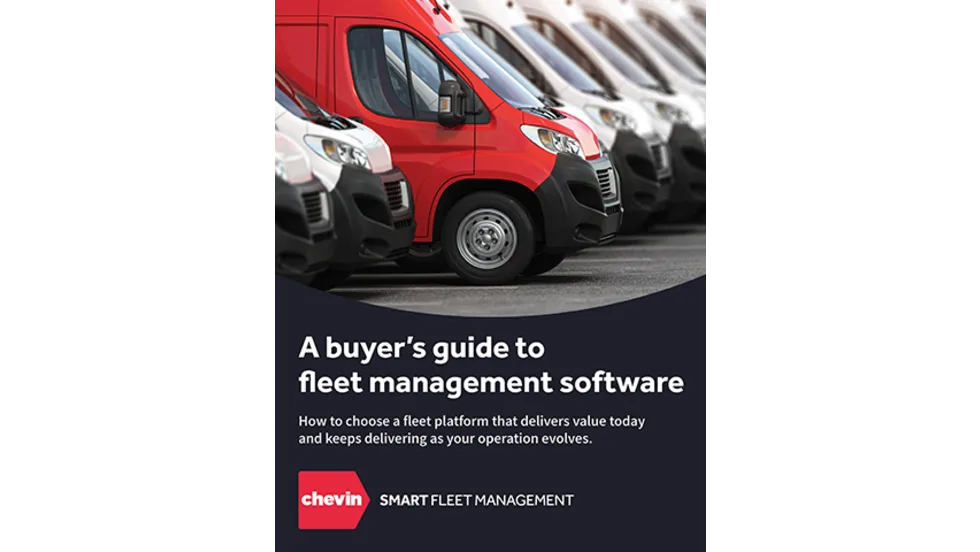
A buyer's guide to fleet management software in 2027
Buying fleet management software in 2027 means looking beyond features and price. As fleet operations, technology and expectations evolve, this guide explores what today’s fleet professionals should consider when choosing a system that can deliver value now and adapt to what comes next.
Read More →

What Will Shape the Next Era of Fleet Management?
EVs, AI, and autonomous vehicles are reshaping fleet management. Discover what’s ahead—and how fleet leaders can prepare for the next era.
Read More →
How Fleets Can Recruit and Train Veterans for Technician Roles
Here's how the technician shortage has affected uptime for fleets, and what to do about it.
Read More →
Avis Budget Group Deploys Neology Toll Management Technology Across Major Brands
Neology’s neoFleet platform will manage toll transactions and toll-authority operations for vehicles across Avis, Budget, Payless, Budget Truck and Zipcar.
Read More →
Fleet Personal-Use Charges Edge Higher in 2026
Nearly eight in 10 surveyed fleets allow personal use of company vehicles, while just over half of respondents report charging employees for the privilege.
Read More →
The Future of Fleet + What’s Changing Right Now | AF News Recap
Could developments overseas offer a preview of what’s coming for U.S. fleets? This week, we’re looking at the future of AI, autonomy, and electrification, plus Ford Pro’s new certified pre-owned program, smarter vehicle offboarding, and a new way for fleets to manage toll expenses.
Read More →
How to Handle Vehicle Offboarding
What do fleet managers need to do when a driver leaves?
Read More →
Fleet Manager’s Ultimate Playbook: Navigating the New Standard in OEM Connectivity
Rising operating costs, driver safety concerns, and unplanned downtime are putting unprecedented pressure on modern fleets. Discover how fleet managers use embedded OEM connectivity and real-time vehicle data to cut TCO, prevent downtime, and protect drivers without aftermarket telematics hardware.
Read More →