EV Outlook: With each new year, the technology and performance of electric vehicles change faster than the year before.
The turn of another year steepens the ascent of electric vehicles, which carry more advances with each new generation of model-years.
More than a decade has passed since the first Tesla Model S and the first Nissan Leaf rolled out, emerging as the flagships of the first generation of electric vehicles. The contrast with newer models over a decade could not be more apparent as they show how EVs are progressing.
One widely known EV battery expert, Scott Case, CEO of Recurrent, a battery analysis company, recently offered some electric vehicle forecasts for this year and beyond that can help fleet managers plan out electrification.
Old Batteries Hanging in There
EV batteries constantly evolve with added heft and range, compared to the first-generation batteries.
“Used EVs are still on the road, which proves they can last into an extended life while offering a reference point for the more advanced models coming out,” Case said. “For 2023 and beyond, EVs are bringing innovations.”
EVs aged MY 2015 or earlier, considered first generation EVs, may now have lower ranges from partially degraded batteries, but the fact they are still viable and mobile proves the batteries are not a failure, and hence, a success, Case said. For example, a 2012 Nissan Leaf may now have a 40-50 mile range instead of 75 miles, but that’s not the case for each vehicle. Battery durability depends on how an EV was charged and what temperature ranges it was exposed to during its life.
In another example, every Chevrolet Bolt ever built will get a new battery due to a massive recall of defective batteries that could catch fire. Because the chemistry and component quality of batteries improved in recent years, the new Bolt batteries will run with higher capacities, thereby boosting the value of the Bolts, Case said. “Batteries can diverge in good and bad ways from what a car had originally.”
Among other changes underway, manufacturers are figuring out ways to reduce the quantity of cobalt and nickel in batteries given the sharp rise in their costs on the commodity market in recent years. That helps lower the cost of EV batteries.
One emerging alternative is lithium phosphate batteries (LFP), which Tesla has been using in its Model 3 since last year, Case said. LFP batteries work on a different chemistry, and as a result, can be charged and discharged on a 100% to O% level scale instead of the now standard 80%-20% guideline. LFP batteries make EVs more convenient since drivers can fully charge them and not worry about degrading the battery beyond an 80% recommended charging limit.
“There’s not much energy in individual cells of the LFP, which means they have more flexibility,” Case said. “They don’t have as much energy density and are also cheaper.”
Over time, the innovations in battery efficiency and how the EV uses the power stored in the battery yield longer ranges.
Reselling ICE Vehicles vs. EVs
Case predicts in the next few years the automotive market will see the beginning of the end of combustion engine vehicles. As buyers gradually and subtly perceive the future risk of trying to resell their ICE vehicles in an ever-hotter EV market, they may shift more to leasing instead of purchasing ICE vehicles, and then transition to EVs altogether.
“The fear of trying to resell an ICE car in five to seven years starts to creep into new car buyers’ minds,” Case said. “No one wants to be the last person to be selling an ICE car when there’s no one buying.”
Counterbalancing that trend could be a reluctance to buy an EV now knowing that the technology and quality of EVs will improve exponentially. Why buy an EV that will seem too old in a future market of newer, better EVs more in demand?
Case contends that 10 years from now a used earlier generation EV will retain more appeal than any ICE vehicle, even with a lower range. “There will still be a lot of use cases for lower range EVs. Fewer people will be looking in 10 years for a 5–10-year-old used Toyota Camry. That’s what will look like a dead-end.”
That also means fleet operations will be making long-term rational decisions, he said. “Five to 10 years from now, buyers of de-fleeting vehicles will recognize they prefer an EV over an ICE vehicle.”
So far, these expected trends are not factoring into EV depreciation and residual values, which will shift based on market dynamics and other economic and supply-demand indicators.
Finding the Right Time for an EV Fleet
Fleets are focusing more on remarketing EVs and how de-fleeting will play out in the future. They will need to model out the net value of resold EVs.
“How should they think about the likelihood of batteries getting replaced in certain cars?” Case asked. “Batteries are changing so much; the cost of replacements will be different. What are the big maintenance items and when and how are they different from ICE vehicles?”
Factors determining when to de-fleet EVs include maintenance schedules and battery replacements. Fleets will no longer assess vehicles based on ICE-oriented turnover rates, such three-year/30,000-mile standards. “Fleets need to figure out which forces are pushing in one direction or another,” Case said. “The mileage likely will not be as big of a driver as calendar age and battery. It won’t be the same.”
The other key factor is the speed and types of charging. “How will we set up charging infrastructure that’s optimal for usage and keeping the battery in best shape for remarketing? You have to think about maxing an asset at the point of sale.”
Ideal Ranges for EV Fleets
Fleet operators will differ from consumers in range criteria, especially for those fleet vehicles running fixed duty cycles or driving within a geo-fenced radius or region.
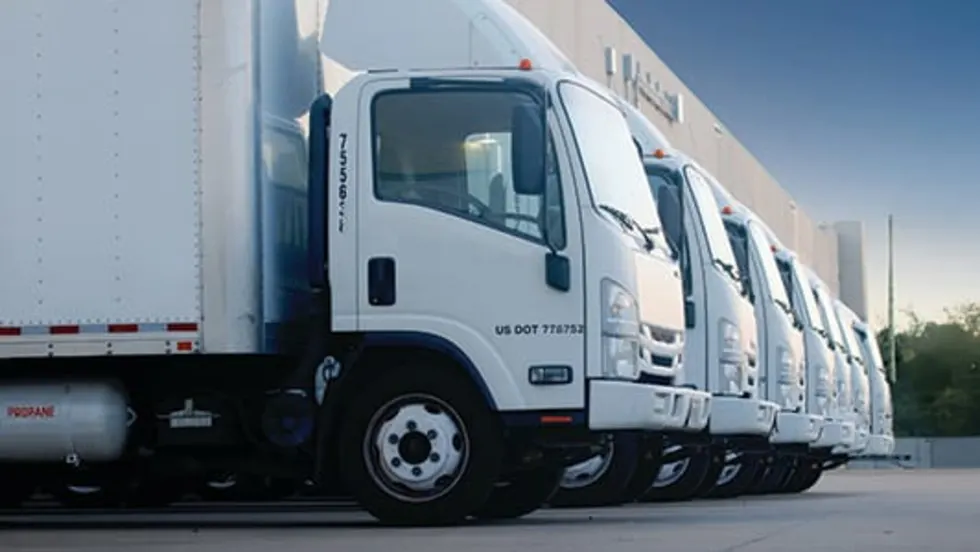
Studies show the average vehicle owner drives about 30 miles in a day. Fleet duty cycles for delivery tend to average about 75 miles per day. Given that fleet vehicles are often parked at night and available to charge, a daily range of 125-140 miles provides enough of a buffer.
The main variable for EVs, however, is weather and temperature, Case said. EVs can lose 30%-40% of their range in extremely cold temperatures. Fleet operations in colder climates should consider whether an EV has a heat pump versus the traditional resistive heat, since vehicles with heat pumps use less energy and perform better in winter.
Other types of fleets, such as rideshare and rental car, will likely opt for longer-range EVs since drivers spend more time and distance in the vehicles.
Since batteries are the primary cost share of EVs, fleets will need to weigh having lower-cost, shorter-range EVs versus ones with higher battery capacities and costs.