




Editorial
Late last November, with unusual zeal, the IRS proposed that the presence of a terminal rental adjustment clause indicates that the agreement is not a lease, disallowing any investment tax credits on finance leases for business and commercial usage.

Money is the most important thing in the world. It represents health, strength, honor, generosity, and beauty as conspicuously as the want of it represents illness, weakness, disgrace, meanness, and ugliness.-George Bernard Shaw, from the preface to Major Barbara, 1907
If a man runs after money, he's money-mad; if he keeps it, he's a capitalist; if he spends it, he's a playboy; if he doesn't get it, he's a ne'er-do-well; if he doesn't try to get it, he lacks ambition. If he gets it without working for it, he's a parasite; and if he accumulates it after a lifetime of hard work, people call him a fool who never got anything out of life.-Vic Oliver
Money affects us on all levels, and daily in both our professional and personal lives. Money is a paycheck; it's the cost of doing business; it's net profit; it's return on investment (ROI); it's a driving force in the fleet market for lessors to find innovative methods to lend at a more advantageous rate; and, unfortunately, it's also the concern of the Internal Revenue Service.
Late last November, with unusual zeal, the IRS proposed that the presence of a terminal rental adjustment clause indicates that the agreement is not a lease, disallowing any investment tax credits on finance leases for business and commercial usage. In this new interpretation of Section 210 of the Tax Equity and Fiscal Responsibility Act of 1982 (TEFRA), the IRS is completely and diametrically opposed to the original intent of the act.
Now, nearly three months later, these remarks are written the day after the Treasury hearing in Washington with responses from an august group of vehicle lessors, adhoc committee designees, tax experts, and other leaders. They are also being written before any final ruling or decision has been made. No one really knows when action will be taken or what the result will be, but as one of the speakers offering testimony quipped, "Dealing with IRS bureaucracy is like wrestling with a shadow."
Importantly, it is time to conduct a "what if" situation. We know that if the IRS withdraws its proposed regulation, all will continue as is albeit with sensitive lessor vigilance. If there is simply a delay for a week or a relatively short period of time, we may be left in limbo, but the ultimate confrontation will surely come. If the IRS does rule by the time you receive this issue, you can look for some dramatic changes.
Anticipation and readiness are watchwords. Yet in the past two days I have spoken with a dozen managers of larger leased fleets, and it shocked me that few possessed more than a mild concerns over the issue that has a strong chance of becoming reality. While it is clear that some lessors feel there is little need to alarm lessees until necessary (when the ruling is confirmed), it would seem that financial vice presidents of these corporate accounts would want to know, specifically, about the possible impact and exactly what the options are. At this particular time, they either do not know or do not appear to care, and to me this is unbelievable.
From my phone conversations with fleet managers, it is evident that they are quite sure that they will not opt for the more expensive closed-end lease to solve their problems; rather, they expect that they would continue to utilize the lessor for purchases and disposal (P&D) plus their expense services. It is rather obvious that lessors have a solidly entrenched professional group of people and services which lessees are not readily able to duplicate.
Leasing companies are truly in the transportation service business, and they have acquitted themselves well with changes in the past. They undoubtedly have the ingenuity to develop proprietary programs around the IRS ruling but are hesitant to announce their presentations until absolutely necessary, since they might lose a competitive edge. Understandably. It all relates to money and the bottom line; the results will be worth recording is fleet history. And you can bet your bottom dollar on it.
More Operations
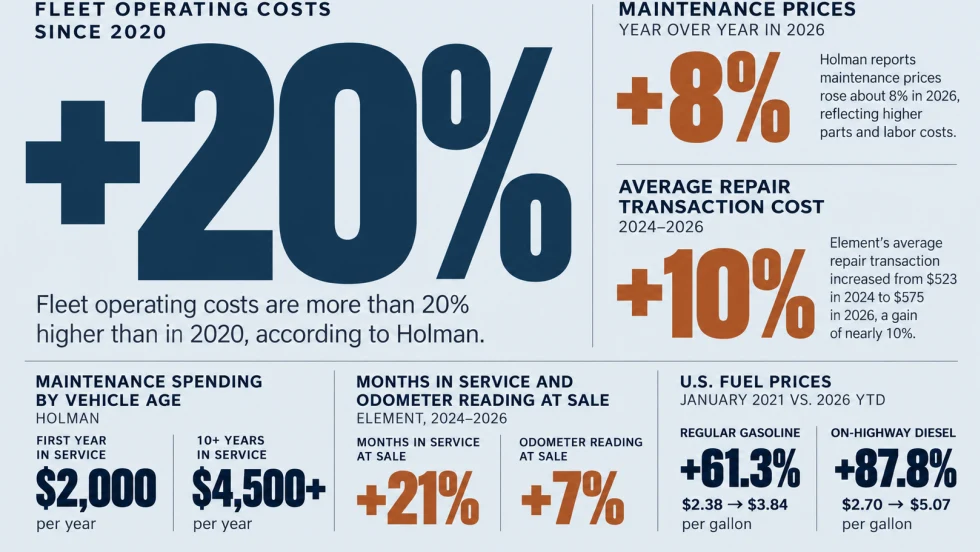
Managing Fleet Costs in an Era of Permanent Volatility
Fleet operating costs have risen more than 20% since 2020, raising a key question: When does extending a vehicle's service life stop making financial sense?
Read More →
The Next Evolution of Fleet Management: Autonomous Operations
This opening keynote session at the Fleet Forward Conference highlights the future of autonomous driving for fleets.
Read More →
How to Reduce the Total Cost of Risk From Catalytic Converter Theft
A stolen catalytic converter can cost fleets far more in downtime and lost productivity than in repairs. A total-cost-of-risk approach can help fleet managers quantify their exposure and prioritize theft prevention.
Read More →

Personal-Use Charges Rise as Vehicle Values Fall | AF News Recap
Personal-use charges are climbing, wholesale used-vehicle values are declining, and commercial fleet sales growth is slowing. This week, we're breaking down the latest fleet data, plus how Element Fleet Management is helping Waymo prepare for its first Canadian robotaxi market.
Read More →
Here's When You Should Make an Exception to Fleet Policy
Fleet policies are designed to create consistency, but not every driver or situation fits neatly within standard rules.
Read More →
AI-Native or AI-Acquired: What Should Fleet Managers Look for in an AI Platform?
Six questions can help fleet managers look beyond AI marketing claims to evaluate integration, data access, and real-world operational performance.
Read More →
A buyer's guide to fleet management software in 2027
Buying fleet management software in 2027 means looking beyond features and price. As fleet operations, technology and expectations evolve, this guide explores what today’s fleet professionals should consider when choosing a system that can deliver value now and adapt to what comes next.
Read More →
What Will Shape the Next Era of Fleet Management?
EVs, AI, and autonomous vehicles are reshaping fleet management. Discover what’s ahead—and how fleet leaders can prepare for the next era.
Read More →
How Fleets Can Recruit and Train Veterans for Technician Roles
Here's how the technician shortage has affected uptime for fleets, and what to do about it.
Read More →
Avis Budget Group Deploys Neology Toll Management Technology Across Major Brands
Neology’s neoFleet platform will manage toll transactions and toll-authority operations for vehicles across Avis, Budget, Payless, Budget Truck and Zipcar.
Read More →