




Ed Bobit's Publisher's Page
Where is the innovation needed today to meet some of the strongest challenges that business people have faced in a number of decades?

Our society cannot have it both ways; to maintain a conformist and ignoble system and to have skillful and spirited men to man the system with. --Paul Goodman
Woe to the princes and people that obey the times, instead of commanding the times! The times will devour them. --Ludwig Boeme; Mendel der Franzosenfresser, 1836.
If there is anything the nonconformist hates worse than a conformist it's another nonconformist who doesn't conform to the prevailing standarsd of nonconformity. --Bill Vaughan
You won't skid if you stay in a rut. --Frank McKinney Hubbard
Referring to the last quotation, some have said that a rut is a grave with the ends knocked out. It comes to mind after completing a pretty full circuit of fall industry meetings and new car previews that, true to form we're close to the conformity of past years. This prompts the question of why these meetings and agendas appear to follow the previous year's programming, often with the same speakers or panelists and most assuredly, the same or similar topics. Where is the innovation needed today to meet some of the strongest challenges that business people have faced in a number of decades?
Even though the meetings and previews were well attended, a fact that tends to mark them as "successful," it's getting hard for me, and perhaps a number of the peers of my generation, to exude excitement and attend with the relish we savored in years past. I am particularly turned on when meeting with the auction and leasing merchandising managers at the annual NAAA convention; the latest was held in Kansas City. These are the real pros in our business; the ones who have an unusual influence on the profitability, or the cost of our operations.
In the fleet profession, we call on experts in or out of our respective companies for the creative financial guidance so necessary there days. Even with the relatively high initial costs of new vehicles today, most buyers can make a fleet purchase for just about the same amount of dollars, just as borrowing can be closely competitive. We know that fuel costs have nearly tripled (from .0215 to .0577 cents/mile) in the last ten years. There are few economics to be made in choosing a particular gas station, presuming you have made the optimum vehicle and engine selection.
The one variable, and greatest opportunity, lies in the disposition of the used units. With new car prices escalating to record level, we know that depreciation has risen from $626 to $1500/year in the past 10 years. Now that is one heck of a lot to work with to save someone's P&L statement. Here's where we can and should be initiating the innovative procedures to obtain the premium residual values and lower overall costs through managerial fleet management.
Our September study among lessor used car merchandisers clearly indicated that it is business as usual" using the same methods established long ago. Except for increased driver sales of the used units, and a few utilizing their own retailing outlets, little has changed. We all realize that we are actually "manufacturing" over a million used cars each year, while the nation's individual auto owners collectively sold 7.5 million cars last year. That calls for competition.
It seems to me that there should be a great deal more monitoring and "auditing" done on the volume of fleet used cars, as well as acquiring resale knowledge in the marketplace. The nest time you attend a NAFA meeting, ask a half dozen fleet administrators in a leased fleet what the going auction price was last week on '79 Impala and a '79 LTD. You'll see what I mean.
In Kansas City at NAAA, I made a mini-poll among auction owners, fleet managers some lessor used car people with one question: "How many high-mileage fleet cars today have their odometers turned back after they are sold?" To my amazement, even with full knowledge of current prosecutions (and convictions) on the current tough odometer law, the lowest estimate was 90%; most agreed on 99%. Privately, of course. While clock-spinning is blatantly illegal and risky, the obvious inequity is undoubtedly tempered by a higher purchase price for the clean fleet car with the buyer knowing well the odometer's ultimate fate. Innovative?
For some of my fellow trivia buffs and former fellow golfers, I read an amazing statistic the other day. Perhaps you would like to guess the average stroke difference between the number one winner on the tour and the golfer who came in number 100. For the record on July 13, Tom Watson led with an average stroke of 70.43 earning $335,982; and the 100th money winner, Beau Baugh (yes who's he) had 71.93, earning $22,620. Might not this apply especially to the sale of used fleet cars? I happen to think so.
More Operations

Fleet Has a Talent Pipeline Problem. What Comes Next? | AF News Recap
Where will fleet’s next generation of leaders come from? This week, we’re looking at the industry’s talent pipeline, what certification can add to a fleet career, how to build an award-worthy track record, and the return of Automotive Fleet’s Personal Use Survey.
Read More →
Smith System Launches Driver Risk Management Program
Fleets have more driver data than ever, but identifying risky behavior doesn't necessarily correct it. Smith System's new Driver Risk Management program combines monitoring, training, and follow-up coaching to help fleets connect risk signals with driver intervention.
Read More →
Automotive Fleet Opens 2026 Personal Use Survey for Commercial Fleet Managers
Less than two weeks left! Commercial and corporate fleet managers are invited to share how their organizations handle company vehicle personal-use policies, charges, and driver eligibility.
Read More →
From AI Prompts to AI-Generated Safety Songs | AF News Recap
Can better prompts make AI more useful for fleet managers? This week, we’re breaking down smarter fleet analysis, an AI-assisted experiment that turned safety training into music, and what happened to fuel prices in August.
Read More →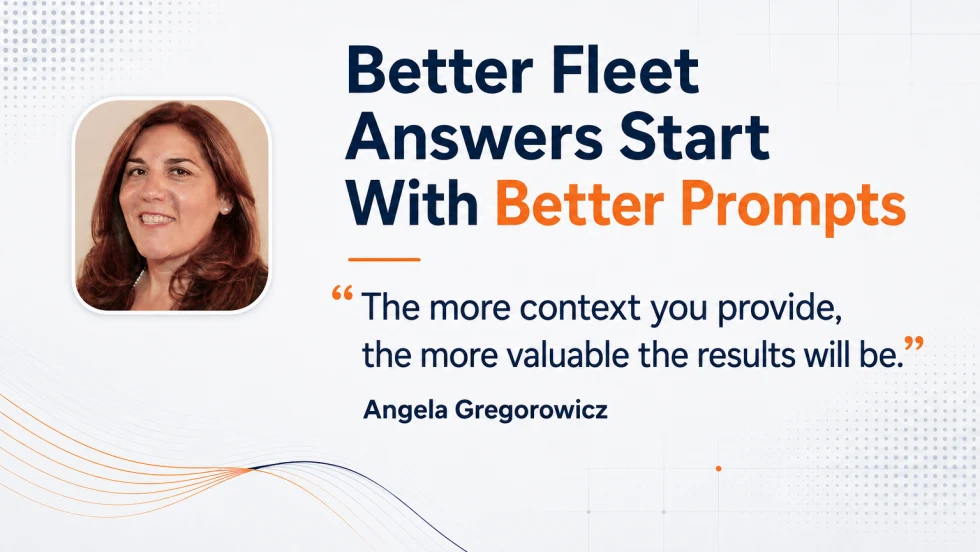
How to Write Better AI Prompts for Fleet Analysis
Include these six elements in your fleet prompts to generate more relevant analysis and accurate answers.
Read More →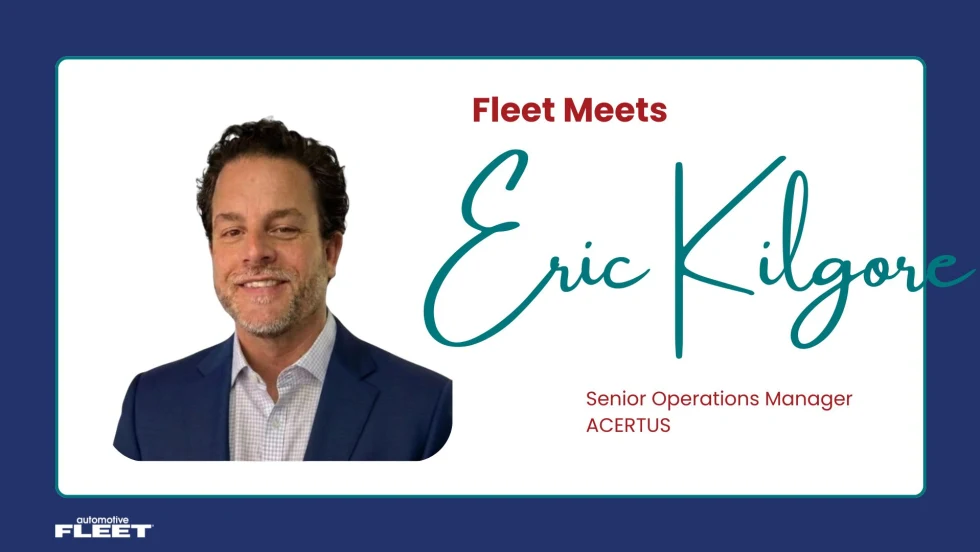
Fleet Meets: Eric Kilgore
This edition of the Fleet Meets series features one of the industry's best leaders driving multi-market and national operations.
Read More →
Why Reactive Fleet Management Is Becoming Too Expensive to Sustain
Research highlights a growing need for proactive management strategies to address rising costs in fleet operations effectively.
Read More →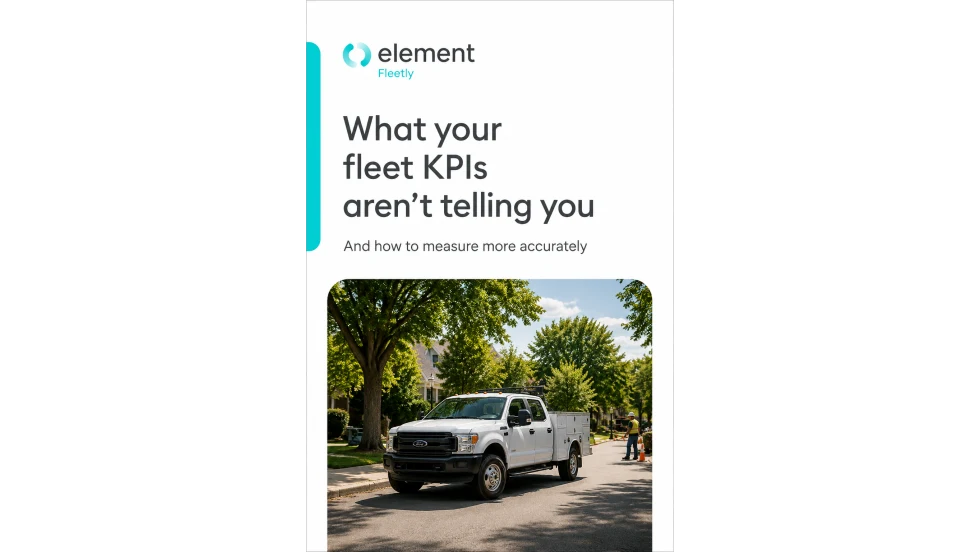
What Your Fleet KPIs Aren’t Telling You
Tracking fleet metrics is only useful when the data leads to better decisions. This guide helps fleet leaders assess cost, utilization, and downtime more accurately, identify performance gaps, and prioritize the actions that can improve operational results.
Read More →
Hidden in Plain Sight: Fleet Compliance Risks
Fleet compliance isn't just about having policies — it's about consistently enforcing them. This practical guide reveals six hidden compliance risks common in public sector and shared fleet operations and outlines proven strategies to improve visibility, accountability, and audit readiness
Read More →
Turning Fleet Payment Data into Executive Insights
Does data alone drive results in operations?
Read More →