




Ed Bobit's Publisher's Page
Right now is the time for fleet men to accept the challenge to recognize the infinite difference between 'fleet administration' and 'fleet management.' And do something about it.

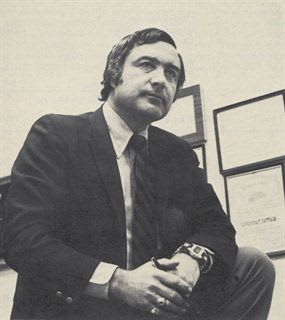
Of all treasons against humanity, there is o one worse than his who employs great intellectual force to keep down the intellect of his less favored brothers.-William Ellery Channing: On the Elevation of the Laboring Classes, 1840.
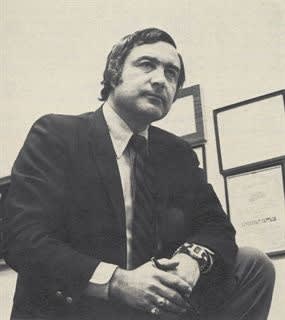
There has never been a more appropriate or demanding time for a change within our industry. Right now is the time for fleet men to accept the challenge to recognize the infinite difference between 'fleet administration' and 'fleet management.' And do something about it.
The need is a shouting one. And it was summarized so perfectly by an old friend and professional fleet man, R.O. Ferguson from Iowa National Mutual Insurance Company. In a letter to me, Fergie laid it on me this way...
Mr. Bobit,
I enjoyed your editorial in the newest issue of Automotive Fleet (January, 1974). Some thoughts whizzed through my mind as I read it, and I felt I had to comment. The survey in the Pittsburgh chapter piqued my curiosity. The answers you got would indicate that the fleet men involved were not coming up with your conclusion but were mired in procedural operations - with little concern for the real problem. I concur. However, there probably is an adequate answer.
I say this because I am much in the same boat (I think) as the fleet men you surveyed. Did your survey include the "kind" of men you were talking to? Were they multi-purpose men? Do they operate out of a cubical with no assigned or hired help? Do they buy a car while someone is standing over their shoulder wondering when the snow will be removed from the parking lot, what the press date is for the company monthly publication? Is the boss waiting for you in his office to give you his keys so that you can get his wife's car washed? Does your Electronic Data Processing Department need that end-of-the-month mileage report so that they can run your aging survey? If so, is it because you haven't found time to do the clerical work that they require of you prior to making the run? Have you coded this month's rental bill from the leasing company for the Accounting Department broken down by branch and department? Have you examined last month's data processed run of your car costs and written to the men who are exceeding your not-so-carefully, and out-of-date, limits set on the exception report?
Changing fleet policy requires you to update the fleet manual, but the nights aren't long enough. The Marketing Department has to have an annual statement put out, and they need photographs of the important people. They need them tomorrow, your camera is at home, the local photo shop can't make enlargements by tomorrow and so your private hobby becomes a nighttime job. The books of the subsidiary company you "run" haven't been closed for the year and the books aren't posted.
The federal and state corporation income tax forms are sitting on your desk. Did all of the 1974 license plates for your fleet get ordered? The boss's annual trip to all branches with his slide show and talks about what happened in 1973 begins in nine days and his slide show isn't all typed, laid out or shot yet; let alone arranging for the special processing which will be necessary in order to have them on time.
Are you getting the message?
On several occasions, I have had the opportunity to discuss the fleet problems with my management. I discovered that (I'm in the insurance business) out of each premium dollar we receive, I spend $.0072 on fleet costs. ($.0075 last year) A survey I took among insurance people about five years ago shows graphically and gives useable figures which indicate we are "within the ball park." However, this information didn't Impress my boss. It would have if I were spending $.25 out of that buck - but it is a minuscule $.0072!
So? My boss has other more pressing expenses with which to concern himself. He doesn't press me - I don't press him - and I turn back to what is pressing. Are you impressed?
While the above situation is compounding itself, YOU show up and ask me - "what is your biggest fleet problem?"
I know it's gotta be the sale of those damned standard-sized, high-mileage, late model cars -.
But as this point, if I had a solution, what the hell could I do about it?
Even a large dose of Milk of Magnesia is an inappropriate excuse.
Maybe the other men you talked to didn't explain THEIR problem quite like this. Thanks very much, Mr. Bobit.
Kindest Regards, R.O. Ferguson, Fleet Manager
His letter clearly outlines the detail a fleet man finds himself immersed in and inevitably harnessed with when there is an obvious need for 'management' rather than 'administration.'
Another professional and friend is Mac Wilson at U. S. Steel. He has taken the time to set definitions in the area. He identifies the work of fleet administration as: A particular vehicle is chosen and regardless of circumstances, it is procured without exception. The same action follows with a replacement mileage criterion.
Conversely, fleet management represents: The replacement (of the vehicle) at the most economic time regardless of mileage or the time and service. While one may establish a 'standard' fleet car, deviations are permitted from this 'standard' car where circumstances warrant such a deviation.
He has developed an epistle around fleet management that will stand the test of time and weather crises of energy, inflation, and used car values.
It is with this challenge in mind that I personally urge each of our readers to consider sharing ad learning among the industry's professional. Namely, to attend NAFA's annual meeting in New York on April 7th for the latest and best on fleet management. And/or the AFLA meeting on April 5th (at the same place) to participate with the entire buying-selling phase of our business.
Do it. You have never had a better reason.
More Operations

Avis Budget Group Deploys Neology Toll Management Technology Across Major Brands
Neology’s neoFleet platform will manage toll transactions and toll-authority operations for vehicles across Avis, Budget, Payless, Budget Truck and Zipcar.
Read More →
Fleet Personal-Use Charges Edge Higher in 2026
Nearly eight in 10 surveyed fleets allow personal use of company vehicles, while just over half of respondents report charging employees for the privilege.
Read More →
The Future of Fleet + What’s Changing Right Now | AF News Recap
Could developments overseas offer a preview of what’s coming for U.S. fleets? This week, we’re looking at the future of AI, autonomy, and electrification, plus Ford Pro’s new certified pre-owned program, smarter vehicle offboarding, and a new way for fleets to manage toll expenses.
Read More →
How to Handle Vehicle Offboarding
What do fleet managers need to do when a driver leaves?
Read More →
Fleet Manager’s Ultimate Playbook: Navigating the New Standard in OEM Connectivity
Rising operating costs, driver safety concerns, and unplanned downtime are putting unprecedented pressure on modern fleets. Discover how fleet managers use embedded OEM connectivity and real-time vehicle data to cut TCO, prevent downtime, and protect drivers without aftermarket telematics hardware.
Read More →
U.S. Bank Adds Verra Mobility Toll Management to Voyager Fleet Platform
The integration allows U.S. Bank Voyager fleet customers to manage toll payments and violations alongside fuel, EV charging and maintenance expenses.
Read More →
ADAS Prevents Crashes. But Repairs Cost More | AF News Recap
ADAS-equipped vehicles may crash less often, but they can cost more when they do. This week, we’re breaking down what that tradeoff means for fleets, plus Subaru’s first Forester Wilderness Hybrid, Nissan’s new e-POWER Rogue, and why Calstart has become Catalyst Mobility.
Read More →
Moventum Fleet Management Names Mark Iorillo Head of Sales
Iorillo brings nearly 20 years of fleet management and sales experience to the role, including previous positions at Element Fleet Management, CEI, Donlen and Ryder.
Read More →
Fleet Has a Talent Pipeline Problem. What Comes Next? | AF News Recap
Where will fleet’s next generation of leaders come from? This week, we’re looking at the industry’s talent pipeline, what certification can add to a fleet career, how to build an award-worthy track record, and the return of Automotive Fleet’s Personal Use Survey.
Read More →
Smith System Launches Driver Risk Management Program
Fleets have more driver data than ever, but identifying risky behavior doesn't necessarily correct it. Smith System's new Driver Risk Management program combines monitoring, training, and follow-up coaching to help fleets connect risk signals with driver intervention.
Read More →