




Ed Bobit's Publisher's Page
During a week's period in late November, two branches of the U.S. government individually dealt our industry cataclysmic blows that will surely change your business lifestyle and delivered a specific shock to fleet and consumer lessors that will reverberate for months to come. It all came quite unexpectedly.

Any change in whatever direction for whatever reason is strongly to be deprecated.-Anonymous: credited to "a Duke of Cambridge," quoted, by Adlai Stevenson, Harper's Magazine, February 1956.
The art of progress is to preserve order amid change and to preserve change amid, order.-Alfred North Whitehead
Progress is a nice word. But change is its motivator and, change has its enemies.-Robert F. Kennedy
Man has a, limited biological capacity for change. When this capacity is overwhelmed, the, capacity is in future shock.-Alvin Toffler
During a week's period in late November, two branches of the U.S. government individually dealt our industry cataclysmic blows that will surely change your business lifestyle and delivered a specific shock to fleet and consumer lessors that will reverberate for months to come.
It all came quite unexpectedly. Our associations, our management leaders, the Washington attorneys, all failed to identify the impending decisions. Leasing companies were collectively enjoying either record or near-record years with new car prices remaining steady, interest rates continuing their fall to workable levels and the used car market as strong as the Merrill- Lynch bull. Then, almost simultaneously, the Ninth Circuit Court reversed a lower court's decision, in the now-infamous Swift Dodge case, ruling in essence that a consumer open-end lease was nothing more than a conditional sales contract. And, in a separate action influenced by the Swift Dodge Ruling, the Internal Revenue Service ruled that Section 210 of the Tax Equity and Fiscal Responsibility Act of 1982 (TEFRA) would disallow any investment tax credits on finance (open-end) leases for business and commercial usage.
Most industry veterans had felt that a "true" (finance) lease had been successfully defended some two decades ago in the Motorlease case. These new implications are sure to produce a major restructuring in almost every lessor's financial and operating procedure for national fleet lessors as well as local retail leasing departments (the exception being a small group currently in closed end leasing). Two nights ago, Bill Nurnberg, WVLA's manager, told his membership to tear up every open-end leasing application in their office and not to write another one. AALA officers and the nation's leading lessors are having "summit" meetings to determine both new direction and to assess the best possible method to change what has happened.
What it may mean is a total switch to closed-end leases. Corporate lessees must virtually forget about removing the vehicles from their financial statement (just after all fleet lessors made the adjustment to "operating leases" during the past year) and get used to earning the ITC and the depreciation. Lessors will have to be very innovative to be more than a "management" lessor performing buying and selling functions. And lessors will have to totally readjust their own service fee and profit packages. Some lessors, like Dresser and CC/McCullagh who have huge tax appetites, may fare much better than those who depend heavily on huge deferred tax credits. Cashflush companies like General Electric may move into both fleet and consumer leasing as never before. Large and small consumer lessors ask what they can do when it is the individual lessee who gets the ITC; what can that individual actually do with the accelerated cost depreciation? How much will the IRS really gain when they shift the tax credits to the lessee but, on the other hand, lose the Use and Rental taxes in many states? It's all devastating and diametrically opposed to the intent of TEFRA.
Although there is one more appeals court to review the Swift Dodge case, there will be intense all-out efforts to change this with the IRS before January 24th (their date for comments). You can help by contacting your own leasing organization.
Do it now; it may be your last chance to view an industry as we know it today. It won't be that way tomorrow.
More Operations

Fleet Has a Talent Pipeline Problem. What Comes Next? | AF News Recap
Where will fleet’s next generation of leaders come from? This week, we’re looking at the industry’s talent pipeline, what certification can add to a fleet career, how to build an award-worthy track record, and the return of Automotive Fleet’s Personal Use Survey.
Read More →
Smith System Launches Driver Risk Management Program
Fleets have more driver data than ever, but identifying risky behavior doesn't necessarily correct it. Smith System's new Driver Risk Management program combines monitoring, training, and follow-up coaching to help fleets connect risk signals with driver intervention.
Read More →
Automotive Fleet Opens 2026 Personal Use Survey for Commercial Fleet Managers
Less than two weeks left! Commercial and corporate fleet managers are invited to share how their organizations handle company vehicle personal-use policies, charges, and driver eligibility.
Read More →
From AI Prompts to AI-Generated Safety Songs | AF News Recap
Can better prompts make AI more useful for fleet managers? This week, we’re breaking down smarter fleet analysis, an AI-assisted experiment that turned safety training into music, and what happened to fuel prices in August.
Read More →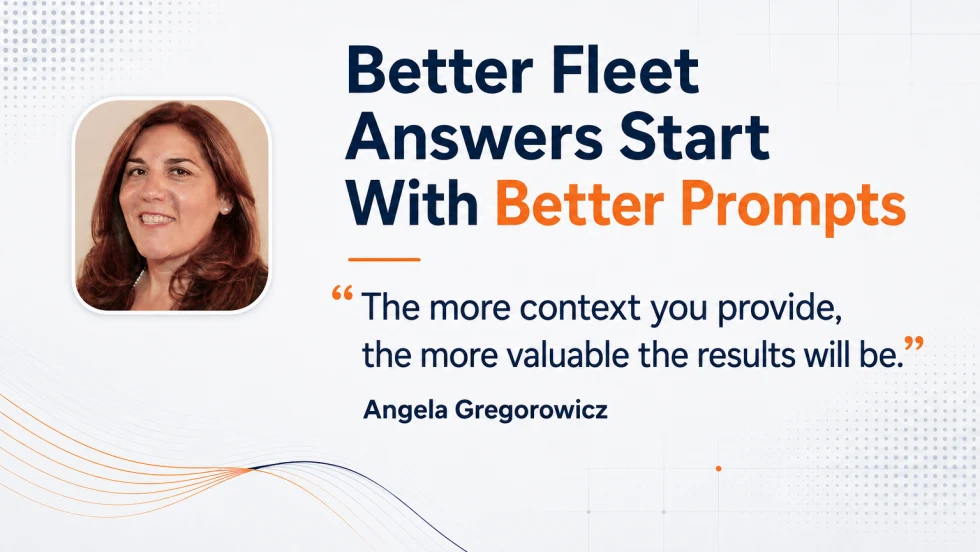
How to Write Better AI Prompts for Fleet Analysis
Include these six elements in your fleet prompts to generate more relevant analysis and accurate answers.
Read More →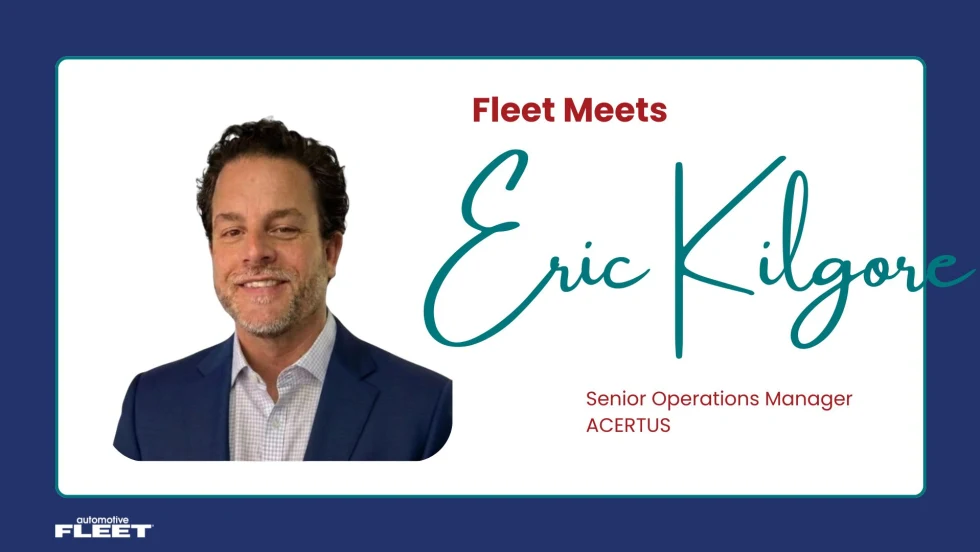
Fleet Meets: Eric Kilgore
This edition of the Fleet Meets series features one of the industry's best leaders driving multi-market and national operations.
Read More →
Why Reactive Fleet Management Is Becoming Too Expensive to Sustain
Research highlights a growing need for proactive management strategies to address rising costs in fleet operations effectively.
Read More →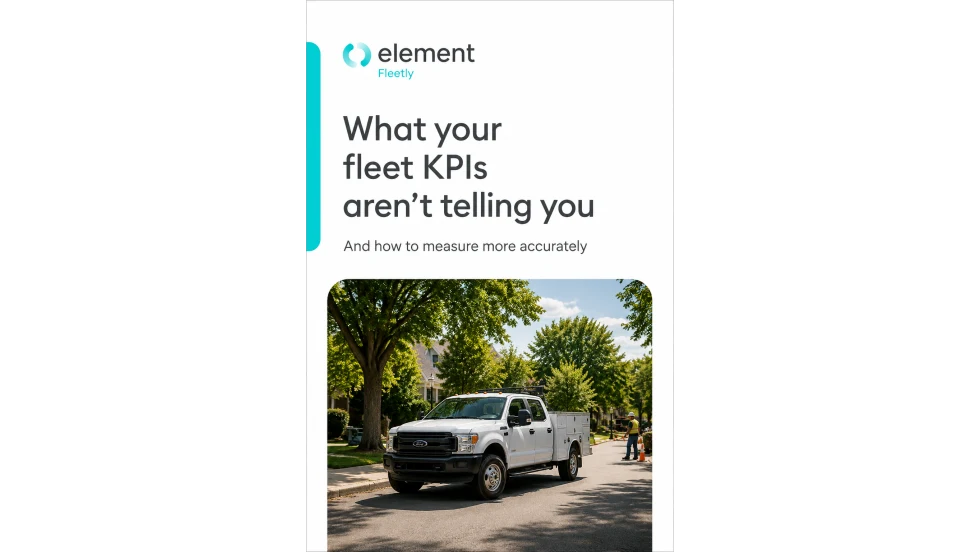
What Your Fleet KPIs Aren’t Telling You
Tracking fleet metrics is only useful when the data leads to better decisions. This guide helps fleet leaders assess cost, utilization, and downtime more accurately, identify performance gaps, and prioritize the actions that can improve operational results.
Read More →
Hidden in Plain Sight: Fleet Compliance Risks
Fleet compliance isn't just about having policies — it's about consistently enforcing them. This practical guide reveals six hidden compliance risks common in public sector and shared fleet operations and outlines proven strategies to improve visibility, accountability, and audit readiness
Read More →
Turning Fleet Payment Data into Executive Insights
Does data alone drive results in operations?
Read More →