




Ed Bobit: Once Upon a Time ...
During current times, nearly every management exec in the auto industry is cognizant of the fleet market. It hasn't always been that way. Most factory people were "wholesale-minded;" success equated to dealer volume and sales.

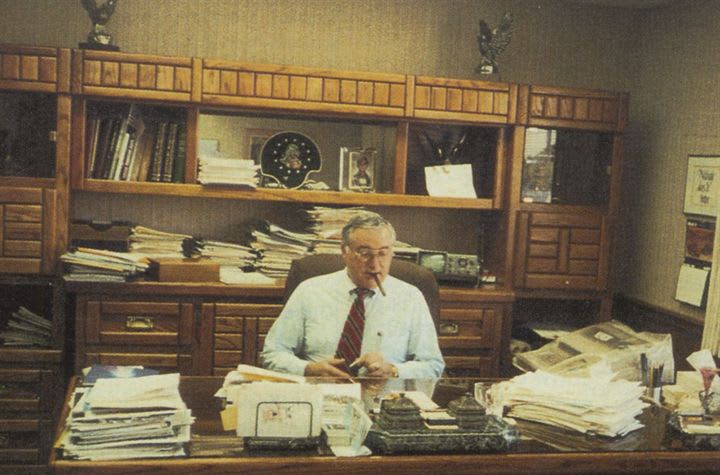
Ed in his office, 1990
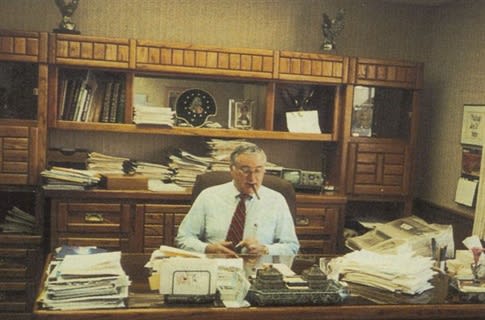
Ed in his office, 1990
During current times, nearly every management exec in the auto industry is cognizant of the fleet market. It hasn't always been that way. Most factory people were "wholesale-minded;" success equated to dealer volume and sales. Premiums, incentives, the formation of special groups like "20-Groups." "Master Dealers." and "Dealer Councils." were always related to the retail (factories call it wholesale) end of the business. It was felt that the dealer alone had the key to the financial bottom line and executive bonuses. "Fleet" was always a reluctant stepchild in the factory family. Years ago fleet directors were appointed just prior to "pasture-time" (retirement).
Fleet sales of tens of thousands of new cars were expected to be sold and serviced by a handful of fleet factor) personnel on meager budgets; and never an epaulet or any applause for a job well done. "Fleet" was the faucet to keep the production reservoir (read inventory) from overflowing: fleet was merely the roll that accompanied the full-course dinner; fleet was the marehing band between halves of the championship game; fleet was simply tolerated like an unpopular mother-in-law. Dealers were king, the heart and soul of the car business, and fleet could not cast a visible shadow with dealers' candles glowing ever so brightly.
Slowly the day of reckoning arrived, and in recent years, fleet business began to be recognized in a positive light. No one could ignore it, especially when more than one out of five new cars registered went into fleet. Import penetration at retail became such a serious threat that some domestic makers had difficulty keeping their dealers from dealing retail orders slackened, production plants were deemed inefficient, and union contracts commanded continuous production to avoid staggering losses. Suddenly, the loud and heavy call went out to "turn on the fleet faucet:" capable marketing people were installed in fleet departments: every carmaker vowed to deliver competitive programs; and non-fleet dealers raised hell with the factory's fleet policy, especially after some makers began investing in rental and leasing companies for guaranteed orders and market share.
The new chapter being written right now is initially aimed at the factory/rental relationship. This is precisely where dealers scream of incentive inequities and unfair used-car competition. The solution is now on the drawing table. It may come in steps, but it looks like 100-percent factory buybacks for rental firms will be available this fall putting carmakers in total control of every fleet vehicle. That means there will be no newly-used risk vehicles across the street from the dealer selling in competition (most rental company used-car lots may be gone) and only dealers will have the opportunity to purchase all the low mileage cars (although those under 7,500 miles may go into some sort of "demo" operation so as not to upset the values at auctions). It also means that cars are going to be fully equipped with options that help resale. Reportedly, the plan cuts across all lines and models and will be based on a fixed fee rather than a depreciation schedule which, in turn, might indicate a closer cost relationship between division car lines than the MSRP sticker would show.
And if it works, as projected economically, it keeps the dealers happy, settles the inter-divisional throat-cutting, and makes rental companies happy since they love no-risk cars loaded with options. It may also work for larger commercial fleets who opt for a 12-15 month cycling period. Yes. it is innovative; and every top GM exec is familiar with the plan. They also know how to spell f-l-e-e-t.
More Operations

Fleet Meets: Eric Kilgore
This edition of the Fleet Meets series features one of the industry's best leaders driving multi-market and national operations.
Read More →
Why Reactive Fleet Management Is Becoming Too Expensive to Sustain
Research highlights a growing need for proactive management strategies to address rising costs in fleet operations effectively.
Read More →
What Your Fleet KPIs Aren’t Telling You
Tracking fleet metrics is only useful when the data leads to better decisions. This guide helps fleet leaders assess cost, utilization, and downtime more accurately, identify performance gaps, and prioritize the actions that can improve operational results.
Read More →


Hidden in Plain Sight: Fleet Compliance Risks
Fleet compliance isn't just about having policies — it's about consistently enforcing them. This practical guide reveals six hidden compliance risks common in public sector and shared fleet operations and outlines proven strategies to improve visibility, accountability, and audit readiness
Read More →
Turning Fleet Payment Data into Executive Insights
Does data alone drive results in operations?
Read More →
Automotive Fleet Opens 2026 Personal Use Survey for Commercial Fleet Managers
Commercial and corporate fleet managers are invited to share how their organizations handle company vehicle personal-use policies, charges, and driver eligibility.
Read More →
Gary Van Orden Retires After Nearly Four Decades in Commercial Fleet
From answering customer calls at Ford Motor Company to leading fleet sales across multiple OEMs and a fleet management company, Gary Van Orden's career reflects nearly four decades of leadership in commercial fleet.
Read More →
How Stellantis Plans to Get Ahead of Fleet Downtime
Vehicle acquisition may grab the headlines, but fleet uptime increasingly determines operating success. Darren Bradshaw of Mopar North America gives the details.
Read More →
Hyundai Releases 2027 Commercial Program Incentives
The 2027 Model Year "Fleet Street Incentives" are available to commercial and government fleets.
Read More →
It's All Downhill from Here! Fleet Industry Raises $22,000 for Skilled Trades Scholarships
Work Truck’s Lauren Fletcher and Automotive Fleet’s Chris Brown turned a friendly racing rivalry into $22,000 for automotive technology and skilled trades scholarships.
Read More →