




Economic Conditions Spur Some Green Fleet Efforts
In the annual PHH survey of environmental fleet issues, 21 percent of respondents said current difficult financial times have accelerated their fleet management goals; just 9 percent said those efforts had slowed.
Click here for PDF of full article, including referenced charts.
Increasingly, fleets are implementing environmental goals, according to fleet management company PHH's most recent annual environmental issues survey. Some 63 percent of respondents indicated they were putting such goals in place. Additionally, the survey revealed a majority of respondents had been asked about their fleets' environmental impact in the last year.
In a break from previous methodologies, the 2009 PHH survey was distributed via the Internet and covered more subject areas, reaching a wider audience and covering the topic in more depth.
Interest in Environmental Issues Remains Strong
Seventy-four percent of respondents reported they were questioned about the environmental impact of their fleets in the last year.
"With the changes in PHH's survey methodology, it is difficult to directly compare this year's results with previous years," said Karen Healey - director in charge of PHH's green initiatives. "However, the survey does indicate interest in this issue continues to be significant. In general, the larger the fleet, the more likely the fleet manager was to answer 'yes' to this question."
Possibly related, 100 percent of respondents who identified fleet as their full-time job said they were asked about the environmental impact of the fleet.
Few Fleets Slow Environmental Programs Due to Economy
The survey also questioned how the current economic environment is impacting fleet environmental programs.
When asked, 21 percent of survey respondents said economic conditions had actually accelerated their fleet environmental goals, and only 9 percent said the economy had slowed their efforts (Chart 1).
"This is an extremely encouraging sign, and may indicate fleet managers are using the economic downturn to right-size vehicles, for both environmental and financial reasons," noted Healey.
[PAGEBREAK]
Cost Remains an Issue for Many Fleets
When asked specifically about the impact of cost on reducing fleet emissions, 44 percent of respondents reported cost was a barrier. However, 24 percent found cost savings as they reduce emissions. Comments in the survey and anecdotal information suggest some companies are using the economic downturn to take a hard look at what drivers "need" in terms of a fleet vehicle. This is particularly true in sales fleets where the vehicle has, in part, been used as a hiring and retention tool.
However, in another survey question related to cost, the answers were more discouraging, according to PHH (Chart 2).
When asked about the top challenges in "greening" the fleet, cost was the top issue for respondents, with 54 percent citing it a challenge. Lack of appropriate vehicles - whether difficult to acquire or nonexistent - was the next most common response.
Lack of data remains an issue for some respondents. "This is somewhat surprising," said Healey, "given the amount of data now available through fleet management companies, Automotive Fleet magazine, NAFA Fleet Management Association, the federal government, and other organizations."
Most Fleets Have Goals; Minority Measures Emissions
Sixty-three percent of respondents said they have environmental goals for their fleets. Among respondents with environmental targets, goals for greenhouse gas (GHG) emissions or fuel efficiency (by mpg) were most common, with 25 percent each (Chart 3).
"This is encouraging news," said Healey. "A goal focused on reducing greenhouse gas emissions is the best way to drive the appropriate behavior, as this type of goal allows a company to accurately track its fleet's impact on the environment. An mpg goal is not as good, because it does not account for changes in fleet size or mileage, but it does, however, allow a company to track the overall efficiency of its fleet."
Although most fleets have an environmental goal, only 40 percent measure their fleet's GHG emissions. Of those, a slight majority (51 percent) use actual fuel use as the metric (Chart 4).
"This is the best way to analyze GHG emissions, as it gives a fleet the most accurate data and accounts for variations in driver behavior, and hence fuel economy and mileage," said Healey.
Fleets Encourage Drivers to Help Improve Fuel Efficiency
A majority of fleets are reaching out to drivers to enlist their help with fleet environmental goals (Chart 5). Overall, 33 percent of the PHH survey respondents have made drivers aware of how vehicle selection can help minimize corporate GHG emissions. Not surprisingly, sales fleets are focused more on vehicle selection, whereas service fleets are focused more on driver behavior and vehicle maintenance.
According to the survey, the most common way fleets communicate with drivers on this issue is through e-mail, although sales and service fleets varied significantly (Chart 6).
Sales fleets take advantage of the vehicle selection process as a way to communicate environmental messages to drivers. Service fleets, which don't generally allow drivers to select vehicles, use e-mail and in-person training to get the word out instead.
"As more online training options become available, it will be interesting to see if fleets increasingly use that as one of their communication tools," said Healey.
Most respondents obtain environmental information from industry sources - either their fleet management company (50 percent), Automotive Fleet (39 percent), or NAFA (25 percent).
Only a small number acquire environmental information from environmental consultants or publications focused on environmental issues.
[PAGEBREAK]
Perception of 'Green' Vehicles Changing
In this year's survey, PHH asked three questions designed to determine the reach of certain perceptions of "green" vehicles.
First, the survey inquired about safety (Chart 7). Eighty-two percent of respondents disagreed with the statement, "Fuel-efficient vehicles are less safe."
"This is a good sign, because when we talk to fleet managers about greening their fleets, we are often asked about safety issues," said Healey. "Certainly, not all fuel-efficient vehicles get top marks for safety, but a fleet does not need to compromise safety for fuel efficiency."
Next, the survey asked participants to respond to the statement, "Fuel-efficient vehicles are less attractive to our drivers and executives." (Chart 8) The query was an effort to understand the degree to which fleet managers might receive push-back from moving to more fuel-efficient vehicles. While not as good, a surprising 56 percent said this statement was false.
"This perceived acceptance certainly makes it easier for a fleet manager to suggest fuel-efficient vehicles," noted Healey.
Perception of Higher Green Program Costs Continues
The final question on the PHH survey returned to the issue of cost.
Participants were asked to respond to the statement, "It is difficult to 'green' our fleet without increasing costs." Sixty-four percent of respondents agreed (Chart 9).
"We still find that most people in our industry believe improving the environmental performance of the fleet is difficult to do without raising costs," said Healey. "While it goes without saying that a greening initiative (or any other, for that matter) is easier with unlimited budget, our experience shows more and more fleet managers have found a way to reduce emissions without increasing costs."
However, there is no "one-size-fits-all" answer to reducing emissions.
"Each company has a different culture, different fleet make-up, and different issues to address, and for many, the greening of the fleet is an ongoing process," said Healey.
Every year brings new opportunities to achieve better results through vehicle selection and driver behavior changes, so that year-over-year fleet continually lowers emissions and reports better performance.
"We encourage fleet managers to share their experiences with their colleagues as part of enhanced education and understanding of best practices in green fleets," said Healey.
More Green Fleet
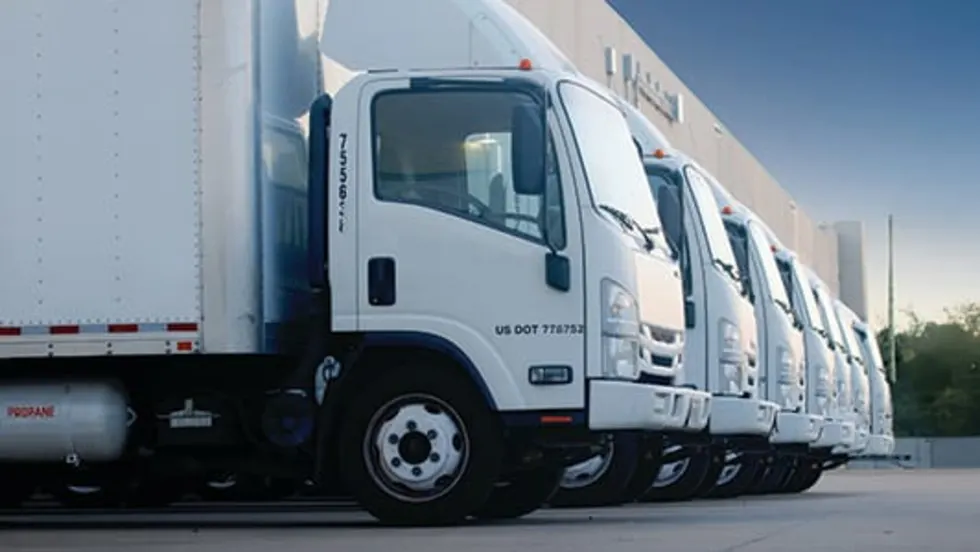
New Propane Autogas Program Offers Fleet Compensation
Qualified commercial fleets can receive $7,500 per eligible propane autogas vehicle and up to $10,000 for new refueling site prep. Learn how the program works and see whether your fleet qualifies.
Read More →
EV Charging Use Is Outpacing Infrastructure Growth
ChargePoint’s 2026 Charging Forward Report points to rising charger use, higher-powered charging, commercial vehicle electrification, and energy-management technology. Here’s what fleets should know.
Read More →
Merchants Fleet Reports 290M EV Miles as Fleets Navigate Changing Electrification Market
From millions in operating savings to hundreds of millions of EV miles, Merchants Fleet’s latest report reveals what’s working and what’s changing in fleet electrification.
Read More →
The EV Breakdown Nobody's Talking About: Why Most Electric Vehicle Roadside Calls Aren't Mechanical Failures
Here's why EV breakdowns are widely misunderstood.
Read More →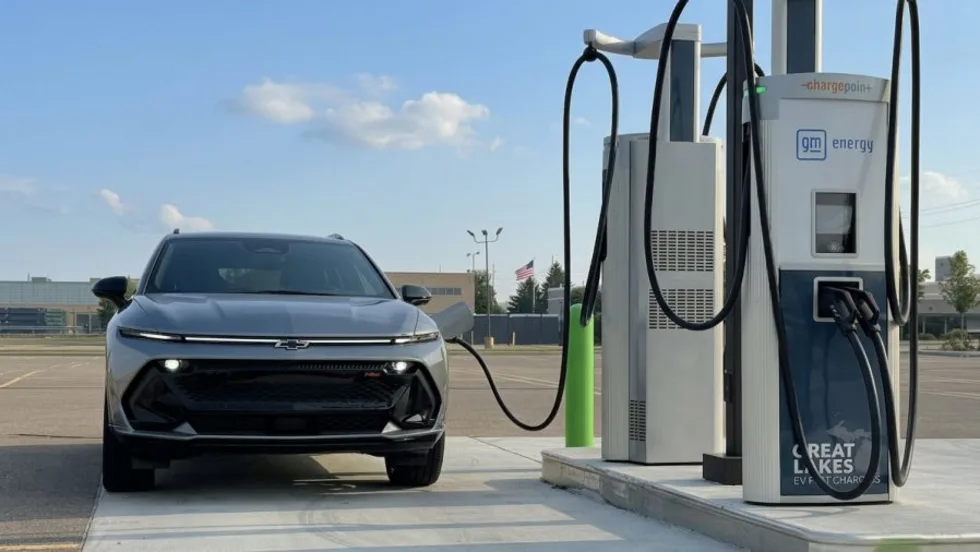
ChargePoint Now Available in Energy Pass
ChargePoint and additional planned charging network integrations were added to GM's Energy Pass.
Read More →

First Look: Slate Auto's Electric Fleet Pickup
Could an affordable, modular EV pickup make electrification more practical for fleets?
Read More →
Slate Debuts Colorful, Unique EV Models
A recent media and client event, studded with electric vehicles dressed up on platforms, planted a new position for the manufacturer in the wider EV market. Fleets will find cost-saving advantages.
Read More →
Slate Electric SUV, Pickup Switchable Model Aims For Light-Duty Fleets
Everything about this EV is counterintuitive and understated, making it stand out from the crowd.
Read More →
Inspiration Mobility Acquires Key Electrada Assets
Inspiration Mobility Group has acquired select assets of Electrada, adding the fleet electrification provider's team, technology, and charging infrastructure development capabilities to its energy management business.
Read More →