




Eastman Chemical's Partnership Fine-Tunes Its Fleet
Eastman Chemical selects First Vehicle Services to oversee its maintenance operations, share customer service best practices, and identify ways to increase vehicle availability within its fleet.

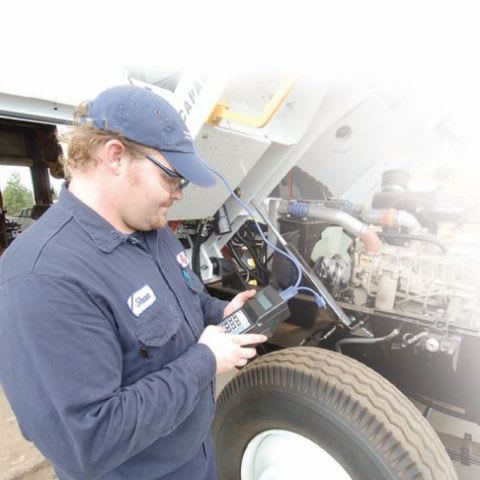
Shaun Groh from First Vehicle Services runs a maintenance check on an Eastman Chemical fleet vehicle.
Fleet managers know how important vehicle availability is to their business. When vehicles are down, that means less productivity. That’s why an efficient fleet maintenance operation is integral to every business. However, sometimes businesses need to spend time on their own goals and leave fleet maintenance to a professional.
Eastman Chemical, located in Longview, Texas, partnered with a company whose business is fleet maintenance.
Eastman Chemical’s business is manufacturing chemicals, fibers, and plastics, including coatings, adhesives, and specialty plastics products. The company is a major supplier of cellulose acetate fibers and produces polyethylene terephthalate (PET) polymers for packaging, so while its vehicles are important, keeping them maintained is not its core competency. By partnering with First Vehicle Services (FVS), a provider of customized fleet maintenance and fleet management solutions, Eastman Chemical could return to concentrating on its own business goals, while FVS focused on improving its fleet efficiencies.
Eastman Chemical’s fleet consists of a wide variety of vehicles, including bulldozers, compactors, fire trucks, ambulances, light-, medium-, and heavy-duty trucks, heavy-, medium-, and light-duty forklifts, industrial compressors, backhoes, tractors, golf carts, electric pallet jacks, medium-duty cranes, equipment-like graders, dump trucks, and small and medium cranes used daily in the construction and maintenance of chemical plant facilities.
With a 507-unit fleet, many are support vehicles used for transportation or service purposes, while others are specific-use units critical to production and safety.
While many fleets might see them as special-use equipment, at Eastman these vehicles are in constant use. That means when a piece of equipment needs repairs or preventive maintenance, a quick turnaround is important.
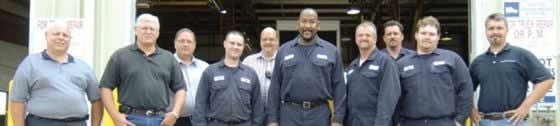
After researching several firms, Eastman chose FVS to oversee its maintenance operations and identify ways to increase vehicle availability, whether preventive or critical. At Eastman, the maintenance technicians, general manager, and shop foreman are all employed by FVS, which includes salaries, benefits, and training. Additionally, FVS maintains parts and supplies, which allows it to control the levels of technical expertise and customer service in the maintenance shop. Using these factors as a starting point, FVS helped Eastman in two key areas: vehicle availability and preventive maintenance compliance.
As part of FirstGroup America, a large surface transportation company that employs 99,000 people in North America and is part of a $10 billion-plus company, FVS leverages its buying power to offer Eastman significant discounts on parts and other supplies. Access to a large volume of supplies also helps Eastman maintain an accurate service and repair parts inventory, ensuring maximum availability for common component failures. "Many of the types of equipment in the Eastman fleet demand quick turnaround on repairs with a minimum of downtime," said Bill Snowden, a former Eastman general manager, who was responsible for implementing many of the procedures now underway.
"We try to do that as seamlessly as possible. If we do our jobs right, our operation will remain transparent to the user," said Snowden.
[PAGEBREAK]
Bob O’Brien, Eastman Chemical fleet coordinator, said, "FVS pursues any and all avenues to expedite service and repair on our equipment. We have seen them drive out of town to pick up parts versus having the part shipped overnight so they could complete the repair and have the equipment available sooner." With increased access to resources, Eastman’s average vehicle availability rate is now 98.5 percent, which leads to a more productive fleet.
Eastman saw similarly impressive improvements when it came to preventive maintenance compliance. Once only 65 percent per month, it’s now 95 percent.
"Prior to our arrival at Eastman, bringing a vehicle to the shop was a chore, and you never knew what to expect or when you would get your equipment back," said John Claassen, general manager for FVS at Eastman. "They now know that our top priority is taking care of our customers, and they can expect excellent service. If a piece of equipment has a performance problem, we will fix the problem or recommend obsolescence. Regardless, they know they can count on the job being done and done right."
To accomplish this level of customer service, FVS implemented a number of best practices, including training programs from ASE, Ford, International, Delco, and others — Lean Six Sigma practices to increase efficiency and productivity, and maintenance shop safety.
"Employees at Eastman responded to the quality of service and customer service. They now look forward to bringing their equipment to the shop. They know there is minimal wait time for returning equipment back to service. They come to the service center knowing they will have a positive experience," said Claassen.
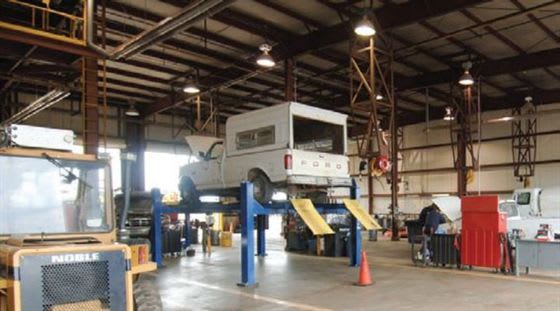
Support from the Eastman management team also helped improve preventive maintenance compliance. They analyzed key performance indicators (including preventive maintenance compliance) to document performance issues. This information was used to make improvements at Eastman facilities. Furthermore, FVS’s access to volume discounts through national purchasing agreements helped Eastman reduce costs for preventive maintenance parts.
As a chemical industry Responsible Care-certified company, Eastman is committed to achieving the highest standards of health, safety, environmental, and security performance. Eastman also needed a partner that shared those same standards.As a result, FVS implemented daily, weekly, monthly, quarterly, and annual mechanisms to ensure a constant state of safety awareness. "FVS at Eastman experiences several rigorous safety audits annually. Audits consist of a compilation of OSHA policy and ‘best in class’ industry standards and practices," said Claassen. "These audits are conducted internally by FVS corporate and by Eastman Chemical, ensuring a constant state of preparedness in facility, work practices, knowledge, and training."
While Eastman has partnered with FVS to improve its fleet operations, its involvement has been seamless. "When we decided to outsource our fleet maintenance operations, we performed extensive research," said O’Brien. "We were looking for a partner, a contractor that shared the same values, particularly in the safety arena. We now are reminded daily that we made a good decision in partnering with a world-class organization."
More Operations

Avis Budget Group Deploys Neology Toll Management Technology Across Major Brands
Neology’s neoFleet platform will manage toll transactions and toll-authority operations for vehicles across Avis, Budget, Payless, Budget Truck and Zipcar.
Read More →
Fleet Personal-Use Charges Edge Higher in 2026
Nearly eight in 10 surveyed fleets allow personal use of company vehicles, while just over half of respondents report charging employees for the privilege.
Read More →
The Future of Fleet + What’s Changing Right Now | AF News Recap
Could developments overseas offer a preview of what’s coming for U.S. fleets? This week, we’re looking at the future of AI, autonomy, and electrification, plus Ford Pro’s new certified pre-owned program, smarter vehicle offboarding, and a new way for fleets to manage toll expenses.
Read More →
How to Handle Vehicle Offboarding
What do fleet managers need to do when a driver leaves?
Read More →
Fleet Manager’s Ultimate Playbook: Navigating the New Standard in OEM Connectivity
Rising operating costs, driver safety concerns, and unplanned downtime are putting unprecedented pressure on modern fleets. Discover how fleet managers use embedded OEM connectivity and real-time vehicle data to cut TCO, prevent downtime, and protect drivers without aftermarket telematics hardware.
Read More →
U.S. Bank Adds Verra Mobility Toll Management to Voyager Fleet Platform
The integration allows U.S. Bank Voyager fleet customers to manage toll payments and violations alongside fuel, EV charging and maintenance expenses.
Read More →
ADAS Prevents Crashes. But Repairs Cost More | AF News Recap
ADAS-equipped vehicles may crash less often, but they can cost more when they do. This week, we’re breaking down what that tradeoff means for fleets, plus Subaru’s first Forester Wilderness Hybrid, Nissan’s new e-POWER Rogue, and why Calstart has become Catalyst Mobility.
Read More →
Moventum Fleet Management Names Mark Iorillo Head of Sales
Iorillo brings nearly 20 years of fleet management and sales experience to the role, including previous positions at Element Fleet Management, CEI, Donlen and Ryder.
Read More →
Fleet Has a Talent Pipeline Problem. What Comes Next? | AF News Recap
Where will fleet’s next generation of leaders come from? This week, we’re looking at the industry’s talent pipeline, what certification can add to a fleet career, how to build an award-worthy track record, and the return of Automotive Fleet’s Personal Use Survey.
Read More →
Smith System Launches Driver Risk Management Program
Fleets have more driver data than ever, but identifying risky behavior doesn't necessarily correct it. Smith System's new Driver Risk Management program combines monitoring, training, and follow-up coaching to help fleets connect risk signals with driver intervention.
Read More →