




Driving Longer ... and Cheaper
Extending vehicle life may add some expense but Hallmark reports important cost savings.
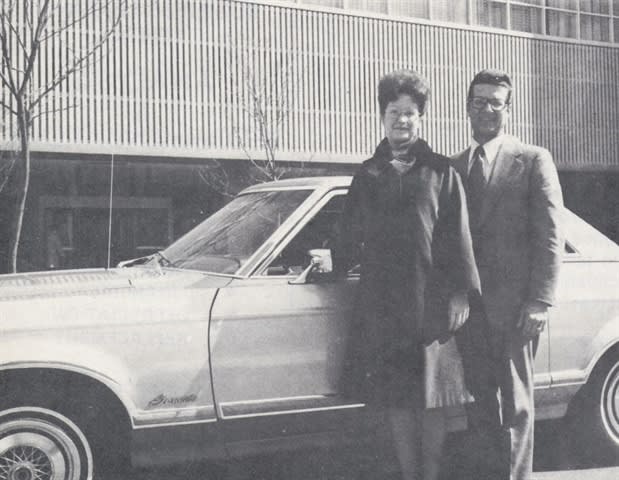
Helen Bland, fleet manager, and Kramer Allen, manager of services, for Hallmark, with a newly delivered Ford Granada in front of their international headquarters in Kansas City.
Keeping cars in service longer since the advent of the energy crisis has been a consideration by many and a number of firms have instituted new policies on replacement. Some leasing companies have recommended extension and factory fleet sales have felt a significant impact as a result.
Hallmark Cards of Kansas City is one of the professionally managed fleets that has not only done something to meet the problem but has turned it into an opportunity and has the documentation to prove it.
Hallmark's fleets are totally company-owned and consist of 1050 cars operated in all 50 states. Two years ago the bulk of these cars were full size units. As replacement occurs, they are now being replaced with intermediates. The fleet now stands at 55- percent intermediates and eventually will be 100-percent.
For several years Hallmark had an effective policy of trading cars every three years or at 50.000 miles, which ever came first. In early 1974, Kramen Allen Manger of Services for Hallmark and Helen Bland, fleet manger were alerted to the then low level of the used car market. A decision was made to hold some cars and not trade them in until the fall. This, obviously, gained them a larger than usual number of high mileage cars at the end of the model year.
During the fall they traded 300 cars. After all transactions were completed, they pulled a 'sold car' report from their computer and enlisted the aid of their Investment Analysis Department to determine the optimum trading cycle in terms of cost.
The study was made objectively and included all the factors included in owning and operating the cars. It was based on actual depreciation, cost less trade value. The specific 300 cars were 1972 and 1973 standard size Ford Galaxies, Chevrolet impalas and Plymouth Fury models.
The study reveled that their cost per mile was less with each succeeding 5,000 increment driven through 65,000 miles; 1.5 per mile less for a car with 65,000 miles than one with 50.000 miles. (Note: there were insufficient cars in the 70,000 mile category to analyze properly).
Allen and Bland studied the results and noted that with the small percentage of units in the 65,000 mile category (8-percent) that a policy of retaining the cars for 60,000 miles was prudent. On a time basis, they will continue to maintain a three-year age level since the average months in service of the cars sold (the 300 in fall of 1974) was 25.6 months. Another similar study is planned after accumulating data on the new 60.000 mile cars.
Mileage | % of Cars Studied | Cost Decrease |
45,000 to 50,000 | 35% | - |
50,000 to 55,000 | 30% | 33¢ |
55,000 to 60,000 | 21% | 34¢ |
60,000 to 65,000 | 8% | 87¢ |
65,000 to 70,000 | 4% | N/A |
More Operations

How to Manage Conflict for Your Fleet Operations
Conflict management is becoming a core leadership skill. Here are five strategies fleet leaders should know.
Read More →
Turning Connected Vehicle Data Into Decisions That Matter
Fleet leaders have more data than ever, but turning that data into clear, actionable decisions remains a challenge. This white paper shows how leading organizations are using connected vehicle data to improve safety, reduce costs, and optimize fleet performance. Learn how to turn insight into action across your fleet.
Read More →
Cameras, Safety and Insurance: From Reactive Claims to Real-time Prevention
Commercial auto remains one of the most challenging and costly lines of coverage for fleet operators and insurers alike. Learn more about how to effectively address these issues from Onur Aksan, Enterprise Business Development Executive, Geotab.
Read More →

Are You Tracking Your Fleet's True Total Cost of Ownership?
Bobit Business Media surveyed 190 fleet professionals and found that while most fleets are tracking costs, fragmented systems and data gaps are keeping true TCO visibility out of reach. With rising pressure to control spend in an increasingly volatile environment, the gap between what fleets think they know and what the data actually shows is wider than you might expect. See how your peers are managing costs today and where the industry still has room to improve.
Read More →
Turn Fleet Data Into Smarter Decisions
Fleet leaders have access to more operational data than ever, but disconnected systems and unclear metrics often slow decision-making instead of improving it. This article outlines five practical steps fleets can take to transform fragmented data into actionable insights that improve planning, safety, utilization, and long-term performance.
Read More →
Hybrids: Electrification Without the Challenges
For fleet managers, fuel is one of the biggest line items in the budget — and it's one hybrids can shrink without changing how your people work. Download the eBook to see the numbers, understand the technology, and get a step-by-step guide to making the switch.
Read More →
How NOV Uses Telematics to Improve Fleet Safety Across 160 Locations
James Victory of NOV discusses how the company manages fleet safety, maintenance, and telematics across more than 150 locations supporting oilfield operations throughout the U.S.
Read More →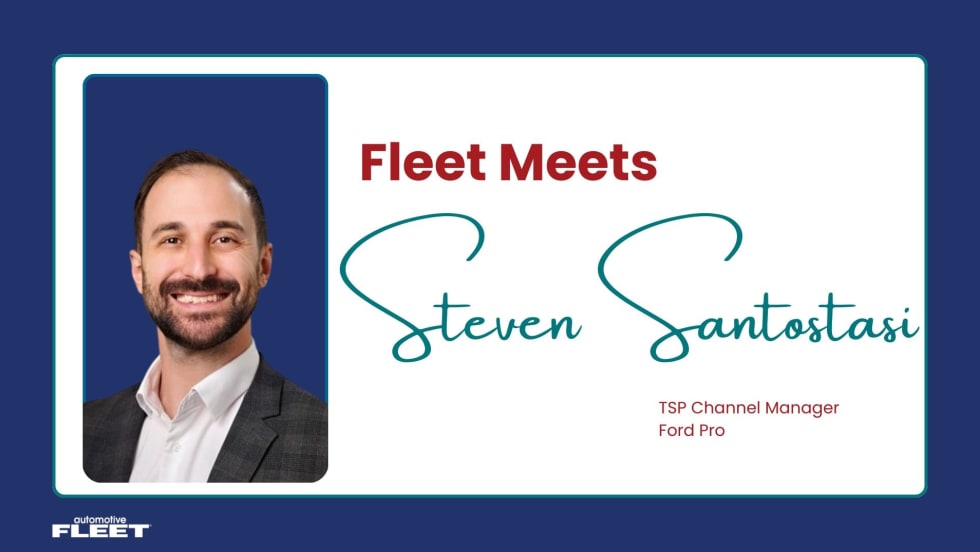
Fleet Meets: Steven Santostasi
This edition of the Fleet Meets series features Steven Santostasi, the current TSP channel manager for Ford Pro.
Read More →
Why Fleet Managers Are Replacing Departmental Vehicles with Shared Motor Pools
Departmentally assigned vehicles often create hidden costs through underutilization, poor visibility, and increased administrative burden. This white paper explores how shared motor pool strategies help fleets reduce costs, improve accountability, and optimize vehicle utilization.
Read More →
Soap Box Derby Challenge: Assembling the Crew
Meet Gabriel, Matthew, and Angel — the team helping bring this soap box derby build to life.
Read More →