




Driver Engineering: All State's Fleet Safety Program
At Allstate's Home Office in Northbrook, Ill., Safety Director Don Costa knew that other large companies having crash problems similar to Allstate's had solved them through comprehensive driving courses.
Spencer McAllister is editor of Good Hands Magazine, an employee publication of the Allstate Insurance Company. He moved into that past after a stint as educational consultant in Allstate's driver education section. Prior to that, McAlister taught driver education in Saginaw, Michigan, and Lansing, Michigan. He is a 1961 graduate of Michigan State University with a B.A. degree in social Science. His master's work at M.S.U. was in highway traffic safety and driver education.
People often say, "Safety is duller than dishwater." Perhaps they have a point if they are referring to some of the cliché-ridden slogans that constantly bombard us. An example is the tired admonition to motorists, "Drive Safely," which is meaningless because it has been overused.
It's no wonder, then, that some of Allstate Insurance Companies' company-car drivers resented it when told a couple of years ago they would have to attend a course called "Driver Engineering." Typical reactions were, "Aah, I don't need a driving lesson. I've been driving a company-car for five years and have had only two accidents." Or, "You're kidding, boss! Just because I had a little fender-bender?"
Well, it was these "only two accidents" and "fender-benders" that were cause for concern among Allstate's regional supervisors and managers. Allstaters had lost their lives in company-car crashes. Others had been injured, and crash repair costs on fleet cars were climbing.
At Allstate's Home Office in Northbrook, Ill., Safety Director Don Costa knew that other large companies having crash problems similar to Allstate's had solved them through comprehensive driving courses. Costa also knew that he had at his disposal safety consultants who could come up with such a program for Allstate. The Driver Education Section under Manager Ralph Jackson was staffed with about a half-a-dozen traffic safety consultants and loss control people. They were spending much of their time on two related major projects: making driver education films for use with Link simulators, and traveling around the country to high schools, colleges and state departments. Their task was teaching teachers how to use the films and simulators. Costa's task amounted to harnessing some of this talent to the task cutting down company-car crashes. (Costa made it a mandate that the word "accident" be replaced by "crash" in all references to a company-car mishap. The word "accident," he felt, had a connotation of something unavoidable.)
Educational Consultant Al Bard was put in charge of developing a course for company-car drivers. Utilizing the National Safety Council's famed Defensive Driving Course, Al first devised a six-hour Fleet Crash Prevention Program. It was, and still is, given to all new company-car drivers as part of their regular training program as new employees. The second phase of the crusade against crashes was to come up with a more comprehensive course that could be given to those drivers who had been with the company for some time and who had demonstrated a propensity for crash involvement.
After months of research and a few false starts, a two-day course dubbed "Driver Engineering' was ready for Allstate drivers. Because the course was designed to be used in conjunction with Link simulators, mobile classroom-simulator laboratories had to be set up in strategic locations around the country. It was decided to place these installations in the four Allstate Zone offices and Home Office. Costa ordered a company-wide tally of all company crashes by Region and Zone to locate the drivers who had the highest frequency of crashes. This was done. Regional and Zone Claim Management, working closely with Home Office Safety men, made preparations for the Driver Engineering sessions to begin. Finally, the drivers were brought in.
That was in April, 1968. And this was when the static started. Allstate company-car drivers simply didn't believe that they needed anyone to tell them how to drive (almost all drivers feel this way).
Moreover, Allstate's driver education consultants almost agreed with them. They said most drivers are proficient at the physical skills of driving. They can steer well, they have adequate reflexes, and they can even handle a car reasonably well in most emergencies. But the hangup with many drivers is that they have poorly developed perceptual skills. Their mental-visual technique of recognizing and interpreting potential hazards is too slow. They do not know to speed-read traffic. And in spite of the fact that most drivers have heard the term "defensive driving," they don't know how to practice it. From past experience in driver education and from numerous studies conducted at leading universities, the driver education men knew that it was these mental-visual driving deficiencies that contribute to an inordinate number of crashes. The new Driver Engineering course would bridge the gap between physical skills and mental-visual skills, thus reducing the frequency and severity of company-car crashes. And it did.
Each Driver Engineering session is specifically tailor-made to fit the participants. For example, if there are ten men at a session (the maximum allowed), a predetermined course of action already has been formulated from a survey of their motor vehicle records and crash report records. If the group of ten has had, say, 13 crashes while driving company cars, and nine of these crashes have been rear-end collisions (the most common crash), then the two Driver Engineering instructors will concentrate most of their discussion and theory of preventability on this particular type of crash.
The company's crash problem is explained and an analysis is made of two Allstate employee fatalities (an agent in Massachusetts and an adjuster in Texas). A discussion is held on the "multiple-cause-theory" of crashes-which can best be explained by giving an example. Let's say you are driving 35 mph in a residential area where the speed limit is 30 mph and you hit another car broadside at an intersection. What are the probable causes? 1) You were going too fast. 2) The other driver misjudged your speed. 3) You assumed the other driver would wait for you to pass the intersection before pulling out. (It's possible, too, that you physically "saw" the other driver but didn't mentally "perceive" him and what he might do. This is analogous to your wife wearing a new dress. You "see" it but you don't "perceive" it, and so you get yourself in trouble.
This thing about drivers developing perception is the basis for the Driver Engineering sessions. The simulator film scripts have been written so that many hazards will come into the "drivers" field of vision as he sits in the simulator while watching the screen in front of him. He can see them easily but it is his responsibility to perceive them-and "prove" that he has by reacting appropriately, such as braking at the correct time, turning the simulator steering wheel, or perhaps simply letting up on the accelerator pedal.
One technique used by the driver education consultants to teach drivers how to see better, to perceive and react properly is called "developing a proper visual search pattern." It's simple. A driver should, first and foremost, keep his eyes on the road ahead-we all do that. But a driver shouldn't rivet his eyes on the road ahead, as some do. When a driver does this, inevitably he will miss seeing a car, a child, a bouncing ball or any number of potential hazards that could come into his driving path until the last instant when only an emergency reaction on the part of the driver can avoid a possible tragedy. The proper eye contact with the driving scene is this: "Keep your eyes moving," Split-second glances to the left, to the right and to the mirrors and back to the road should become a habit while driving. This gives the driver an edge. Whenever something does come into his path, he has plenty of time to react before the hazard develops into an emergency situation.
It is this kind of defensive driving that Allstate's Driver Engineering consultants get across to Allstate company-car drivers. The classroom discussions are augmented with perception-oriented film presentations. Finally, an actual drive in a car with the instructor and the other participants puts the theories into practice. And the other participants-as any teacher will tell you-are rougher than the instructor on the driver. If a driver doesn't see, perceive and react to a possible hazardous situation in plenty of time, the Allstate passengers will good-naturedly "climb all over him." Of course, each man takes a turn at the wheel, so everybody benefits from the on-the-street drive.
Some 350 Allstate company-car drivers have gone through the Allstate Driver Engineering course. Of these drivers, all but one have improved their crash records. In fact, company-wide there has been a 76 percent improvement in crash-ratio between the drivers who have taken the course and those who haven't. Safety Director Don Costa says, "We have shown an almost unbelievable improvement in our company-car drivers and it will take a long time to reach all of them. Of course, many of them have excellent driving records to start with, but we want all drivers to take the course eventually. Preventability is our watchword."
Are there still gripes from Allstaters who are assigned to take the course? Not much. The word has gotten around. The course is beneficial. As one company-car driver put it after attending the two-day session in Atlanta, "My life is worth the time."
More Operations

Top 50 Executive Fleets
It is that time of year again! Time for the 2026 list of the Top 50 Executive Fleets, presented by Automotive Fleet and Volvo as part of its annual Fleet 500. Download now to see this year's list of companies!
Read More →
Gary Van Orden Retires After Nearly Four Decades in Commercial Fleet
From answering customer calls at Ford Motor Company to leading fleet sales across multiple OEMs and a fleet management company, Gary Van Orden's career reflects nearly four decades of leadership in commercial fleet.
Read More →
How Stellantis Plans to Get Ahead of Fleet Downtime
Vehicle acquisition may grab the headlines, but fleet uptime increasingly determines operating success. Darren Bradshaw of Mopar North America gives the details.
Read More →
Hyundai Releases 2027 Commercial Program Incentives
The 2027 Model Year "Fleet Street Incentives" are available to commercial and government fleets.
Read More →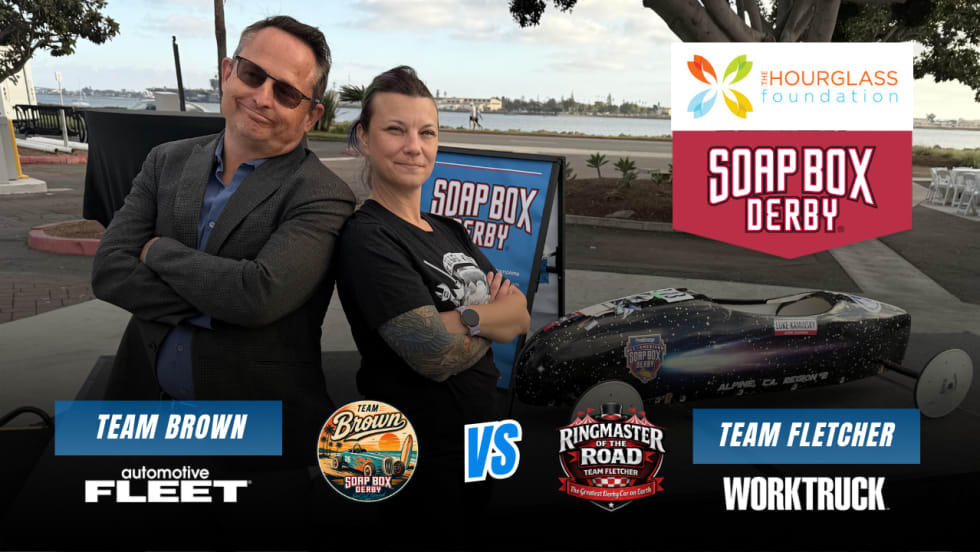
It's All Downhill from Here! Fleet Industry Raises $22,000 for Skilled Trades Scholarships
Work Truck’s Lauren Fletcher and Automotive Fleet’s Chris Brown turned a friendly racing rivalry into $22,000 for automotive technology and skilled trades scholarships.
Read More →
The Top 300 Commercial Fleets
The Top 300 Commercial Fleets: See the List
Read More →
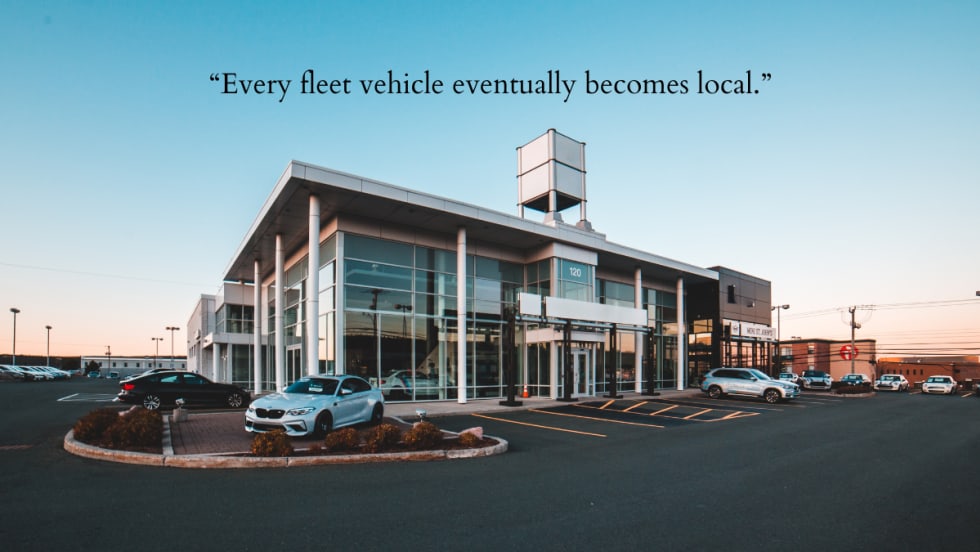
Your Local Dealer Knows More Than You Think
Your local dealer can provide an information advantage that extends well beyond courtesy deliveries.
Read More →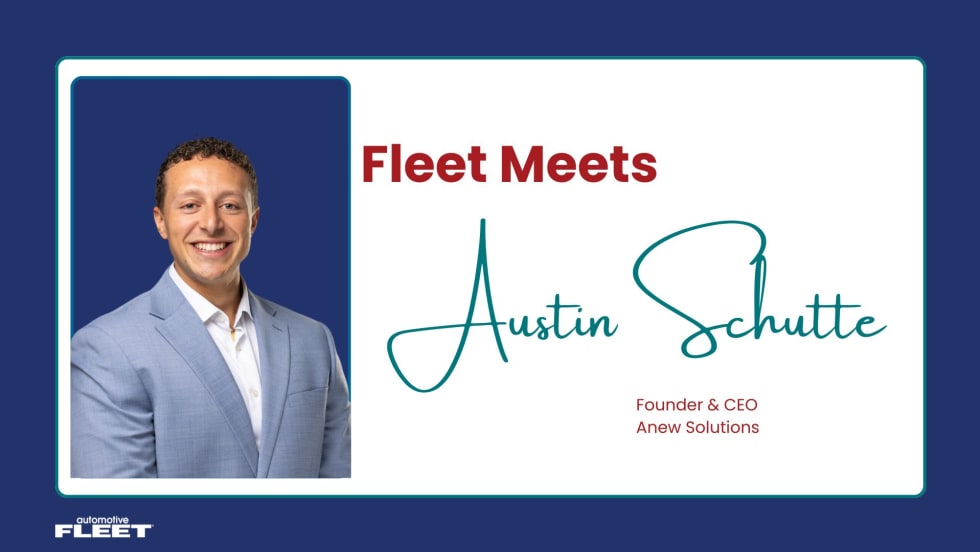
Fleet Meets: Austin Schutte
Here are some industry insights, personal touches, and words of advice from the CEO and Founder of Anew Solutions.
Read More →
Soap Box Derby Challenge: What’s Powering Team Brown
The car is coming together, the students are solving real build problems, and the fleet industry is helping push Team Brown toward the starting line.
Read More →