




'Detroit 1985': Looking For Mr. Goodcar
Donald MacDonald's new book takes aim at Detroit, from the boardroom to the factory floor.
An intriguing look into the inner workings of Detroit is presented in the book, "Detroit 1985," by Donald MacDonald, who spent the better part of 20 years covering the automotive scene for such publications as Business Week, Motor Trend, the New York Times and others. Published by Doubleday & Co., it's billed as "An irreverent look at the automakers, the dealers, the government and you."
While giving an enlightening look at some areas and problems most automakers would care not to think about, such as warranty claims, dealer markups and safety defects, the title in a way is deceptive. Perhaps the title should read Detroit 1975 or Detroit 1980 for it gives little insight into what is going to happen in the auto industry in the next five years, a period which may prove to be one of great upheavals in the way Detroit does business.
Instead, the book dwells on the Bigness (with a capital B) is Bad concept and recommends that divestiture of the Big Three or Four (however, given the turn of events of the past year, perhaps that should be read the Big Two) into a number of independent competitive makes would be the best for the industry and the public. There's a catch to it for those who are quick to ask how a small company can afford to meet the massive governmental regulations that go into the building of a car, for Mac Donald recommends that at the same time the automakers divest themselves of their many car and component divisions that the huge bureaucracy that regulates the auto industry be also dismantled. A novel idea.
Throughout the book, interspersed between the anecdotes, stories of personal rivalries at the top and product successes and failures, Mac Donald uses over and over again examples of how well things worked during the golden Age of Automobiles (circa 1929 to 1939). For example, in a chapter titled 'The Experimental Affordable Car" he writes, "The truly simple car is not an impossibility. Those that qualify are abundant in history, the Model T just being the best known example. A better illustration for my thesis, also from the same maker, would be Ford's first eight cylinder car of 1932. Here was a 70-horsepower package of utilitarian driving excitement that weighed only 2,000 pounds in roadstar form and sold for $460, only $10 more than the stodgy four cylinder Model A which it replaced. It was adequately sized and comfortable, but hardly luxurious. It also, with a touch of modern engineering, could meet a CAFÉ of 27.5 miles to the gallon.
Granted, the Ford Model A was a milestone in its time. But it's like the old saying, "the past is like a foreign country, they do things differently back there." And granted, in basic function, the car really hasn't changed since it was invented. But today's car will take you further, faster, more efficiently with less maintenance. In addition, it is cleaner, safer and infinitely more complex. That is the key. The whole world has become infinitely more complex and it would be difficult to start a company and build a socially responsible car. The Ford Model A built today would not be a socially responsible car by today's standards. MacDonald feels that by forcing the major manufacturers to divest, that the car would become more socially responsive because there would be more competition, and smaller organizations where the consumer and worker alike would have access to top management. It sounds like a good idea, but is it workable? He says yes, especially with GM and he adds that there is much duplication of effort on the part of the giant automaker. He decries their management by committee and feels it is impersonal and unresponsive noting the old saw "A camel is a horse designed by committee" several times. (He reports that the saying originated somewhere within Ford.) However, one will get farther through a desert on a camel than a horse and in these energy scarce times, a camel may be more preferable. Remember, management by committee brought us the X-car, while management by one person delayed downsizing by two model years.
Perhaps divestiture in Detroit 1975 would have worked, but divestiture in Detroit 1985 may not. The auto industry's back is against the wall. Many changes are being made at a pace unheard of, even in the Golden Age of Automobiles. Perhaps Bigness is Bad, but given our dependency on foreign oil, the technological pace of import competition and the onus of government regulation. Bigness is the only choice we have in the short run.
The book is worth your while to read, it challenges the accepted beliefs of the automobile industry and the anecdotes are interesting. It's also ironic that the publisher of MacDonald's book, Doubleday & Co., also published Alfred P. Sloan's "My Years With General Motors."
More Operations
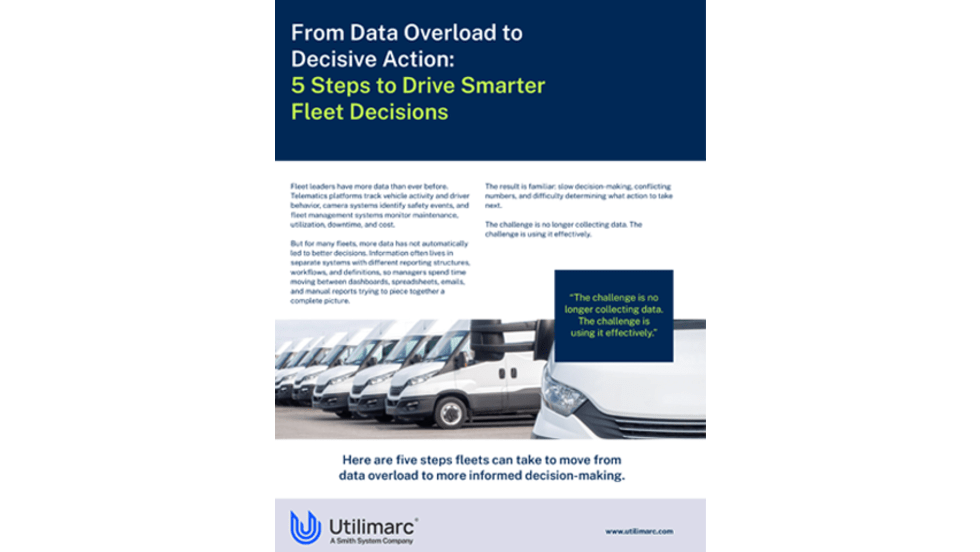
Turn Fleet Data Into Smarter Decisions
Fleet leaders have access to more operational data than ever, but disconnected systems and unclear metrics often slow decision-making instead of improving it. This article outlines five practical steps fleets can take to transform fragmented data into actionable insights that improve planning, safety, utilization, and long-term performance.
Read More →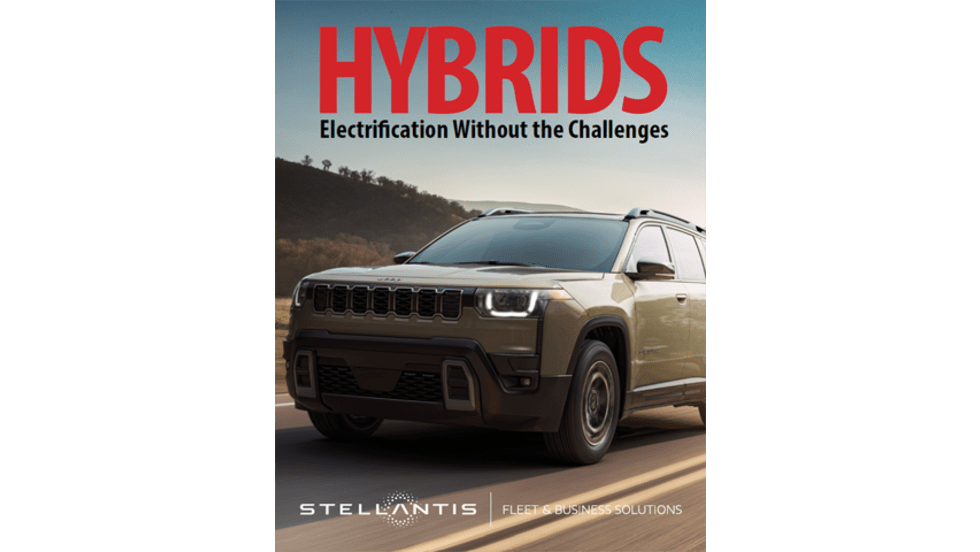
Hybrids: Electrification Without the Challenges
For fleet managers, fuel is one of the biggest line items in the budget — and it's one hybrids can shrink without changing how your people work. Download the eBook to see the numbers, understand the technology, and get a step-by-step guide to making the switch.
Read More →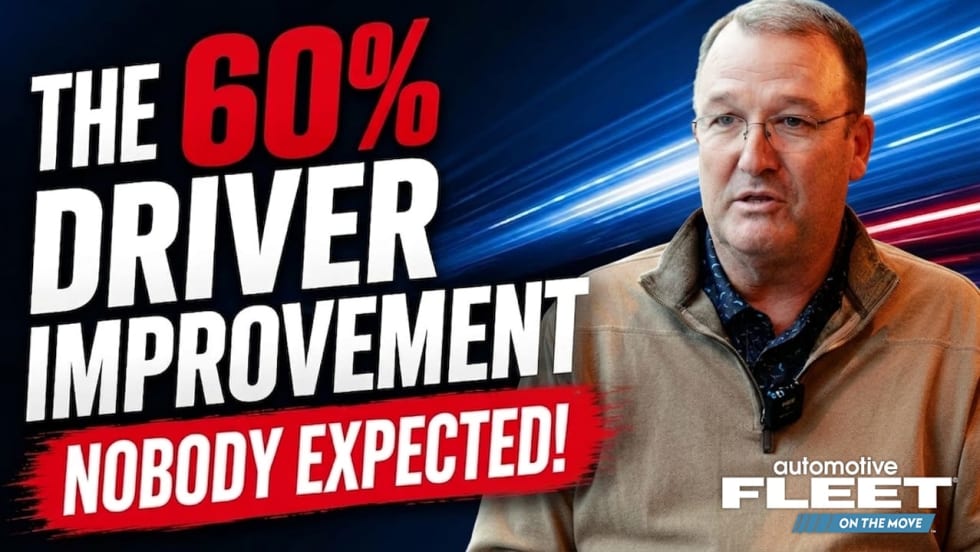
How NOV Uses Telematics to Improve Fleet Safety Across 160 Locations
James Victory of NOV discusses how the company manages fleet safety, maintenance, and telematics across more than 150 locations supporting oilfield operations throughout the U.S.
Read More →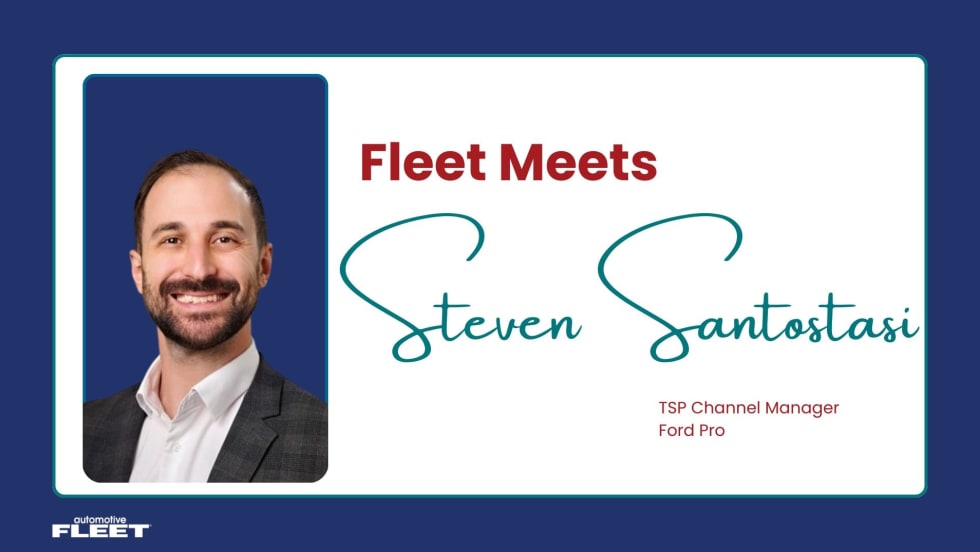
Fleet Meets: Steven Santostasi
This edition of the Fleet Meets series features Steven Santostasi, the current TSP channel manager for Ford Pro.
Read More →
Why Fleet Managers Are Replacing Departmental Vehicles with Shared Motor Pools
Departmentally assigned vehicles often create hidden costs through underutilization, poor visibility, and increased administrative burden. This white paper explores how shared motor pool strategies help fleets reduce costs, improve accountability, and optimize vehicle utilization.
Read More →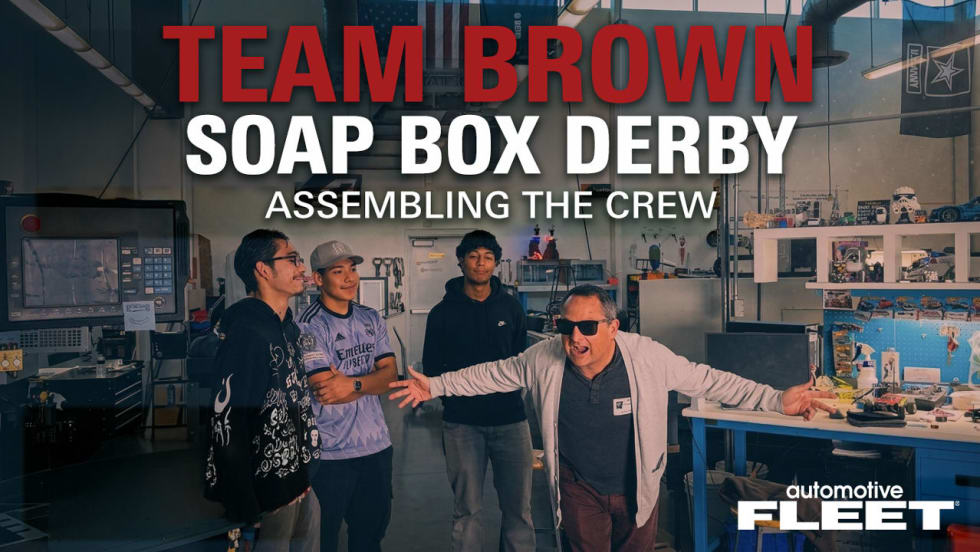
Soap Box Derby Challenge: Assembling the Crew
Meet Gabriel, Matthew, and Angel — the team helping bring this soap box derby build to life.
Read More →
BBL Fleet Acquires Velcor Leasing Corporation
BBL Fleet expanded its footprint in the fleet management industry with the acquisition of Velcor Leasing Corporation of Madison through a stock purchase agreement finalized Feb. 27, 2026.
Read More →
Lytx Introduces New AI Fleet Technologies at Protect 2026
The company introduced new AI-driven fleet safety and operations technologies during its annual user conference.
Read More →
Fleet Costs Are Rising: Here’s How Leaders Are Responding
Fleet leaders are under pressure to reduce costs, adapt to economic uncertainty, and make smarter decisions. See how peers across North America are responding with real data, proven strategies, and forward-looking insights. Download the 2026 Market Pulse Report to benchmark your strategy and uncover where you can gain an edge.
Read More →
From Waffle House to AI: Fleet Trends You Need to Know
In this AF news recap, host Faith Howell covers how Waffle House stepped up during disaster response and new AI tech on the market.
Read More →