




CSC Seeks to Combine High Tech with High Touch
For Consolidated Service Corporation, Internet-enabled fleet management is a double-edged sword: while it offers speed and flexibility, it threatens to dilute the high-touch customer service that fleet managers demand.

Consolidated Service Corporation (CSC) has built its business around a high-touch, personal sendee-oriented approach in serving its clients. As the company prepares for the 21st Century, the challenge facing it will be to balance this high-touch service with e-commerce applications. President Ron Starr, a 20-year veteran of CSC and grandson of the founder, recently discussed this balancing act between high-touch and high-tech with Automotive Fleet. Following are some highlights of this conversation.
AF: As a company, how do you balance high-service, personal relationship-based business with the trend toward e-commerce?
Starr: Onthe technology side, when information is highly dependent on the transmission of data, we've accelerated our efforts to enhance connections between us and the customers. We've done this through use of the Internet, EDI, and all the options of modern technology.
When there becomes a need to have more than data, we feel it's very important to have human interaction wherever possible. An example of that would be our phone system, which is our "front door" to the customers. Throughout the structure of our phone system, from the 800 number through every department, there are no voice trees. So, when a customer calls in need of service, we have a call director station that has six people whose sole responsibility is to greet all our customers as soon as they call, as soon as they "walk in the door" as we say. The customer's first point of contact with our company is going to be a human voice - a real person. No matter how much business is done through e-commerce, that side of our business will never go away.
AF: Some fleet management companies are giving drivers and fleet managers the option of communicating via the Internet, which would bypass any sort of human voice. What is CSC's opinion of this?
Starr: We're going in that direction; as well. We want to add more option's to our web page; we want to give drivers the option to real-text communicate, in real time, with somebody. So, if the drivers or fleet managers have a question while they're online, we have individuals in our customer care center who can answer any question. We call that "live text messaging."
AF: When do you see that being implemented?
Starr: I see that being implemented next year. We want to build human interaction, even with online systems. We want to take it one step further in the future: when the bandwidth will allow it, we want to be able to communicate via voice through our Internet site, so that drivers or fleet managers can actually talk to a human being about what they're viewing onscreen for answers to their question.
AF: Conceivably, that could include video, if you're talking about increased bandwidth.
Starr: Exactly. We want to make sure that wife stay high-touch. When my grandfather started the company, we were very high-touch, and we still are very high-touch. I think high-tech and high-touch have to go hand-in-hand.
One high-tech area where we want to still have high-touch is our vehicle rental replacement program. We do what we call "RAC-track," where we call individual body shops and car rental branch locations to know where a vehicle is in the repair process, and/or if the vehicle has been returned to a rent-a-car location. If not, and the vehicle has been repaired, we will telephone the driver and make sure the driver is aware he or she needs to turn in the car. It's a lot of leg work, and it's very high-touch, but the ultimate payback to the customer is a reduction in cycle time. We're very concerned about reducing cycle time. Some of this can be done through electronic media, but there's still a lot of batch processing going on with vehicle inventory counts in the rent-a-car locations, where their systems are not exactly real-time. By making a telephone call, it may cost us a little more time and resources, but we feel the ultimate payback to the customer is going be there.
AF:Do you see a potential danger of the industry drifting away from high-touch service as a result of the new technology that's becoming available?
Starr: I think there will be more of a tendency to drive business toward e-commerce because of reductions in overhead costs. However, I think it may come full-circle; people may demand to talk to a real person. I see this wholesale approach to technology peaking in the next three to five years. The important question for companies is, "How is this service going to save my company money down the road and provide excellent service to my drivers and myself?" I see things coming full circle, where companies will have to add support people, customer service people, available when there are questions that arise from people using your Internet sites. We're seeing a lot of growth towards "live help," and I think that's where this is going to go too. We're not against technology, by any means, but it has to be balanced with high-touch customer care. We want to have that, whether it costs us more money to do it or not.
AF: Where do you see your company in 10 years?
Starr: Ithink personal care will always be an important part of our business. We've built two highly responsive customer care centers. The second one has been in operation for about a year now. In 10 years, I see our response time being even better than it is today. Right now, with thousands of customers' calls coming in right now, our average answering speed is between three and four seconds, which is less than two rings; that's the kind of responsiveness we have to have. Technical issues are easy to fix, but customer service issues take a long time to fix. We treat our associates as the most important people in our business. If they're happy, they'll make our clients happy. Through training and mentoring, it can help the associates love their job; we don't have any worries about customer service then.
AF: How do you see the E-track fleet management software system evolving over the years?
Starr: I seeE-track as a complete, stand-alone network system as it is today, continually enhanced, with E-track features available on the internet as well. I also see more push technology being integrated into the system. We'll have information automatically sent out electronically, to regions and territories as well as drivers. This includes information on preventive maintenance, licensing, and titling.
AF: With the trend of some companies wanting their data to reside in-house, how will these companies work with web-based systems?
Starr: With the E-track product, it provides its own database. Every data field is stored at the customer site, if that's what they want. In addition, it's stored at CSC. So, if a company ever wants to move business from one lessor to another, they have the position of being vendor neutral with their data.
AF: What are the emerging trends in maintenance management?
Starr: I think there's going to be more electronic transmission from point of sale; possibly more automated approval processes for routine transactions. Beyond those parameters, human intervention and the high-touch care of an individual, approving the work, will continue to be necessary.
AF: What trends do you foresee in accident management?
Starr: Accident management is a very rapidly growing program for CSC, and it has been for the past 10 years. I foresee CSC providing other insurance services that supplement the physical damage portion of the accident management program. We will expand our service offerings to offer new services that have not really been part of the fleet industry. We will be more involved in other insurance claims solutions.
More Operations
What Fleet Managers Really Want From Vendors
From customer service frustrations and technology breakdowns to RFQs, change management, and the growing impact of turnover across the industry, this conversation pulls back the curtain on the real operational challenges fleet managers are navigating every day.
Read More →
Fleet Safety Masterclass: Industry Leaders on Storytelling, Strategy & Innovation
In this special masterclass episode, industry leaders break down what it really takes to build safer fleets in today’s increasingly distracted and data-driven world.
Read More →
Integrating Legacy Fleet Systems and Historical Data
In this episode, we bring together fleet and technology leaders to unpack the realities of data integration, system migrations, and the evolving role of AI in fleet management.
Read More →

From Resistance to Results: Change Management Strategies for Fleets
From new technologies and safety programs to evolving regulations, fleets are under constant pressure to adapt. But as Dr. Betz explains, success isn’t about the system you implement—it’s about whether your people actually use it.
Read More →
Where We're Headed: A Practical Look at AI in Fleet
Discover how AI is actually being deployed in fleets, not just marketed, including practical use cases and emerging risks.
Read More →
How Coca-Cola United Protects Its Fleet from Growing Legal Risk
Growing legal exposure can put fleets at risk. Here's one company's approach.
Read More →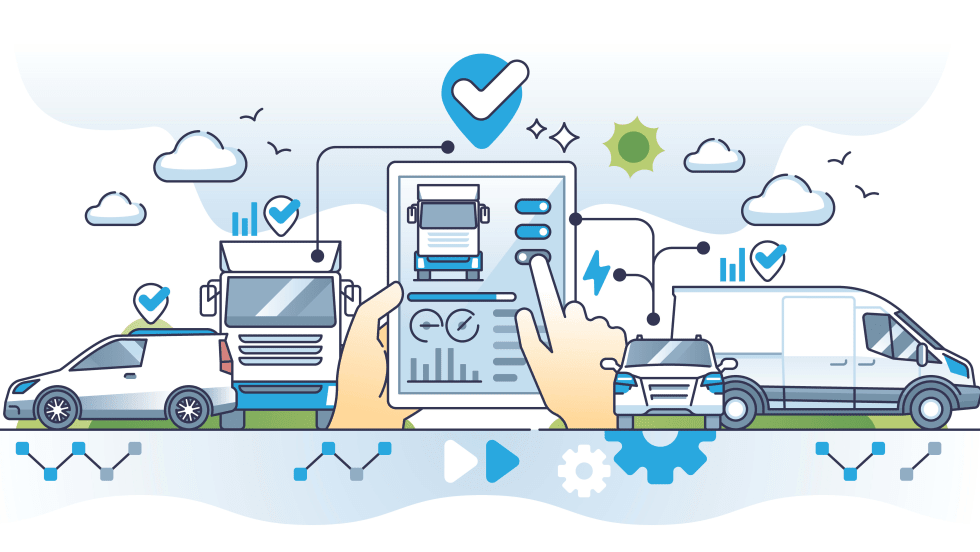
Fleet Managers Think They Understand Their Costs. The Data Says Otherwise.
Most fleet managers say they have a strong handle on their costs, but new research from Bobit Business Media tells a different story. A 2026 survey of 190 fleet professionals reveals a widespread "confidence gap" where fragmented systems, disconnected data, and delayed reporting are leaving major blind spots hidden beneath the surface. Find out what the data actually shows.
Read More →
Cameras, Safety and Insurance: From Reactive Claims to Real-Time Prevention (Part 2 of 2)
Part Two: Commercial auto remains one of the most challenging and costly lines of coverage for fleet operators and insurers alike. Continue learning more about how to effectively address these issues from Onur Aksan, Enterprise Business Development Executive, Geotab
Read More →
New Trucks, AI & Summer Downtime | AF News Recap
From new truck updates to AI-powered driver coaching and summer maintenance tips, this week's fleet headlines are all about keeping things moving.
Read More →
Beyond Utilization Rates: Smarter Fleet Replacement Decisions
Vehicle replacement decisions affect every aspect of fleet performance, from operating costs to asset availability. This guide explores how fleet leaders use integrated data, benchmarking, and lifecycle analytics to determine the right fleet size and optimize replacement timing with greater confidence.
Read More →