




Related: Fleet Readers Sound Off on Policies and Procedures to Mitigate COVID-19
COVID-19 Creates Tax Headaches for Personal Use Charges in 2020
There is uncertainty with regards to the taxation of mileage reporting for drivers sheltering in place.

Andy Lundin・Former Senior Editor

Fleets have expressed concern over how the stay-at-home orders could negatively impact taxation of drivers with personal use vehicles at the end of the year, particularly as any miles driven or not driven during the shutdown would be factored as personal use.
5 min to read
The state of fleet personal use charges in 2020 was complicated by the impact COVID-19 had on the industry, creating uncertainty for fleet personal use policies.
This was caused by the widespread sheltering-in-place mandates and the subsequent slowdown in business activity in the U.S. when the pandemic was declared on March 11, 2020. There is uncertainty among fleet managers with regards to the taxation of personal use mileage reporting for drivers operating assets who were required to stay home.
How Work-From-Home Mandates Impacted Personal Use
Fleets have expressed concern over how the stay-at-home orders could negatively impact taxation of drivers with personal use vehicles at the end of the year, particularly as any miles driven or not driven during the shutdown would be factored as personal use.
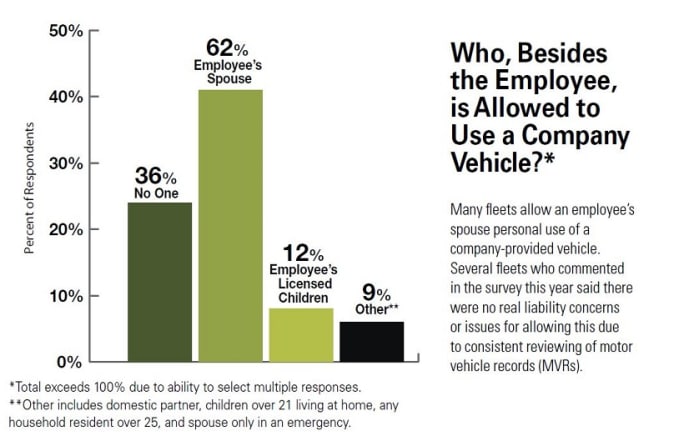
While the stay-at-home mandates may have helped contribute to a decrease in fleet spend for things like fuel, maintenance, and accident cost, the key unknown that has risen from all of this has been with consideration to IRS taxation policy.
“My reps, in normal practice would all be charged 100% personal for their vehicle usage during this time. Having said that, if they drive one mile or 500 miles their tax would be 100%, therefore taxed the maximum amount for their vehicle. So that is a huge concern for them,” said an anonymous fleet manager.
As of print, the IRS has not provided official guidance related to mileage reimbursement.
“Unfortunately, the IRS has yet to issue any formal update or guidelines regarding any potential changes related to business versus personal use of a company vehicle that cannot be used for business purposes due to the ongoing pandemic,” said Adam Bier, manager of North American driver services, ARI. “With that in mind and given the uncertainty about what may or may not happen, we’re advising our customers and their drivers to continue to accurately report business/personal mileage in an effort to avoid potential issues down the road. In most cases, vehicles are likely being driven much less than normal (both in terms of business and personal use) so the impact on tax implications will likely be minimal if any.”
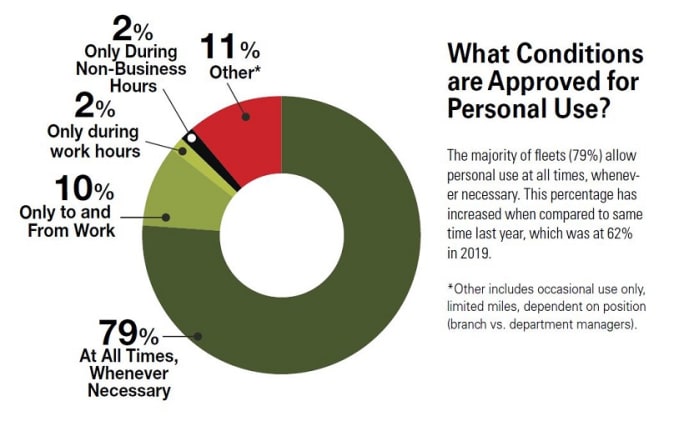
Amid the uncertainty, questions have arised; will the IRS need to issue new orders for the impact? Should companies be planning to off-set the financial impact to employees somehow? These unknowns have led to efforts by fleet industry leaders to identify solutions.
NAFA CEO Bill Schankel and Pat O’Connor, NAFA’s U.S. legislative counsel, have sent a letter to the Senate Finance Committee, seeking a waiver of certain IRS rules that govern the taxable benefit of personal use of employer-provided vehicles.
Jen VrMeer, sr. manager, operations support/sales operations, Becton Dickinson, was another fleet professional who expressed concern with regards to potential tax impacts for drivers on their mileage reporting.
“We are working with our FMC to closely monitor the YTD mileage reporting data, and estimating the potential year-end tax impact due to larger personal use percent during this time,” said VrMeer. “We are not planning to change the policy at this moment, but potentially might need to provide our drivers a heads up on the tax impact.”
Fleets See Reductions in Spend
David Anderson, sr. fleet & travel manager, ALFASIGMA USA, was one such professional whose personal use fleet reported any miles driven during the pandemic as personal, and also saw spend drop significantly for major areas of fleet.
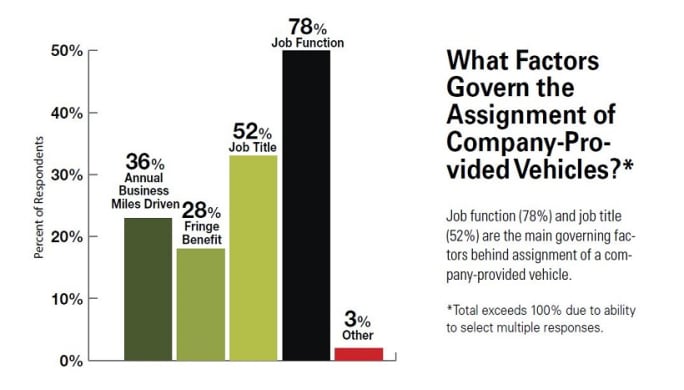
“If there is one positive item to this COVID period, our accident, fuel, and maintenance expenses have gone down considerably,” Anderson added.
Business activity since March for some has begun a continued trajectory to pre-pandemic levels, including ALFASIGMA.
“We took all of our sales reps off the road in late March, and have been gradually phasing them back in the field over the last two months,” said Anderson. “We currently have around 85% of our sales force back in the field. It’s mostly the NE states who are waiting to go back in the field.”
Fortunately the business model for some companies during the pandemic has still allowed for work to be conducted virtually, continuing to pave the way for the ubiquity of employees working from home across the U.S.
“Due to the nature of our business (medical device/life sciences/healthcare), with the heightened safety concerns across all hospitals, most of our businesses are conducted virtually these days,” said VrMeer. “A small number of our reps are able to go on the road to visit hospital customers to help with cases/procedures, etc. We have seen a significant decrease of business mileage driven over the past few months, while a surprising increase of personal mileage driven for the same time period. We saw some solid reduction in fuel and maintenance back in April/May, but those expenses have started to come back up in the past couple months.”
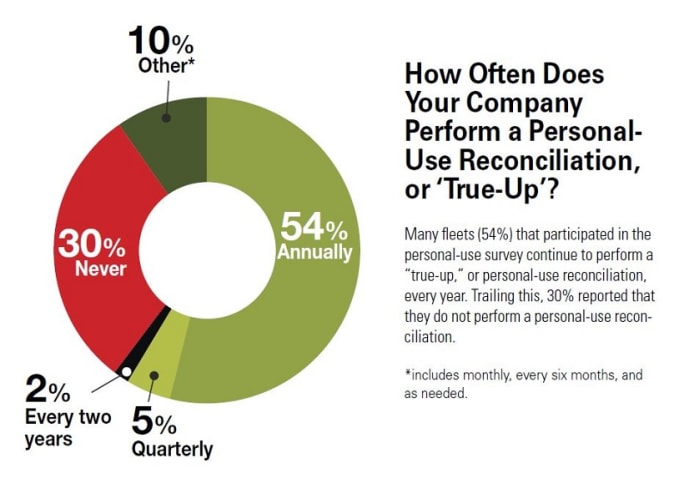
Monthly Charges in 2020
When looking at how fleets charged for personal use in 2020, the numbers were flat when compared to the $139 monthly average of 2019.
Fleets in the survey said how the IRS decides to address the taxation of personal use mileage may impact their decision making of these policies moving forward.
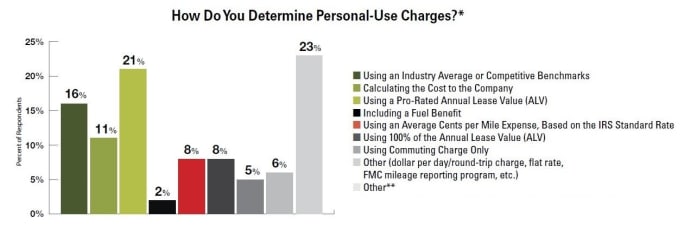
Another anonymous fleet manager noted how their personal-use policy was being maintained at consistent levels during the pandemic, and a shift could occur in the coming years.
“We have made the decision not to increase any personal use charge this year due to COVID,” the fleet manager said. “I believe next year we will re-evaluate for 2022 if increasing the personal use charge is a pro or a con and how that would affect us retaining top talent.”
Subscribe to Our Newsletter
More Operations

Sponsored•October 14, 2026
A buyer's guide to fleet management software in 2027
Buying fleet management software in 2027 means looking beyond features and price. As fleet operations, technology and expectations evolve, this guide explores what today’s fleet professionals should consider when choosing a system that can deliver value now and adapt to what comes next.
Read More →
What Will Shape the Next Era of Fleet Management?
EVs, AI, and autonomous vehicles are reshaping fleet management. Discover what’s ahead—and how fleet leaders can prepare for the next era.
Read More →
How Fleets Can Recruit and Train Veterans for Technician Roles
Here's how the technician shortage has affected uptime for fleets, and what to do about it.
Read More →

Avis Budget Group Deploys Neology Toll Management Technology Across Major Brands
Neology’s neoFleet platform will manage toll transactions and toll-authority operations for vehicles across Avis, Budget, Payless, Budget Truck and Zipcar.
Read More →
Fleet Personal-Use Charges Edge Higher in 2026
Nearly eight in 10 surveyed fleets allow personal use of company vehicles, while just over half of respondents report charging employees for the privilege.
Read More →
The Future of Fleet + What’s Changing Right Now | AF News Recap
Could developments overseas offer a preview of what’s coming for U.S. fleets? This week, we’re looking at the future of AI, autonomy, and electrification, plus Ford Pro’s new certified pre-owned program, smarter vehicle offboarding, and a new way for fleets to manage toll expenses.
Read More →
How to Handle Vehicle Offboarding
What do fleet managers need to do when a driver leaves?
Read More →
Sponsored•October 1, 2026
Fleet Manager’s Ultimate Playbook: Navigating the New Standard in OEM Connectivity
Rising operating costs, driver safety concerns, and unplanned downtime are putting unprecedented pressure on modern fleets. Discover how fleet managers use embedded OEM connectivity and real-time vehicle data to cut TCO, prevent downtime, and protect drivers without aftermarket telematics hardware.
Read More →
U.S. Bank Adds Verra Mobility Toll Management to Voyager Fleet Platform
The integration allows U.S. Bank Voyager fleet customers to manage toll payments and violations alongside fuel, EV charging and maintenance expenses.
Read More →
ADAS Prevents Crashes. But Repairs Cost More | AF News Recap
ADAS-equipped vehicles may crash less often, but they can cost more when they do. This week, we’re breaking down what that tradeoff means for fleets, plus Subaru’s first Forester Wilderness Hybrid, Nissan’s new e-POWER Rogue, and why Calstart has become Catalyst Mobility.
Read More →