




Clean Fleet’s Future May Be Electric, but Today It’s Propane
Yes, electric vehicles are a part of our future. But propane autogas is a part of our past, present, and future, too.
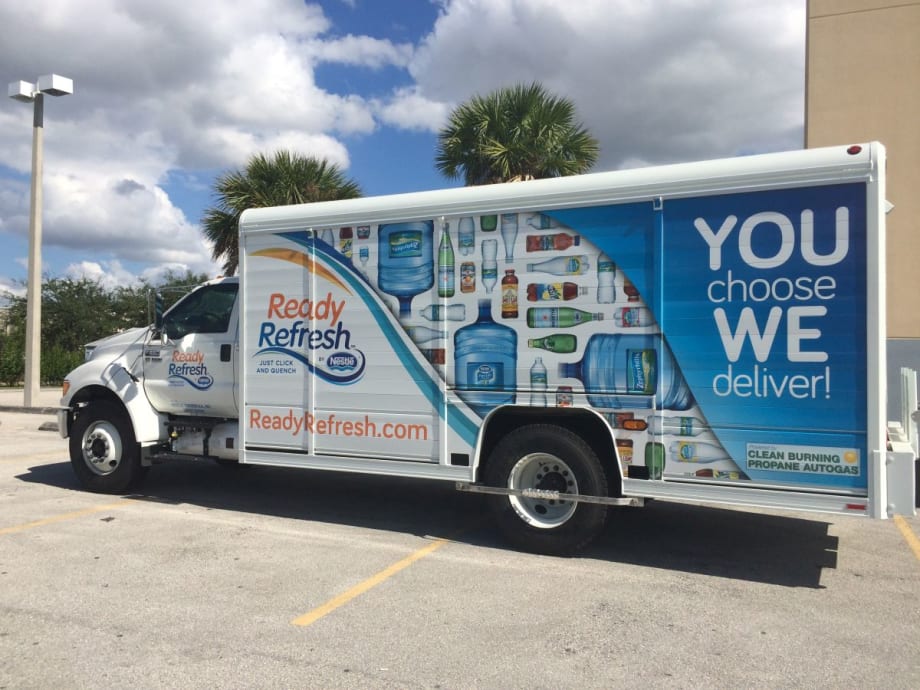
Propane has been around for more than 100 years to fuel vehicles, like school buses, delivery vans, construction trucks, transit vehicles, and more.
Photo: Roush CleanTech
Roush CleanTech is an advanced technology development company. Alliance AutoGas is a vehicle conversion technology and fuel provider. Together, we know fleets and fuels.
Roush CleanTech has been an active player in the alternative fuels business for almost 15 years with multiple fuel sources and has more than 40,000 units on the road that have accumulated over two billion miles of alternative-fuel performance characteristics.
When we teamed up with Alliance AutoGas for this article, we felt it was important to communicate today’s energy options for fleets.
The Future of Alternative Fuels
We hear a lot about various alternative-fuel vehicles, especially those powered by electric. Electric vehicle (EV) technology is exciting and quickly emerging. The reality is that it’s not quite there on a large scale for commercial vehicles — yet. And, as we all know, technology development takes time. While there is much to be excited about regarding the potential future growth of EVs, when we shift our focus to “right here, right now,” it’s shovel-ready propane autogas.
Propane has been around for more than 100 years to fuel vehicles, like school buses, delivery vans, construction trucks, transit vehicles, and more. It’s a readily available fuel with more than 90% of the United States supply produced domestically and an additional 7% from Canada. More than 24 billion gallons of excess U.S. production are being exported out of the United States. There’s no question that the supply is there.
The Roush CleanTech propane engine (a Ford 7.3L V-8) is currently on the market with certified California Air Resources Board’s optional low NOx emissions standard. In addition, multiple technologies are available in the U.S. for propane vehicles that meet or exceed the 0.2g nitrogen oxide standard.
Looking at the Big Picture
When you consider the entire spectrum of tailpipe emissions and emissions associated with the electricity production, propane offers drastic decreases over conventional fuels and EVs without the need for complex aftertreatment devices or expensive charging stations. And then there is renewable propane, which has virtually zero emission levels, reduced greenhouse gases, and helps meet the demand for ever-cleaner products.
The eventual maturity of renewable propane is where we get very excited. Renewable propane provides a solution for today’s fleets as we transition to options that exist in the future.
Renewable propane, also known as biopropane, is a non-fossil fuel produced from 100% renewable materials. It’s commonly produced from feedstock such as plant oils, animal waste, and cooking oils. It can be used as a “drop-in” fuel to conventional propane since renewable propane’s molecular structure, and physical properties, are the same. The fact that it is generated from renewable sources lays a different carbon intensity perspective.
Renewable propane aligns with California and Oregon's Low Carbon Fuel Standards. It provides fleets with significant carbon reduction while experiencing the benefits of propane, such as reduced costs, longer driving ranges, and being a domestic fuel source.
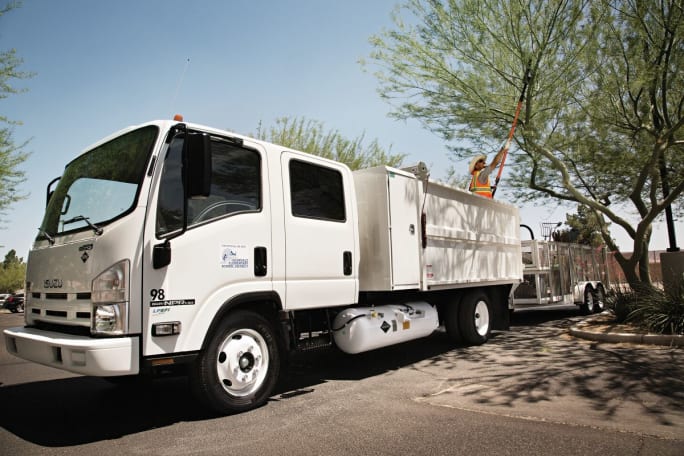
Renewable propane provides fleets with significant carbon reduction while experiencing reduced costs and increased driving ranges.
Photo: Alliance Autogas
It Just Makes 'Cents'
The economics of propane vehicles are hard to ignore. Cost savings are significant without a large upfront investment because the incremental price of a vehicle equipped with a propane fuel system is only a small increase over comparable gasoline or diesel power options. For fueling, propane suppliers can install onsite propane stations at low (or even zero) cost with a fueling contract. Plus, and especially important in today’s world, the cost of the fuel itself averages less than half that of gasoline or diesel.
With easy and quick fill-up time, reduced maintenance, and a long-driving range, propane autogas vehicles stay on the road — all important for managing your daily fleet activities.
We get it. EVs can offer the highest reduction in vehicle tailpipe emissions because there is no engine, thus no exhaust emitted from the vehicle. However, when considering total emissions and the generation of electricity, conventional propane is currently cleaner than an EV in all but a handful of states.
Not every EV is charged using sustainable power sources; for example, coal is frequently used to generate electricity. And there are many environmental challenges surrounding grid capacity, coal-fired power plants, and the energy-heavy process of developing lithium-ion batteries.
The map below shows the carbon intensity rating of the electrical grid when you evaluate how electricity is generated, stored, transmitted, and consumed. This map is compared with the same research to a 50/50 blend of propane and renewable propane, the carbon intensity ratings by state:
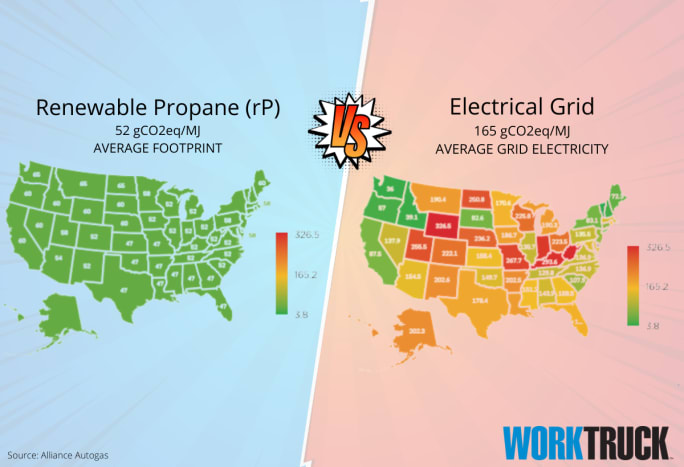
Looking at the carbon intensity rating of the electrical grid vs renewable propane shows a major difference in all U.S. states.
Source: Alliance Autogas
The bottom line is that EVs are a part of our future. Propane is a part of our past, present, and future. The momentum around renewable propane is a gamechanger when you focus on emissions as it offers fleets a near-zero advanced alternative fuel technology.
Are you ready to bridge the gap from traditional fuels to propane autogas? Check out these benefits, and challenges, when transitioning. Work Truck also has you covered for converting your truck to run on propane autogas with these nine steps!
About the Authors: Joe Thompson is president at Roush CleanTech, and Stuart Weidie is president at Alliance AutoGas. This article was authored and edited according to WT editorial standards and style. Opinions expressed may not reflect that of WT.
Originally posted on Work Truck Online
More Green Fleet

Merchants Fleet Reports 290M EV Miles as Fleets Navigate Changing Electrification Market
From millions in operating savings to hundreds of millions of EV miles, Merchants Fleet’s latest report reveals what’s working and what’s changing in fleet electrification.
Read More →
The EV Breakdown Nobody's Talking About: Why Most Electric Vehicle Roadside Calls Aren't Mechanical Failures
Here's why EV breakdowns are widely misunderstood.
Read More →
ChargePoint Now Available in Energy Pass
ChargePoint and additional planned charging network integrations were added to GM's Energy Pass.
Read More →

First Look: Slate Auto's Electric Fleet Pickup
Could an affordable, modular EV pickup make electrification more practical for fleets?
Read More →
Slate Debuts Colorful, Unique EV Models
A recent media and client event, studded with electric vehicles dressed up on platforms, planted a new position for the manufacturer in the wider EV market. Fleets will find cost-saving advantages.
Read More →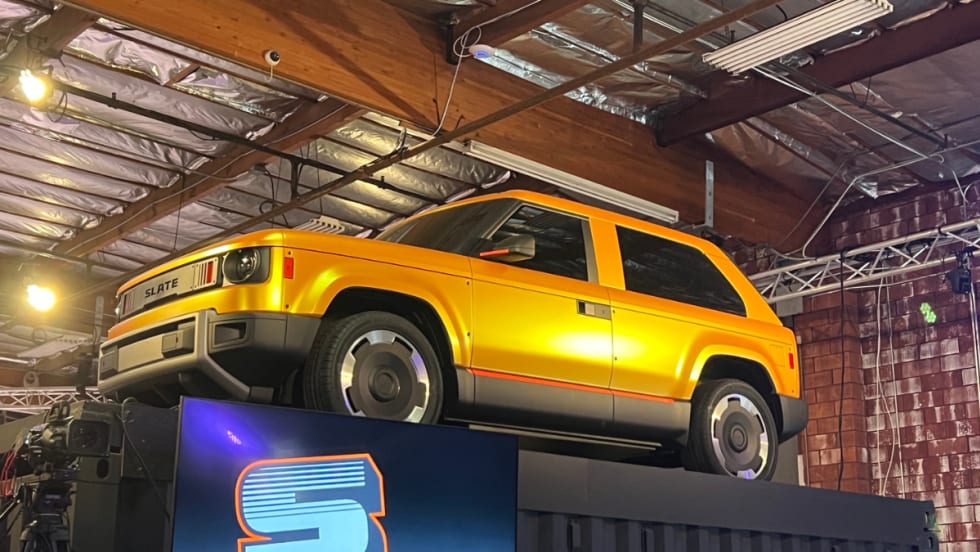
Slate Electric SUV, Pickup Switchable Model Aims For Light-Duty Fleets
Everything about this EV is counterintuitive and understated, making it stand out from the crowd.
Read More →
Inspiration Mobility Acquires Key Electrada Assets
Inspiration Mobility Group has acquired select assets of Electrada, adding the fleet electrification provider's team, technology, and charging infrastructure development capabilities to its energy management business.
Read More →
Turning Connected Vehicle Data Into Decisions That Matter
Fleet leaders have more data than ever, but turning that data into clear, actionable decisions remains a challenge. This white paper shows how leading organizations are using connected vehicle data to improve safety, reduce costs, and optimize fleet performance. Learn how to turn insight into action across your fleet.
Read More →
Are You Tracking Your Fleet's True Total Cost of Ownership?
Bobit Business Media surveyed 190 fleet professionals and found that while most fleets are tracking costs, fragmented systems and data gaps are keeping true TCO visibility out of reach. With rising pressure to control spend in an increasingly volatile environment, the gap between what fleets think they know and what the data actually shows is wider than you might expect. See how your peers are managing costs today and where the industry still has room to improve.
Read More →