




Clean Cities Celebrates 20 Years
Over the past two decades, Clean Cities coalitions across the country have been working hard to promote more eco-conscious transportation operations and shrink U.S. dependency on foreign oil.
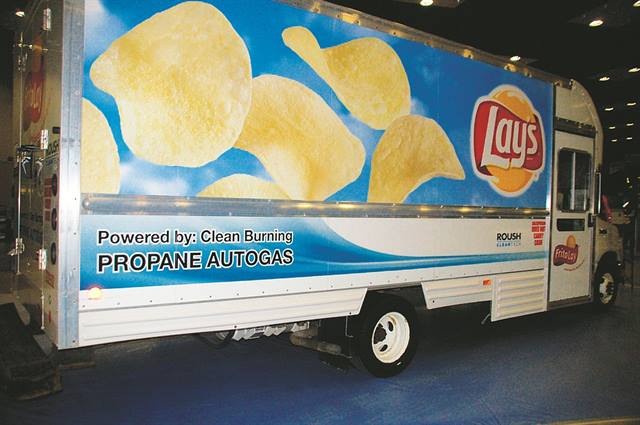
The National Clean Fleets Partnership program is helping 18 mega-fleets, such as Staples and Frito-Lay, incorporate alternative fuels and fuel-saving measures into their operations.
Since its launch 20 years ago, the U.S. Department of Energy’s Clean Cities program has followed a simple model: Helping local communities lead the way to a stronger and more prosperous energy future by providing American families and businesses more transportation energy options to help reduce the nation’s reliance on imported oil.
Establishing a Presence
In 1993, Clean Cities designated its first coalition in Atlanta and by 1994 had added another five local coalitions from across the country. Since then, this network has expanded to include nearly 100 coalitions representing almost 80 percent of the country’s population. These coalitions collaborate with more than 10,000 state and municipal governments, small businesses, community organizations, and others to diversify transportation energy choices and deploy more efficient vehicles that will save consumers money. By leveraging these stakeholders’ combined resources, the Clean Cities coalitions are driving achievements that no single organization or group could accomplish on its own.
Nationwide, the Clean Cities program is paying dividends in communities from Atlanta to San Diego to Kansas City. To date, these efforts have helped put more than 600,000 alternative-fuel buses, taxicabs, and other fleet vehicles on the road, as well as help stand-up electric vehicle charging stations and alternative-fuel stations, including natural gas, propane autogas, and biofuels. As of 2011, Clean Cities coalitions have saved more than 4.5 billion gasoline-gallon equivalents.
These public-private partnerships serve as models of community-scale efforts that have regional impacts. For example, through the American Recovery and Reinvestment Act (ARRA), the Treasure Valley Clean Cities coalition launched an effort to install four new natural gas stations along local highways in Boise, Idaho. At the same time, a local transit agency planned to shut down the area’s commuter bus line due to escalating diesel prices. However, by introducing cost-effective compressed natural gas (CNG) stations in the community, the local Clean Cities coalition was able to help the transit agency continue running the community bus service and eventually purchase eight new natural gas buses.
Making a National Impact
Building on local partnerships, Clean Cities has recently expanded its impact on the national stage. In spring 2011, President Barack Obama announced the launch of the National Clean Fleets Partnership, which is helping America’s largest commercial fleets speed the adoption of alternative fuels, electric vehicles, and fuel-economy improvements. Now the program is helping 18 mega-fleets from Coca-Cola and Staples to UPS and Verizon incorporate alternative fuels and fuel-saving measures into their operations. Clean Cities also continues to collaborate with its fellow federal agencies. Building on past collaborations with the National Parks Service, Clean Cities is working with some of the country’s largest and oldest parks, including Yellowstone and Mammoth Cave National Parks, to help them cut emissions and reduce reliance on petroleum fuels.
The initiative has also expanded its public education efforts, providing a full suite of tools to help people make informed decisions about the alternative-fuel or petroleum-saving solutions that may be right for them. In 1991, the Alternative Fuels Data Center started with a single computer. Today, the website (www.afdc.energy.gov) hosts a wide range of interactive tools, including maps, databases, videos, case studies, and fuel calculators.
In 2012, FuelEconomy.gov, which is managed in cooperation with the U.S. Environmental Protection Agency, saw a record number of visitors to its site. Users accessed the site more than 47 million times to compare fuel-efficient vehicles and make driving decisions that maximize their fuel economy.
As Clean Cities has expanded, so has the United States’ alternative-fuel vehicle market. Record numbers of alternative-fuel trucks, buses, and other vehicles are now on the road, with particularly high interest in plug-in electric and natural gas vehicles. Many alternative-fuel vehicles offer such a good business case that fleets are realizing a payback on their investments in one year or less. To keep up with the ever-changing market, Clean Cities is now focusing on alternative-fuel community readiness efforts. From streamlining permitting processes for alternative-fueling infrastructure, to training mechanics who will be working with these new fuels and technologies, Clean Cities is tackling a variety of critical non-financial barriers.
From 1993 through the present day, Clean Cities has evolved to address changing market conditions and meet the needs of fleets, drivers, and stakeholders who share the goal of being less dependent on petroleum fuels. By working together through programs like this, we can reduce our dependence on foreign oil and help our nation’s communities and businesses save money at the pump.
About the Author
Dennis Smith is the national Clean Cities director. He can be reached via e-mail at dennis.smith@ee.doe.gov.
To mark its 20th anniversary, Clean Cities will share success stories, accomplishments, and lessons learned throughout 2013. Stay tuned to CleanCities.Energy.gov. Profiles of Clean Cities programs are also featured in each issue of Green Fleet.
More Green Fleet
EV Charging Use Is Outpacing Infrastructure Growth
ChargePoint’s 2026 Charging Forward Report points to rising charger use, higher-powered charging, commercial vehicle electrification, and energy-management technology. Here’s what fleets should know.
Read More →
Merchants Fleet Reports 290M EV Miles as Fleets Navigate Changing Electrification Market
From millions in operating savings to hundreds of millions of EV miles, Merchants Fleet’s latest report reveals what’s working and what’s changing in fleet electrification.
Read More →
The EV Breakdown Nobody's Talking About: Why Most Electric Vehicle Roadside Calls Aren't Mechanical Failures
Here's why EV breakdowns are widely misunderstood.
Read More →
ChargePoint Now Available in Energy Pass
ChargePoint and additional planned charging network integrations were added to GM's Energy Pass.
Read More →

First Look: Slate Auto's Electric Fleet Pickup
Could an affordable, modular EV pickup make electrification more practical for fleets?
Read More →
Slate Debuts Colorful, Unique EV Models
A recent media and client event, studded with electric vehicles dressed up on platforms, planted a new position for the manufacturer in the wider EV market. Fleets will find cost-saving advantages.
Read More →
Slate Electric SUV, Pickup Switchable Model Aims For Light-Duty Fleets
Everything about this EV is counterintuitive and understated, making it stand out from the crowd.
Read More →
Inspiration Mobility Acquires Key Electrada Assets
Inspiration Mobility Group has acquired select assets of Electrada, adding the fleet electrification provider's team, technology, and charging infrastructure development capabilities to its energy management business.
Read More →
Turning Connected Vehicle Data Into Decisions That Matter
Fleet leaders have more data than ever, but turning that data into clear, actionable decisions remains a challenge. This white paper shows how leading organizations are using connected vehicle data to improve safety, reduce costs, and optimize fleet performance. Learn how to turn insight into action across your fleet.
Read More →