




Chrysler's MacDonald Sets Customer Service as Top Priority
One of John MacDonald's first actions as the new general manager of Chrysler Fleet Operations was to challenge his staff to find new ways to satisfy fleet customer needs. Determining these needs will be customer-driven.
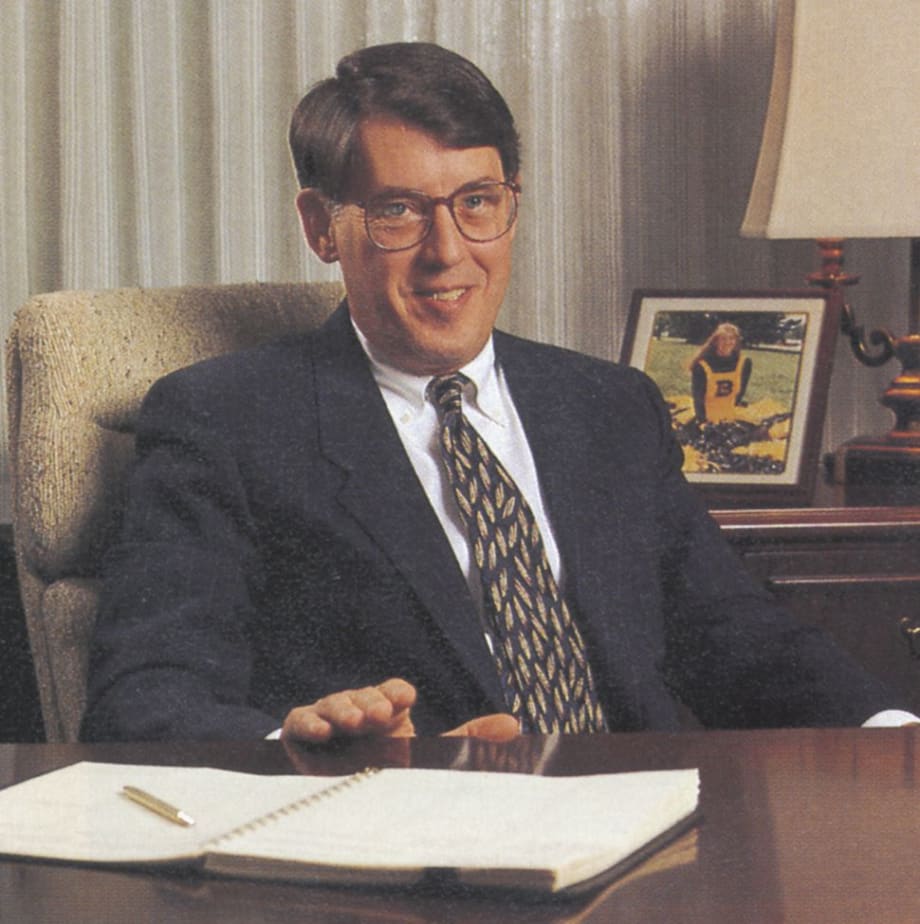
MacDonald
MacDonald
On Jan. 1, 1993, John MacDonald was named general manager for Chrysler Fleet Operations. In his new position, MacDonald will be responsible for all fleet operations activities and company car program process activities. Since July 1991, he has served as assistant general manager - fleet operations.
MacDonald joined Chrysler in July 1971, and has an extensive background in sales management. He held various positions in the Chicago zone, then served as assistant sales manager in the Omaha zone and Detroit zone. In 1980 he was named Denver zone manager and then Chicago zone manager. In December 1983, he was named regional manager - South and in June 1985, he became regional manager - central. He was appointed general manager - Dodge Truck Marketing in September 1987, and in October 1988, he was named general sales manager for Chrysler Corp., serving in that capacity until his move to Fleet Operations in 1991.
Recently, Automotive Fleet interviewed MacDonald to determine his goals as general manager of Chrysler Fleet Operations.
AF: For the past year-and-a-half, you have worked as assistant general manager of Chrysler Fleet Operations. How has this job experience prepared you for your new assignment as general manager of Fleet Operations?
MacDonald: In the past 18 months, I have personally called on most of our top 50 commercial accounts. The idea behind this effort was to learn as much as I could from them about their businesses and how they perceive our products are service. Also, I've attended several NAFA local chapter meetings. The frank exchange of ideas was very good. From this exposure, I have a pretty good idea of what we're doing right - and the areas where we have opportunities to improve.
You know, while this most recent assignment helped me fine-tune my fleet sensibilities, I am not a newcomer to the fleet business. In my 22 years of working for Chrysler in various field and home office assignments, I, of course, had ample opportunity to become involved with fleet concerns as they related to Chrysler's dealer body. In my capacity as general sales manager, I was an advocate of more dealer involvement in the fleet business. I am gratified to see that Chrysler's new Customer One movement will lend itself readily to the dealer/fleet customer relationship. And I intend to make the most of it.
AF: What are the key challenges facing Chrysler Fleet Operations in 1993 and beyond?
MacDonald: With the change in stewardship here at Chrysler - both in the Office of the Chairman and here in Fleet Operations - a new era has begun. Bob Eaton (Chrysler's chairman and CEO) and I recognize that with change comes a degree of uncertainty. We are eager to reassure our customers that they are highly valued and that they can continue to expect the same fine service that Chrysler has provided in the post. However, we understand that talk is cheap and we will be judged by our actions. So, if I could deliver just one message to your readership, it would be that one year from now I plan to ask them if they are satisfied with the new team. We will be working hard to ensure they are!
Beyond that, of course, all of us, GM, Ford, and Chrysler, are struggling with the role of daily rental. There will have to be adjustments made. But then, that's what this business is all about; it's a constant evolution. Daily rental is good business; we simply have to find a way to profitably co-exist. Ensuring that the daily rental companies and Chrysler both come out winners will be a major challenge. But I know there's a way and we will find it.
Another challenge that we face will be the successful launch of many fine new products. There's been a lot of fanfare about the new Grand Cherokee, Dodge Intrepid, Eagle Vision, and Chrysler Concorde, but they are just the first of a stream of new products. You know, when we had the foresight to embark on an extensive cost-cutting program four years age, the product plan was "hands off." But it's paid off! We will be introducing a major new product to the public every six months between now and 1995: the LH 207 (New Yorker and LHS); the new B-Series Vans and Wagons; T-300; an all-new, made-in-America small car in '94; and an all-new midsize car in '95.
AF: Do you envision any marketing or organizational changes in Chrysler Fleet Operations under your stewardship?
MacDonald: At this time, no changes are planned. As in the past, our emphasis has been on customer service. I have challenged the Chrysler Fleet Operations personnel to find new ways to improve that service. For example, we have participated with several of the major leasing companies in the improvement of our service through a program which is commonly called "Process Redesign." In a nutshell, Process Redesign means learning through a cooperative effort how to structure your processes and organization to best meet the needs of your customer. Any changes that you may see in our organization will be customer-driven.
AF: What is Chrysler's strategy for building marketshare in the fleet/lease and daily rental marketplaces?
MacDonald: Great products, programs, and people. You must have all of these elements to succeed. We've got them. Beyond that we're going to take a look at how the Chrysler dealer approaches the fleet experience to see if we can improve his awareness and interest. He's the link in the chair that can make or break the whole relationship, whether it's his handling of the delivery of a lease customer or of the timely, quality repair of a daily rental unit. Again, the focus is the customer and his or her needs. That's how we will continue to differentiate the Chrysler Corporation.
AF: What is the role of the fleet dealer in Chrysler's fleet strategy?
MacDonald: My aim is to continue to support the high level of involvement by the fleet minded dealers and to encourage some level of participation by all dealers. There are nearly 5,000 Chrysler Corporation dealers in the U.S. That's a significant network for the development and maintenance of a first-rate support system.
AF: What has been the initial reaction of commercial fleets to the new LH models? How will the new New Yorker be positioned in relation to the earlier-introduced LH models and how will it be marketed to commercial fleet users?
MacDonald: The reaction has been fantastic. We have been inundated with phone calls and letters - all highly complimentary. It's been very gratifying. As far as the New Yorker goes, actually we are coming out with two LH 207s: the New Yorker and the LHS. These sedans are Chrysler's all-new large cars, compared to the Intrepid, Vision, and Concorde, which are considered mid-size. The New Yorker is the more traditional, six passenger, luxury car offering; the LHS, with its touring suspension and low-speed traction control, is targeted at the younger, more affluent personal luxury car buyer who is very interested in technical innovation. Of the two models, I would expect that the New Yorker will have the most appeal to the commercial fleet customer. This vehicle will have all of the wonderful attributes of the LH - cab forward design, huge passenger compartment, easy access/egress, safety features galore but on a larger scale, and with every imaginable amenity as standard equipment. This is a vehicle for top brass, including the CEO.
AF: How will the forthcoming B-van and T-300 pickup help serve the needs of commercial fleet customers?
MacDonald: The 1994 Ram Van and Wagon went into production last month. These are the very versatile, MAGNUM-powered units that have become an industry standard with an all-new aerodynamic look and many functional improvements. The fleet customer will be impressed with the improved steering response, ride and handling, and added safety features, such as the available four-wheel-drive ABS and center high-mounted stoplight. A compressed natural gas model will be available to help fleets comply with the various federal, state, and local requirements for cleaning up the air.
The T-300 will go into production next summer as a 1994 model. This unit was designed with the fleet customer in mind. Many new innovations are a direct result of input from a panel of actual fleet users. While many of the specifics still are confidential at this point, I can assure the fleet community that they will be thrilled with the power and convenience features that this truck will offer. A 4500 model also is on the drawing board. And the look of this truck - well, there aren't enough superlatives to describe it.
AF: What is Chrysler doing in terms of product availability of alternative-fueled vehicles to help fleets meet the legislated purchase mandates to acquire these vehicles?
MacDonald: A lot. I mentioned the compressed natural gas (CNG) Vans and Wagons. We came out with CNG in the 1992-model year. Chrysler Corporation has taken a "fuel neutral" position on the various potential alternatives, but you have to admit that the infrastructure for natural gas is more developed than the others. And, given that natural gas is abundant domestically and the appointment of Mack McLarty as President Clinton's chief of staff and his connection to the American Gas Association, we believe there will be more emphasis on this fuel.
We also have the Flexible Fuel Vehicle (FFV) in the 1993-model year. It's an available engine option on our Dodge Spirit and Plymouth Acclaim models. As you know, methanol or M-85 is very big in California. The California Energy Commission and the various Air Quality Management Districts are pushing M-85. It's a good alternative in that it's truly "flexible" - you can run your FFV by Chrysler on 100 percent gasoline or 100 percent M-85, which is 85 percent methanol and 15 percent gas, or any combination of the two.
Then, there's the electric version of the Minivan. Fifty 1993 TEVans, as they're called, have been sold to select utility companies around the country. With the feedback we get from these customers, we will continue to redefine the TEVan. Then, based on advancements in battery technology and market demand, we hope to offer the unit in 1994 to any fleet that wants one.
More Operations

How Fleets Can Recruit and Train Veterans for Technician Roles
Here's how the technician shortage has affected uptime for fleets, and what to do about it.
Read More →
Avis Budget Group Deploys Neology Toll Management Technology Across Major Brands
Neology’s neoFleet platform will manage toll transactions and toll-authority operations for vehicles across Avis, Budget, Payless, Budget Truck and Zipcar.
Read More →
Fleet Personal-Use Charges Edge Higher in 2026
Nearly eight in 10 surveyed fleets allow personal use of company vehicles, while just over half of respondents report charging employees for the privilege.
Read More →
The Future of Fleet + What’s Changing Right Now | AF News Recap
Could developments overseas offer a preview of what’s coming for U.S. fleets? This week, we’re looking at the future of AI, autonomy, and electrification, plus Ford Pro’s new certified pre-owned program, smarter vehicle offboarding, and a new way for fleets to manage toll expenses.
Read More →
How to Handle Vehicle Offboarding
What do fleet managers need to do when a driver leaves?
Read More →
Fleet Manager’s Ultimate Playbook: Navigating the New Standard in OEM Connectivity
Rising operating costs, driver safety concerns, and unplanned downtime are putting unprecedented pressure on modern fleets. Discover how fleet managers use embedded OEM connectivity and real-time vehicle data to cut TCO, prevent downtime, and protect drivers without aftermarket telematics hardware.
Read More →
U.S. Bank Adds Verra Mobility Toll Management to Voyager Fleet Platform
The integration allows U.S. Bank Voyager fleet customers to manage toll payments and violations alongside fuel, EV charging and maintenance expenses.
Read More →
ADAS Prevents Crashes. But Repairs Cost More | AF News Recap
ADAS-equipped vehicles may crash less often, but they can cost more when they do. This week, we’re breaking down what that tradeoff means for fleets, plus Subaru’s first Forester Wilderness Hybrid, Nissan’s new e-POWER Rogue, and why Calstart has become Catalyst Mobility.
Read More →
Moventum Fleet Management Names Mark Iorillo Head of Sales
Iorillo brings nearly 20 years of fleet management and sales experience to the role, including previous positions at Element Fleet Management, CEI, Donlen and Ryder.
Read More →
Fleet Has a Talent Pipeline Problem. What Comes Next? | AF News Recap
Where will fleet’s next generation of leaders come from? This week, we’re looking at the industry’s talent pipeline, what certification can add to a fleet career, how to build an award-worthy track record, and the return of Automotive Fleet’s Personal Use Survey.
Read More →