




Chip Shortage Is Affecting Rental Car Orders
Due to the global shortage of semiconductors used in automobiles, OEMs are telling car rental companies to expect “significant delays” with fleet orders. One operator has had a large order canceled outright.

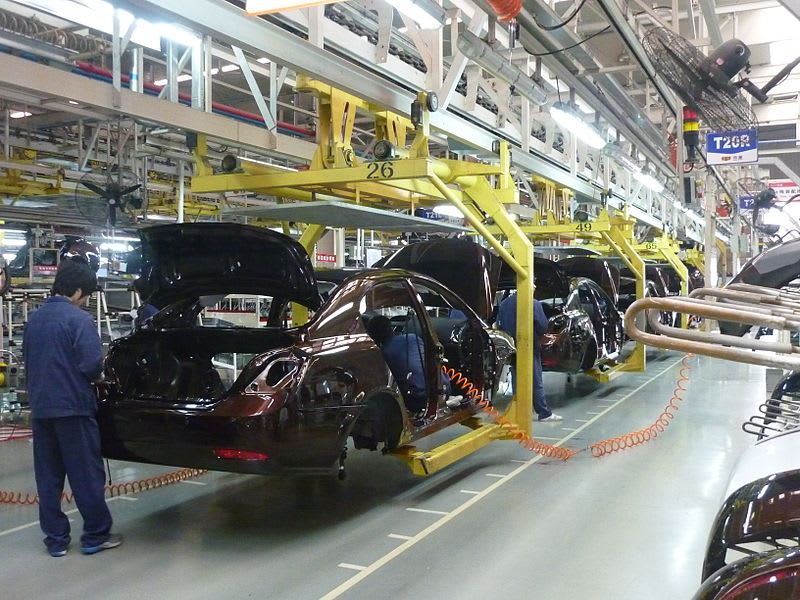
Karl Brauer: “Just as production capacity is coming fully back online, we have a major crimp in the supply chain causing a production shortfall that’s continuing to drive up transaction prices for both consumers and fleet buyers.”
Photo via Wikimedia Commons/Siyuwj.
U.S. car rental companies are beginning to feel the effects of a global shortage of semiconductors used in automobiles.
A major system licensee had an OEM completely cancel an order of over 500 units that were scheduled for late spring and early summer, while another OEM pulled back on 60 orders scheduled for production, the licensee reported. “Most (OEMs) have said ‘We’re monitoring it closely, cuts/changes may be coming,’” the licensee wrote to Auto Rental News. “I think a lot of OEMs just don’t know yet how bad it’ll get.”
The licensee surmised that fleet orders — rental in particular — will be the first to get cut.
A licensee from another system reported that OEM representatives are telling him to expect certain vehicles, mostly trucks and SUVs, to be “significantly delayed.” An informal survey of other rental operators did not reveal further drastic delays or canceled orders, yet. But they all reported that they’re monitoring the situation closely.
“At the moment, we aren't getting a lot of information,” one licensee wrote. “I feel like the OEMs aren't sure right now. I'm expecting several months’ delay on vehicles I had scheduled to be built this month.”
Wrote a rental fleet supplier: “100% an issue, primarily on SUVs. We are scrambling for product.”
On the commercial fleet side, the impact may be felt in longer delays and unexpectedly early buildouts, with the biggest impact to truck and van production. Some truck and van models are no longer orderable, according to a commercial fleet supplier, while ordered 2021 units are scheduled for production into summer and in some cases into the fourth quarter.
Semiconductors that control smartphones and computers are also critical in automobiles, which need 200 to 400 chips. They not only control infotainment systems but also engine, emissions, and collision avoidance systems.
The production problems in the semiconductor chip market intensified last year when the coronavirus pandemic disrupted supply chains. Auto demand returned at the same time that chip manufacturers shifted production away from the autos to more profitable sectors such as consumer electronics, which spiked in demand. The largest chip manufacturers are in Taiwan and China.
The shortage has finally caught up with auto manufacturers. Ford closed its Louisville plant, which makes the Ford Escape and Lincoln Corsair, on Jan. 11 for a week and subsequently extended that closure through the first week in February. Last week, Ford announced the closure for one month of the German plant that makes the Ford Focus for the European market.
Stellantis (the former FCA) has delayed restarting its Mexico plant that makes the Jeep Compass and has scheduled downtime for its plant in Ontario, Canada that builds the Chrysler 300, Dodge Charger, and Dodge Challenger.
Toyota is scaling back production this month at its plant in Texas that builds the Tundra. General Motors has not announced U.S. production cutbacks, though it is slowing production at a South Korean plant. Volkswagen has slowed operations at factories in China, Europe, and North America. Tier 1 parts suppliers such as Continental and Bosch are also dependent on semiconductors and feeling the effects.
“The chip shortage couldn’t have come at a worse time,” Karl Brauer, executive publisher at CarExpert.com, told Auto Rental News. “We’ve already experienced a reduction in new vehicle production with a simultaneous rise in consumer demand, both driven by the pandemic over the past 12 months.”
“Now, just as production capacity is coming fully back online, we have a major crimp in the supply chain causing a production shortfall that’s continuing to drive up transaction prices for both consumers and fleet buyers,” Brauer continued. “Even more troubling is the long-term nature of this issue, as it appears to be a systemic problem that will linger for at least several months.”
Originally posted on Auto Rental News
More Operations

A buyer's guide to fleet management software in 2027
Buying fleet management software in 2027 means looking beyond features and price. As fleet operations, technology and expectations evolve, this guide explores what today’s fleet professionals should consider when choosing a system that can deliver value now and adapt to what comes next.
Read More →
What Will Shape the Next Era of Fleet Management?
EVs, AI, and autonomous vehicles are reshaping fleet management. Discover what’s ahead—and how fleet leaders can prepare for the next era.
Read More →
How Fleets Can Recruit and Train Veterans for Technician Roles
Here's how the technician shortage has affected uptime for fleets, and what to do about it.
Read More →

Avis Budget Group Deploys Neology Toll Management Technology Across Major Brands
Neology’s neoFleet platform will manage toll transactions and toll-authority operations for vehicles across Avis, Budget, Payless, Budget Truck and Zipcar.
Read More →
Fleet Personal-Use Charges Edge Higher in 2026
Nearly eight in 10 surveyed fleets allow personal use of company vehicles, while just over half of respondents report charging employees for the privilege.
Read More →
The Future of Fleet + What’s Changing Right Now | AF News Recap
Could developments overseas offer a preview of what’s coming for U.S. fleets? This week, we’re looking at the future of AI, autonomy, and electrification, plus Ford Pro’s new certified pre-owned program, smarter vehicle offboarding, and a new way for fleets to manage toll expenses.
Read More →
How to Handle Vehicle Offboarding
What do fleet managers need to do when a driver leaves?
Read More →
Fleet Manager’s Ultimate Playbook: Navigating the New Standard in OEM Connectivity
Rising operating costs, driver safety concerns, and unplanned downtime are putting unprecedented pressure on modern fleets. Discover how fleet managers use embedded OEM connectivity and real-time vehicle data to cut TCO, prevent downtime, and protect drivers without aftermarket telematics hardware.
Read More →
U.S. Bank Adds Verra Mobility Toll Management to Voyager Fleet Platform
The integration allows U.S. Bank Voyager fleet customers to manage toll payments and violations alongside fuel, EV charging and maintenance expenses.
Read More →
ADAS Prevents Crashes. But Repairs Cost More | AF News Recap
ADAS-equipped vehicles may crash less often, but they can cost more when they do. This week, we’re breaking down what that tradeoff means for fleets, plus Subaru’s first Forester Wilderness Hybrid, Nissan’s new e-POWER Rogue, and why Calstart has become Catalyst Mobility.
Read More →