




Cellular Systems Improve Communications
At one time, the mobile telephone was thought of as little more than a plaything. Making calls from a mobile telephone was expensive; air space, range, and frequency availability were limited; and the quality of transmission was poor at best. But the same technology that changed the hand-held calculator from an expensive toy to an inexpensive every-day tool many have the same effect on the mobile telephone.
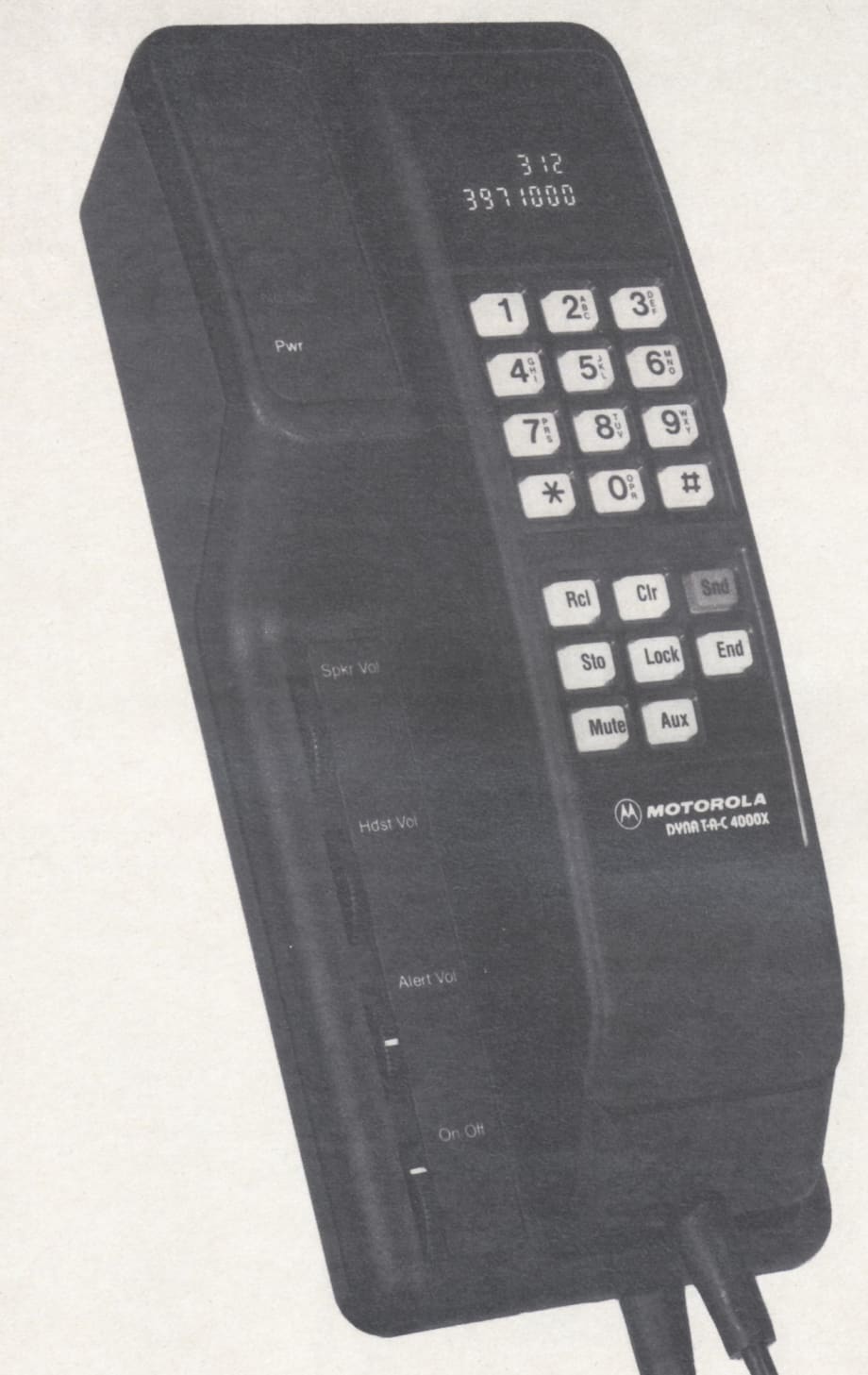
At one time, the mobile telephone was thought of as little more than a plaything. Making calls from a mobile telephone was expensive; air space, range, and frequency availability were limited; and the quality of transmission was poor at best. But the same technology that changed the hand-held calculator from an expensive toy to an inexpensive every-day tool many have the same effect on the mobile telephone.
This innovation in mobile communications is called the cellular mobile telephone. Cellular phones will be offered as factory-installed options from the auto manufacturers, as automotive add-ons installed by independent, cellular mobile telephone dealers, and on rental cars. And many companies may soon be interested in the usefulness and cost-effectiveness of cellular phones.
The cellular concept is not new, but actual practical applications are still in the fledgling stage. To date, availability of systems is limited. The first cellular systems went into operation in Chicago last October, and a similar system began operating in the Los Angeles area last month. The equipment is made by only a handful of manufacturers, and it is relatively expensive. According to one source, a typical cellular system costs about $3000, with a $40 hook-up fee and a $50 monthly service charge, in addition to 40 cents for each minute of use during peak periods, 7 a.m. to 9 p.m. But despite any drawbacks with the current state-of-the-art, the potential for acceptance and growth of the system, some say, is enormous. Some predict that there may be as many as 50 cities and towns offering cellular phone service by as early as 1986. Others indicate that cellular phone systems will be serving 1.5 million U.S. customers and will generate $2.7 billion in revenue by the end of the decade.
Some car manufacturers and daily rental companies are beginning to think these predictions are definitely something to crow about. Chicago branches of Hertz, Budget, and National are all offering cellular phones on their luxury model cars GM's Buick division is currently offering cellular phones as a factory-endorsed Chicago-dealer option at a price of $3,000 complete and installed-on its 1984 Rivieras, with plans to include the option on other models as demand increases. Ford will include cellular phones as an option on its Lincoln Mark VII and other luxury models in 1985 if the market is there.
While conventional, ground-based mobile telephone systems have been around for many years, most of the problems encountered using them frequent busy signals due to the shortage of air space, poor fidelity, and heavy background noise-have been eliminated with the new cellular system. The term "cellular" refers to the design of the regions which are defined by mini-computers strategically situated throughout a metropolitan area and linked, via electronic radio contact, to form a honeycomb-type network of cells. A radio signal broadcast through the cells connects car phones to an electronic switching system located at a central mobile telephone switching office. When someone wants to call a mobile telephone user, the caller is connected by cable from the telephone company to the MTS office. From that point, the call is transferred by radio signal through the cells to the user, who, in this case, is the receiver of the call. As the user drives through the cellular network, the system computer determines which cell with provide the strongest signal.
A single cell in the system has 48 channels which can be further split into a maximum of six smaller cells, each having the capacity for 48 channels. The Chicago system links 17 cells, each ranging 50 miles. But that number can be expanded if demand necessitates. In contrast, the conventional radiotelephone transmitter covers just between 15 and 20 miles, with a capacity for only 12 to 14 channels each. Moreover, two transmitters on the same frequency cannot be located within 50 to 75 miles of each other. Consequently, the current radiotelephone system capability limits cities to one transmitter and one set of frequencies, whereas the cellular radiotelephone system covers a broader area and offers greater capacity to expand. These limitations of the earlier radiotelephone system are the primary reasons why it hasn't grown.
With the computerized cellular system, however, a strong and nearly static-free signal is almost always guaranteed because the cellular system is always close to the source of signal transmission within a cell. Moreover, with a minimum of 48 channels per cell available, the cellular system has fewer busy signals due to line demand. The Chicago cellular system, for example, can handle up to 50,000 calls per hour, compared to the radiotelephone's maximum of 1,400. Greater privacy is also a plus for the system. With the conventional mobile telephone, many users share one transmitter, producing a party-line environment. In contrast, the cellular telephone system hands off transmissions from cell to cell, making monitoring conversations on the moving unit difficult.
Because the FCC is regulating the cellular system equipment has been standardized. Unlike radiotelephone units, all equipment is compatible with all cellular systems.
All this aside, many fleet managers might still question the necessity of having a telephone in a car at all, cellular or not. But according to PacTel Mobile Access, a subsidiary of Pacific Telesis, which has built and will operate the Los Angeles cellular system, the possible business uses for mobile telephones are many. PacTel paints these scenarios: A salesman, unexpectedly caught in a traffic jam, calls his client to say he will be late; a West Coast executive uses her morning commute time to call her New York office in order to catch her colleagues before they go to lunch; a busy manger, en route to the airport to catch a flight, uses the driving time to return calls; an account coordinator, required to attend a client meeting across town, has an important call from a second client forwarded to her mobile phone as she drivers to the meeting; a contractor sets appointments with his supplier as he travels from site to site.
"Mobile phone service can save time and money for on-the-go people," PacTel stresses. "Heavy schedules become more manageable as the dead time now devoted to driving can be put to productive use."
Still, there are some who assume that once cellular telephones gain acceptance, they will probably settle into the role of either an executive toy, a company perk, or perhaps both. In its executive report, the Cellular Mobile Telephone, Runzheimer points out that "in the near future, cellophones may be an option included on fleet cars-most likely the executive portion of a fleet. Pierce Walsh, fleet manger for 9,800 vehicles at IC Industries, told us that cellular mobile telephones were installed in 13 cars (makes include Cadillac, Lincoln, and Mercedes) of senior management at the request of the chairman of the board, William B. Johnson. When we asked Walsh whether the cellophones should be viewed as a perk, he stated: "No. They are viewed as a means of increasing management efficiency." One point to note is that the company previously had four radiotelephones. The switch and increase in number results primarily from the quality of transmission and phone service which cellular makes possible. Clearly, the chairman of the board was quite pleased with his unit and its performance."
Whether cellular telephones will find acceptance in other areas of the fleet industry remains to be seen. But one thing is clear: Due to advances in technology, the mobile telephone has finally come of age.
More Operations

Avis Budget Group Deploys Neology Toll Management Technology Across Major Brands
Neology’s neoFleet platform will manage toll transactions and toll-authority operations for vehicles across Avis, Budget, Payless, Budget Truck and Zipcar.
Read More →
Fleet Personal-Use Charges Edge Higher in 2026
Nearly eight in 10 surveyed fleets allow personal use of company vehicles, while just over half of respondents report charging employees for the privilege.
Read More →
The Future of Fleet + What’s Changing Right Now | AF News Recap
Could developments overseas offer a preview of what’s coming for U.S. fleets? This week, we’re looking at the future of AI, autonomy, and electrification, plus Ford Pro’s new certified pre-owned program, smarter vehicle offboarding, and a new way for fleets to manage toll expenses.
Read More →
How to Handle Vehicle Offboarding
What do fleet managers need to do when a driver leaves?
Read More →
Fleet Manager’s Ultimate Playbook: Navigating the New Standard in OEM Connectivity
Rising operating costs, driver safety concerns, and unplanned downtime are putting unprecedented pressure on modern fleets. Discover how fleet managers use embedded OEM connectivity and real-time vehicle data to cut TCO, prevent downtime, and protect drivers without aftermarket telematics hardware.
Read More →
U.S. Bank Adds Verra Mobility Toll Management to Voyager Fleet Platform
The integration allows U.S. Bank Voyager fleet customers to manage toll payments and violations alongside fuel, EV charging and maintenance expenses.
Read More →
ADAS Prevents Crashes. But Repairs Cost More | AF News Recap
ADAS-equipped vehicles may crash less often, but they can cost more when they do. This week, we’re breaking down what that tradeoff means for fleets, plus Subaru’s first Forester Wilderness Hybrid, Nissan’s new e-POWER Rogue, and why Calstart has become Catalyst Mobility.
Read More →
Moventum Fleet Management Names Mark Iorillo Head of Sales
Iorillo brings nearly 20 years of fleet management and sales experience to the role, including previous positions at Element Fleet Management, CEI, Donlen and Ryder.
Read More →
Fleet Has a Talent Pipeline Problem. What Comes Next? | AF News Recap
Where will fleet’s next generation of leaders come from? This week, we’re looking at the industry’s talent pipeline, what certification can add to a fleet career, how to build an award-worthy track record, and the return of Automotive Fleet’s Personal Use Survey.
Read More →
Smith System Launches Driver Risk Management Program
Fleets have more driver data than ever, but identifying risky behavior doesn't necessarily correct it. Smith System's new Driver Risk Management program combines monitoring, training, and follow-up coaching to help fleets connect risk signals with driver intervention.
Read More →