




Car Care a Must With Livery Firm
Keeping up the appearance of its cars is a major problem at Thorne Anderson Livery Service in Chicago.
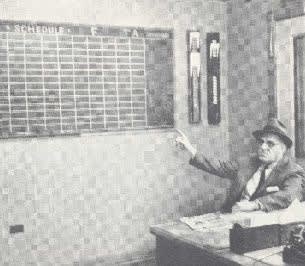
Stapleton uses car schedule board to maintain up to the minute check on availability of firm's vehicles.
And with good reason. A livery service can't operate at a profit without satisfied customers. And the quickest way not to satisfy a customer is to furnish him with a sloppy car.
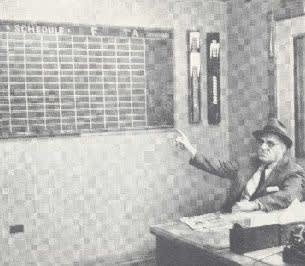
"We take car appearance serious," said Bill Stapleton, vice president of Thorne Anderson. "We have to to stay in business."
Thorne Anderson is one of four companies that operate an integrated custom livery, funeral and flower service in Chicago. Operating 100 Cadillac cars from three locations, Stapleton says the firm is the largest funeral livery service in the United States.
To practice good car care, each vehicle is washed every day and often twice if the run is short. An automatic overhead spray washer assists one man in keeping the cars clean. Whitewall tires are steam cleaned each day and a thorough vacuuming job is also a daily chore.
Because of the heavy use of salt on Chicago streets, all cars receive a hand wax job four times each year after a machine rub-out with a cleaning compound. The interiors are shampooed regularly.
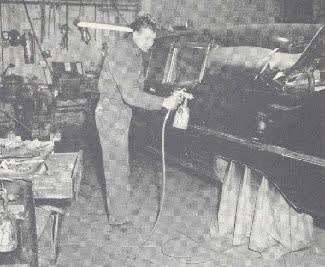
Related to the program of good car care is the large amount of body work and subsequent buffing and painting carried out in the three garages.
"Most body refinishing is not serious," Stapleton said, "but scratches and nicks are plentiful. And we go through more new moldings than you would expect."
Stapleton's area of responsibility is the North Side garage where 37 cars are housed. Each garage is responsible for its own maintenance and repair work.
The cars at the North Side garage include 15 Cadillacs Series 75 limousines, 13 hearses, six flower cars and three service cars. All are either black or "Chicago gray." The hearses have special bodies built by Divco-Wayne on the Cadillac "Z" chassis. Some of the cars are equipped with two-way radio for greater flexibility.
Limousines average 23,000 miles a year; limousines in custom livery pile up about 28,000 miles a year and the hearses and flower cars put on about 12,500 miles per year.
Because of the wide variance in total mileage between the individual cars, proper maintenance records are a must. Each car has its own maintenance record and at a quick glance Stapleton can add up gas and oil consumption, tire mileage and what service the car has "Maintenance Is Serious Business"
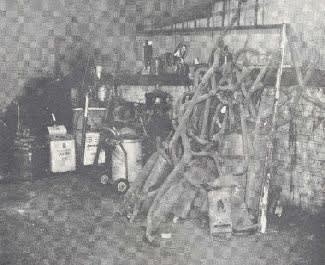
received. The records help Stapleton keep a close watch on expenses.
In addition, each driver has the responsibility upon checking in the car each day to record the amount of gasoline consumed and to notify the service department when it reaches 1,000 miles or no more than 1,200 miles for a complete lubrication. He also records any noise or mechanical problems. Major servicing is done immediately; minor adjustments are performed at the regular oil and lube intervals.
[PAGEBREAK]
In order to arrange the most efficient schedule for his mechanics and body repair men, Stapleton pulls the cars in somewhere between every 8,000 and 10,000 miles for a complete tune up. At this time, the cars receive new spark plugs, points and a thorough inspection. Stapleton believes that the use of ethyl gas exclusively (about 3500 gallons per month) along with premium detergent oil and greases helps him hold engine problems to a minimum.
"We rarely incur any engine trouble of a major degree," Stapleton said, "since we replace primarily with original equipment parts from our local jobbers. The only work we send out right now is for transmission repair and front end alignment."
Little tire maintenance is incurred since most are six ply tires. The heavier hearses use eight ply tires. Tires are replaced well before the tread is gone to insure a smooth, safe ride.
Because of the emphasis on appearance, cars are traded every two years. Replacement costs are relatively low, Stapleton said, because most cars are sold direct to users in small communities and to individuals with large families.
One major maintenance problem encountered by Stapleton is tail pipe and muffler systems. The salts and chemical used in Chicago make periodic replacement to exhaust systems a must.
"Our customers demand prestige service and we give it to them," he explained.
"We may be in a specialized business but we face the same everyday maintenance and service problems that a lot of other fleets do," Stapleton said. "These problems have to have our immediate attention or the car just sits idle in the shop. That's why we take our preventive maintenance program serious."
More Operations

Moventum Fleet Management Names Mark Iorillo Head of Sales
Iorillo brings nearly 20 years of fleet management and sales experience to the role, including previous positions at Element Fleet Management, CEI, Donlen and Ryder.
Read More →
Fleet Has a Talent Pipeline Problem. What Comes Next? | AF News Recap
Where will fleet’s next generation of leaders come from? This week, we’re looking at the industry’s talent pipeline, what certification can add to a fleet career, how to build an award-worthy track record, and the return of Automotive Fleet’s Personal Use Survey.
Read More →
Smith System Launches Driver Risk Management Program
Fleets have more driver data than ever, but identifying risky behavior doesn't necessarily correct it. Smith System's new Driver Risk Management program combines monitoring, training, and follow-up coaching to help fleets connect risk signals with driver intervention.
Read More →
Automotive Fleet Opens 2026 Personal Use Survey for Commercial Fleet Managers
Less than two weeks left! Commercial and corporate fleet managers are invited to share how their organizations handle company vehicle personal-use policies, charges, and driver eligibility.
Read More →
From AI Prompts to AI-Generated Safety Songs | AF News Recap
Can better prompts make AI more useful for fleet managers? This week, we’re breaking down smarter fleet analysis, an AI-assisted experiment that turned safety training into music, and what happened to fuel prices in August.
Read More →
How to Write Better AI Prompts for Fleet Analysis
Include these six elements in your fleet prompts to generate more relevant analysis and accurate answers.
Read More →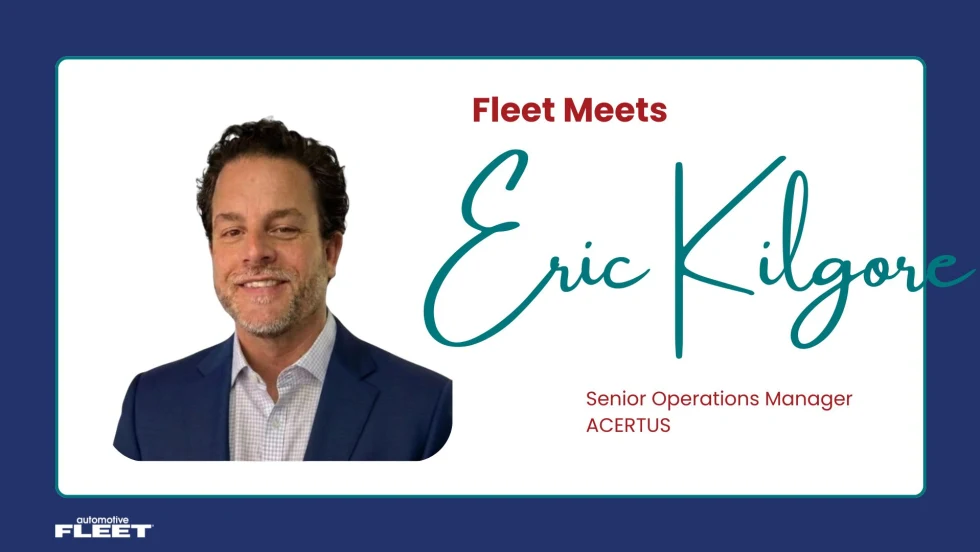
Fleet Meets: Eric Kilgore
This edition of the Fleet Meets series features one of the industry's best leaders driving multi-market and national operations.
Read More →
Why Reactive Fleet Management Is Becoming Too Expensive to Sustain
Research highlights a growing need for proactive management strategies to address rising costs in fleet operations effectively.
Read More →
What Your Fleet KPIs Aren’t Telling You
Tracking fleet metrics is only useful when the data leads to better decisions. This guide helps fleet leaders assess cost, utilization, and downtime more accurately, identify performance gaps, and prioritize the actions that can improve operational results.
Read More →
Hidden in Plain Sight: Fleet Compliance Risks
Fleet compliance isn't just about having policies — it's about consistently enforcing them. This practical guide reveals six hidden compliance risks common in public sector and shared fleet operations and outlines proven strategies to improve visibility, accountability, and audit readiness
Read More →