




California Agency Awards Nearly $70M For Electric School Buses
The new buses are part of the California Energy Commission's $94 million school bus replacement program to help pupil transportation providers replace more than 200 diesel school buses throughout the state.
SACRAMENTO, Calif. — The California Energy Commission (CEC) approved on Monday nearly $70 million in funding to replace more than 200 of the state’s diesel school buses with electric buses.
The new all-electric buses are part of the agency’s $94 million school bus replacement program to help public school districts, county offices of education, and joint power authorities transition from diesel school buses to zero- or low- emissions vehicles, according to a news release from the CEC. So far, the agency has awarded a total of $89.8 million of the program’s funds to schools in 26 California counties.
"School buses are by far the safest way for kids to get to school," said Patty Monahan, CEC commissioner. "But diesel-powered buses are not safe for kids’ developing lungs, which are particularly vulnerable to harmful air pollution. Making the transition to electric school buses that don’t emit pollution provides children and their communities with cleaner air and numerous public health benefits. The Energy Commission is proud to support this transition to protect the health of children throughout the state, something that will help all Californians breathe easier.”
As part of the program, the CEC selected The Lion Electric Co.'s Type A (without wheelchair lift), Type C, and Type D electric bus models, according to a news release from the school bus manufacturer. The funding for these models range from $269,488 for Lion's Type A bus (without wheelchair lift) to $337,469 for the manufacturer's Type D bus (with a wheelchair lift), according to the CEC grant agreement.
Additionally, the CEC selected Blue Bird’s Type A electric model under a zero-dollar agreement with transportation dealer and distributor A-Z Bus Sales Inc. Under the agreement, the school bus manufacturer’s Type A Micro Bird electric model will qualify for over $291,000 in grant funding, according to a news release from Blue Bird.
Part of the funding for the electric buses comes from the California Clean Energy Jobs Act, also known as Proposition 39.
The CEC said that approximately 90% of the electric buses funded by the replacement program will be operating in disadvantaged communities — and will reportedly eliminate nearly 57,000 pounds of nitrogen oxides (NOx) and nearly 550 pounds of fine particulate matter (PM 2.5) emissions annually.
In addition to improving air quality, the agency estimates that school districts will save nearly $120,000 in fuel and maintenance costs per bus over the next 20 years.
The CEC’s Alternative and Renewable Fuel and Vehicle Technology Program will provide the charging infrastructure for the buses, and will also fund workforce training and development opportunities for drivers and maintenance technicians. The program will also supply nearly $2 million in funding to ChargePoint Inc., for equipment and tooling used to manufacture electric vehicle fast-charging infrastructure.
In related news, two California school districts announced plans to receive new electric school buses.
The Mojave Desert Air Quality Management District (MDAQMD) recently awarded a $1.3 million grant to Apple Valley Unified School District and Lucerne Valley Unified School District for a total of three Blue Bird all-electric buses, according to a news release from the MDAQMD. The grant is part of state incentives created through Assembly Bill 617, designed to identify the areas of most need for pollution reduction.
Brad Poiriez, the executive director for the MDAQMD, said that the buses will be delivered — two to Apple Valley and one to Lucerne Valley — within the next four to five months.
Originally appeared in School Bus Fleet Magazine.
More Fleet Forward

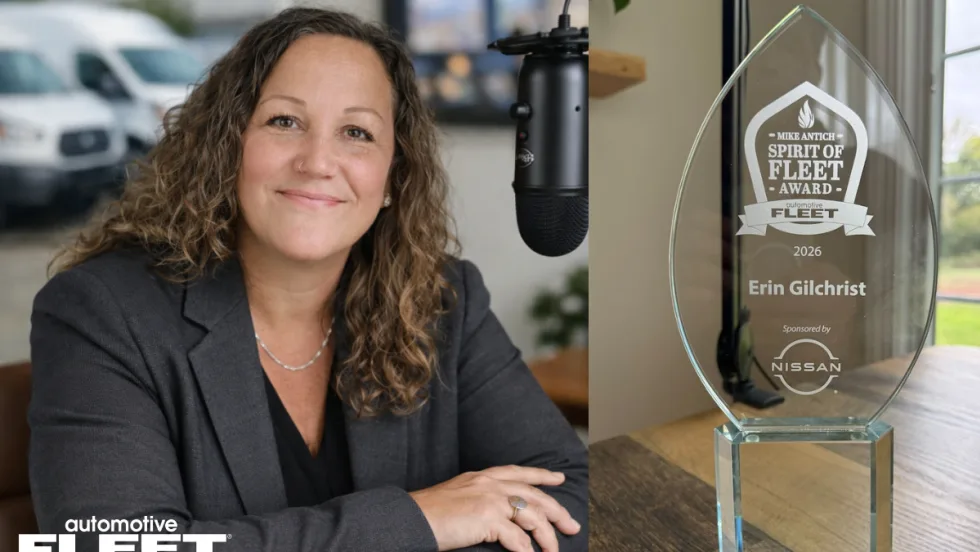
Erin Gilchrist Receives Mike Antich Spirit of Fleet Award
Last week at AFLA in Vegas, Erin Gilchrist received the inaugural, brand-new Spirit of Fleet Award.
Read More →
Dominika Leja Named the 2026 Fleet Manager of the Year
The AstraZeneca associate director of fleet was recognized for her leadership in fleet electrification, cost savings, and operational transformation.
Read More →
Jamie McKay Named the 2026 Fleet Visionary Award Winner
The Aptive Pest Control fleet manager was recognized for her approach to operations, data, lifecycle management, and driver needs.
Read More →
Fleet Forward Conference Introduces One-Day Passes for 2026
New one-day registration gives fleet professionals the flexibility to attend Tuesday, Wednesday, or Thursday, with passes available for $199 through Sept. 18.
Read More →
Vibe Coding: When Fleet Managers Become Software Builders
Five fleet professionals — none with programming skills — discuss how they’re using AI to build fleet solutions in-house and in a fraction of the time.
Read More →
Fleet Forward Conference Tackles Fleet Industry’s Growing Leadership Gap
This session will examine succession planning, knowledge transfer, and the skills the next generation of fleet leaders will need as veteran professionals leave the industry.
Read More →
2026 Fleet Manager of the Year Finalists Announced
Who are the 2026 Fleet Manager of the Year finalists?
Read More →
John Rossant to Deliver Opening Keynote at 2026 Fleet Forward Conference
The CoMotion founder will draw on developments across Europe, China, the Middle East, and other international markets to identify trends that could influence how U.S. fleets plan for the coming decade.
Read More →
How to Build Custom Fleet Tools With AI and Vibe Coding [Webinar]
A new Automotive Fleet webinar explores how fleet managers are using AI and vibe coding to automate routine work and create simple operational tools without traditional programming skills.
Read More →