





This article appeared in the 2022 Connected Fleet Guide, which offers resources to turn connected car data into actionable insights to foster safer and more efficient fleets.
Building a Connected Charging Ecosystem
With more and more fleets entering the EV space, a combination of charging services at work, at home, and at public stations will help accelerate the adoption of these zero-emission vehicles. Just make sure to connect it all.
December 14, 2022
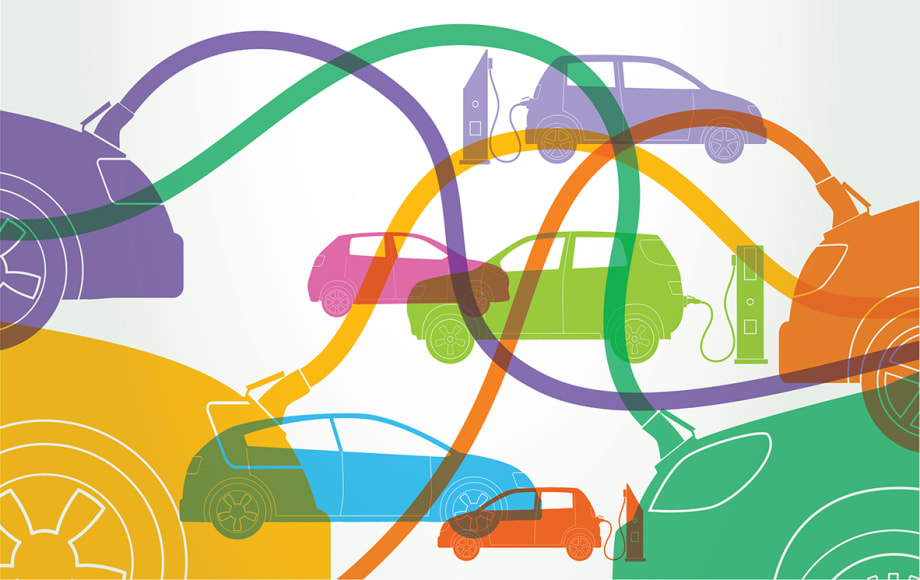
Look at telematics data, including fuel costs and driver proximity to routes, to determine if your fleet has a use case for installing at-home chargers for drivers.
Photo: Getty Images/smartboy10
5 min to read
The future is finally now — OEMs, solution providers, and fleets have intersected to create a perfect storm for the adoption of zero-emission, battery-electric vehicles. With more and more electric vehicles (EVs) now available and soon to hit the market, companies have an increasing number of options to transform their fleets into an emission-free sustainable message for clients, customers, and their own employees.
Along with this wave of new EVs comes the need to research, strategize, and implement a charging infrastructure plan moving forward. This is far from an easy task, and onsite infrastructure planning includes site walks with any number of local agencies, applying for permits, and ensuring your setup is future-proofed for the possible purchase of more EVs.
This is when it is important to look at the big picture and decide how your team will be charging your fleet — onsite, at home, or with public charging sites along their routes.
Charging On-Site
Installing chargers at your place of business is not cheap, and it’s not something that can be hammered out in a couple of weeks. Fleets looking to take on this type of project must do their homework before making any concrete decisions. Ask yourself and your team:
How many chargers will we need?
Do we require level 1, level 2, or DC fast chargers?
When will we be charging our vehicles?
Do we need to upgrade the local grid to handle the increased usage?
Are there funding/grant programs available to cover some of the costs?
Do we need a partner to assist us?
How do we maintain the chargers once they are installed?
This list is just the start — every fleet will have their own customized questions for themselves, their solution providers, and any partners assisting in the project. Luckily, there are a number of options out there that can help — with several OEMs and electric vehicle supply equipment (EVSE) providers offering concierge-type services to ease the pains of installing chargers.
Ford Pro recently launched its Ford Pro Charging solution for commercial electric vehicle charging. Starting the journey together, Ford offers its fleet customers help in identifying available incentives, consulting on the design and construction of optimal charging sites, and even working with local utilities on energy and infrastructure needs.
GM Fleet has partnered with EV charging providers such as EVgo, eTransEnergy, Schneider Electric, Qmerit, and In-Charge Energy to give fleets access to onsite infrastructure planning and implementation, charger data management, at-home solutions, and access to chargers all around the country. Add to this the BrightDrop battery-electric delivery van, and the OEM is covering numerous bases with its current and upcoming EV strategy.
Charging At Home
While onsite charging might be the right avenue for some fleets, other might benefit from setting up home chargers for their drivers. Very few, if any, fleets are going to make a 100% immediate transition to EVs. They must take the time to decide which drivers and routes would offer the highest ROI during the initial move to EVs. Using route telematics data, fuel costs, and driver proximity to routes, fleet managers can decide on the best use cases for at-home charging.
The cost is obviously much lower than installing onsite charging, and drivers can save the company money by charging at night, when utility rates are much lower. Many OEMs offer at-home charging solutions for consumer customers that can be translated to the fleet industry, offering assistance during installation, and sometimes even sharing or covering the cost of the installation of the chargers.
Charging on the Go
According to the U.S. Department of Energy’s Alternative Fueling Station Locator, there are currently more than 120,000 public EV chargers located around the country. And with the recent passage of the Infrastructure Investment and Jobs Act, more federal money is coming down the pipeline to increase the number of available chargers.
Using public chargers is most often more expensive than home or depot charging, but the continuing buildout of public infrastructure is giving fleets the confidence to purchase EVs and know their drivers won’t get stranded.
Again, it matters on the location of your business, your drivers, and their routes, but public charging can make the transition to EVs more viable for some fleets.
Charging-as-a-Service
While the name might be new to some, the concept is not. Charging-as-a-Service, or CaaS, takes a lot of the burden of infrastructure development off the shoulders of fleets. These solution providers can more quickly plan, set up, install, and manage a charger system for fleets, all the while requiring no upfront investments. These companies own all the equipment and only require fleets to pay a subscription fee for the charging services, like a monthly internet or cellphone bill.
These setups include the chargers and their ongoing maintenance and could include onsite solar panels and battery storage to supplement the power taken from the grid. The addition of battery storage can lower the costs of charging, as the system recharges itself at night during off-peak utility pricing hours and can be used to charge vehicles during daytime peak hours. This can save the fleet considerable money throughout the year.
The CaaS model has become more and more popular, with several companies entering the fray — Alphastruxure, Zeem Solutions, ChargePoint, and EV Connect to name a few. These providers could help more and more fleets make the switch to zero-emission vehicles, speeding up a national movement towards EVs.
There is no one solution to EV charging, as every fleet has its own requirements and intricacies. But it takes time, research, and sometimes the right partner to make the best decision moving forward and into the future.
Connecting & Integrating EV Data
After understanding how and where you’ll be charging, you’ll need to pull data from disparate hubs and interpret that data to drive efficiencies. Yet there isn’t one set way to access and analyze all this data, as it comes from many sources: aftermarket-installed telematics, new data services platforms, fleet card providers, EV charging network provider apps, and automakers’ EV management systems. Each of these systems takes on specific roles in the EV ecosphere, and many provide multiple solutions, but none do them all.
Integrating this data won’t be easy, but the good news is that there is an industry coalescing around holistic solutions to get you on the right path. Those stakeholders include CaaS providers, fleet management companies, telematics providers, utilities, third-party consultancies, and the manufacturers themselves. For a fee, they’ll manage a lot of the hard stuff for you.
Subscribe to Our Newsletter
More Green Fleet
Sponsored•October 1, 2026
New Propane Autogas Program Offers Fleet Compensation
Qualified commercial fleets can receive $7,500 per eligible propane autogas vehicle and up to $10,000 for new refueling site prep. Learn how the program works and see whether your fleet qualifies.
Read More →
EV Charging Use Is Outpacing Infrastructure Growth
ChargePoint’s 2026 Charging Forward Report points to rising charger use, higher-powered charging, commercial vehicle electrification, and energy-management technology. Here’s what fleets should know.
Read More →
Merchants Fleet Reports 290M EV Miles as Fleets Navigate Changing Electrification Market
From millions in operating savings to hundreds of millions of EV miles, Merchants Fleet’s latest report reveals what’s working and what’s changing in fleet electrification.
Read More →
The EV Breakdown Nobody's Talking About: Why Most Electric Vehicle Roadside Calls Aren't Mechanical Failures
Here's why EV breakdowns are widely misunderstood.
Read More →
ChargePoint Now Available in Energy Pass
ChargePoint and additional planned charging network integrations were added to GM's Energy Pass.
Read More →

First Look: Slate Auto's Electric Fleet Pickup
Could an affordable, modular EV pickup make electrification more practical for fleets?
Read More →
Slate Debuts Colorful, Unique EV Models
A recent media and client event, studded with electric vehicles dressed up on platforms, planted a new position for the manufacturer in the wider EV market. Fleets will find cost-saving advantages.
Read More →
Slate Electric SUV, Pickup Switchable Model Aims For Light-Duty Fleets
Everything about this EV is counterintuitive and understated, making it stand out from the crowd.
Read More →
Inspiration Mobility Acquires Key Electrada Assets
Inspiration Mobility Group has acquired select assets of Electrada, adding the fleet electrification provider's team, technology, and charging infrastructure development capabilities to its energy management business.
Read More →