Leadership buy-in, driver engagement, behavior monitoring, accountability, regular feedback, and intervention are key steps to build a solid program.
by Ward Warkentin, CEO of Fleetmetrica
September 1, 2021
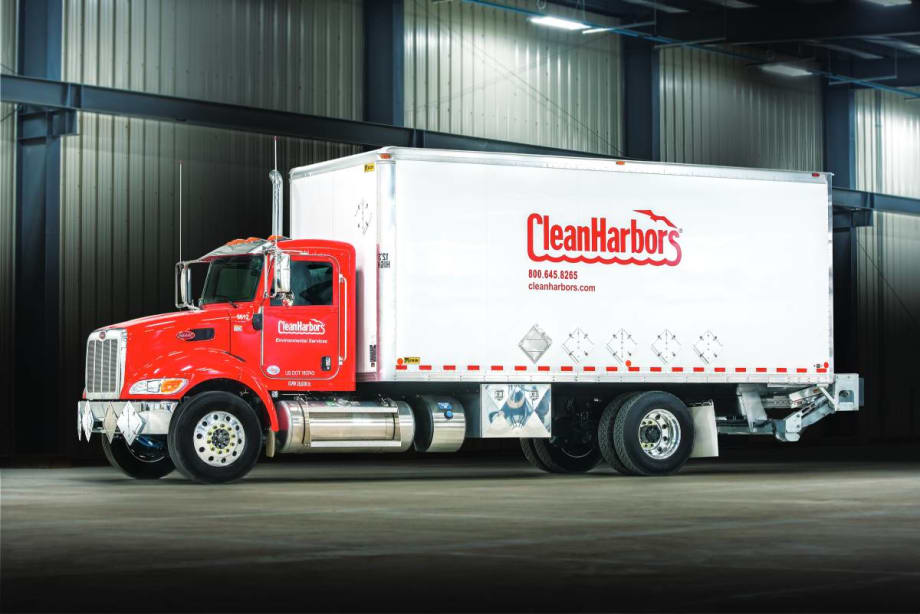
Photo via Marion Body Works.
8 min to read
A regional fleet hauling automotive and general freight with 150 drivers implemented formal driver scorecards. In the first year, their scorecard program resulted in a 60% reduction in net accident costs per mile. In additional the fleet realized hard savings of $3,763/truck/year, based on fewer fines and unscheduled repairs and less fuel used.
Ad Loading...
How did they do it? By executing best practices strategies for setting up a scorecard program.
Ad Loading...
Seeing is Believing
The implementation and management of the carrier’s program involved regularly distributing performance scorecards to drivers. At program launch, drivers were instructed about the points of measurement and baselines outlined in company policies. Once familiar with the information, its use per company policies, and sits significance to their performance, drivers received bi-weekly scorecards.
The scorecard included pertinent data relating to driving behavior in fuel, safety and compliance areas. Given its focus on safety, the fleet saw the greatest improvement in metrics in this area, including:
A 43% drop in aggressive accelerations
An 80% drop in speeding
A 60% drop in harsh braking events
Notably, improved safe driving behavior also led to a 3.4% increase in MPGs.
Company officials attribute to this success to key actions such as a well-defined safety policy that clearly outlines company metric targets as well as intervention whenever driver performance exceeded the targets or was trending worse. The company also had instituted well-defined fleet procedures with an online training program to sustain these results.
Ad Loading...
Effective Data Points to Track
Today’s onboard technology records a variety of useful safety-related information to include in a scorecard program, such as:
Speeding/MPG
Harsh braking
Aggressive accelerations
Hours-of-service violations
Lane departure and forward crash incidents
Safety belt usage
Distraction incidents captured by in-cab videos
While public safety scores are important to share and include in scorecards, real-time metrics that directly contribute to these results should be the primary focus. Drivers and managers then can proactively change behavior. Scorecards can also include other online data monitoring compliance with key processes by drivers or other fleet areas, such as pre-trip inspections, fault code clearances, and required training.
To be most effective, scorecard data must be shared with drivers in a way that allows them to understand the information and be able to act on it accordingly.
Best practices in driver scorecard implementation include the following:
Ad Loading...
1. Secure management buy-in early.
A strong fleet safety program directly affects the company’s insurability and profitability. For this reason, the first step must be securing leadership buy-in of the value of a properly executed scorecard program. Winning management’s commitment to a scorecard program early helps ensure proper resources are provided and all departments support the program. One way to secure buy-in begins with reviewing total accident- and safety-related costs-per-mile and benchmarking performance to industry leaders. This step will help highlight opportunities for improvement.
2. Build in driver engagement.
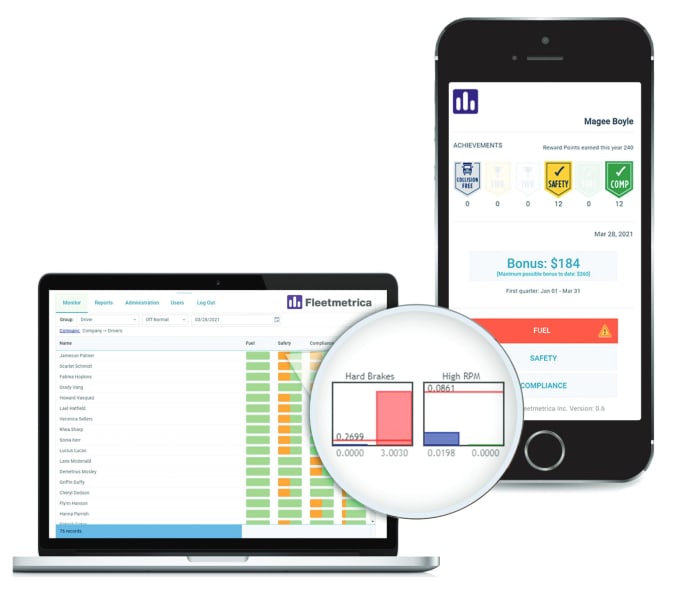
Everyone wants to know where they stand. Scorecards are an excellent way of communicating to drivers how well they are performing. However, if drivers are not engaged, changing their behavior will be difficult. A scorecard program can lead to more driver engagement in a number of way: incorporating a bonus program, sharing how drivers are performing in relation to their peers (creating a friendly-competition environment), providing automated notifications a driver is trending better or worse, and making use of gamification.
Monitoring driving that deviates from internal safety policies is one aspect of managing behavior. Equally important is monitoring changes in behavior itself. For example, if a driver’s performance is beginning to trend negatively, providing feedback to that driver enables him or her to change their behavior long before a fine or accident occurs.
Photo: Fleetmetrica.
3. Monitor behavior, not just results.
Monitoring driving that deviates from internal safety policies is one aspect of managing behavior. Equally important is monitoring changes in behavior itself. For example, if a driver’s performance is beginning to trend negatively, providing feedback to that driver enables him or her to change their behavior long before a fine or accident occurs.
Monitoring behavior changes in this manner is more time consuming and requires more advanced data analysis than simply following up on extreme safety events. With correct software, however, behavior monitoring can be easily automated enabling safety managers to focus on more value-added activities such as coaching and training drivers.
Set up a system that allows you to identify negative driving behaviors before they turn into egregious safety incidents, resulting in fines, accidents or events inconsistent with company policies. As covered earlier, with the abundance of captured real-time, risk management and due diligence dictate a company must address issues as they are identified.
Ad Loading...
4. Provide regular feedback to all drivers.
Managers who give drivers feedback only in negative situations are missing an opportunity to boost overall safety performance. Limiting feedback to noncompliant episodes, disregards applauding drivers who follow policies.
The profiled fleet adopted a culture of safety and a desire for excellence from its fleet. Providing information regularly to drivers created an excellent opportunity for drivers to showcase their exemplary skills and be appropriately recognized and rewarded. Driver recognition can be implemented through comments by safety or fleet managers in reports or scorecards.
Ideally, driver reports or scorecards are tied to or expand a fleet’s existing bonus program and are made available to drivers via company-wide communications channels, such as digital boards or even company-wide emails. Consider provided drivers access to both positive and corrective feedback via various devices they can access.
The following stats illustrate the benefits of providing employees with feedback:
Companies that implement regular employee feedback have turnover rates 14.9% lower than those that do not give feedback.
24% of workers would consider leaving their jobs if their managers provide inadequate performance feedback.
69% of employees say they would work harder if they felt their efforts were better recognized.
92% of respondents agreed with the assertion, “Negative (redirecting) feedback, if delivered appropriately, is effective at improving performance.”
68% of employees who receive accurate and consistent feedback feel fulfilled in their jobs.
Ad Loading...
5. Involve everyone responsible for safety.
Most people are quick to blame the driver whenever accidents occur. But the driver is not the only person responsible for safety. Anyone who can impact on fleet safety is accountable including driver supervisors and trainers, dispatchers and other fleet support managers or staff members.
Management guru W. Edwards Deming states that most problems in an organization are due to management; don’t focus simply on the driver’s behavior but also consider the roles other people play in the organization for ensuring safety.
For example, in the Texas case of Blake v. Ali and Werner Enterprises, the jury awarded a $90-million verdict to the plaintiff. Jury members attributed responsibility for the accident as 70% to Werner’s employees other than the driver, and only 14 % to the driver’s operation of the truck involved on the day of the crash. Establishing documented company safety policies is important; equally important, however, is ensuring compliance by all relevant employees.
Everyone wants to know where they stand. Scorecards are an excellent way of communicating to drivers how well they are performing. However, if drivers are not engaged, changing their behavior will be difficult. A scorecard program can lead to more driver engagement in a number of way: incorporating a bonus program, sharing how drivers are performing in relation to their peers (creating a friendly-competition environment), providing automated notifications a driver is trending better or worse, and making use of gamification.
Photo via Marion Body Works.
6. Reinforce management intervention when necessary.
Drivers need to know what is expected of them, no different than any other role in the company. When they fail to comply with company policies, timely and appropriate follow-up action must be taken consistently to correct the noncompliant behavior. All appropriate safety policies and procedures can be in place, but if management oversight does lead to correcting errant behavior, then these policies are irrelevant, as if they didn’t exist in the first place. Should drivers realize policies are checked infrequently or not at all, the chances of creating or controlling good driving habits are greatly reduced.
Fleets find that progressive forms of discipline and recognition generate the best results. For example, if a driver exhibits excessive speeding, disciplinary action may begin with a call to the driver and then progress, if necessary, to an in-office meeting and/or internal demerit points, and eventually to more training or disciplinary action.
Ad Loading...
Let us not forget what the legal profession now refers to as the “nuclear verdict” in the Werner case.
7. Treat it as any other company program
For best results, a scorecard initiative should involve the same level of planning as any other company-wide initiative. A more recent example is electronic logging devices (ELD) implementation required/requires all members of the company to be aware of their role and to receive the training required to fulfill their role accordingly.
Scorecard program implementation should begin with setting goals and assigning a project leader. For larger organizations, a committee of other team members may be needed to help define and execute the program. The plan should define all the policies on which the scorecard is based on and include written processes or procedures for monitoring scorecards and all players responsible for each activity. This procedure should also reference related areas or company departments with a role in the scorecard process, such as training, safety and compliance, dispatching and maintenance.
To help pre-plan for a scorecard program, begin by assessing your company’s internal safety practices to identify weaknesses should be strengthened prior to or during implementation. Doing so ensures that all critical aspects of the safety system, such as documentation and training, are in place to maximize the chances of a successful scorecard initiative.
In one approach to assessing a safety system—offered as a complementary online tool by the author’s company, multiple members of the management team complete individual risk assessments of your company’s safety program, then compare notes on common weaknesses in the system.
Ad Loading...
Insurability
The more organized you are, the more documentation you have, and the more company actions all point to having a sound safety program in place, the more attractive your organization will be to insurers. Proactively addressing negative trends and providing regular feedback improvement, combined with strong fleet messaging that empowers drivers to facilitate their own safety policies and documented fleet improvement improves the company’s insurability and defensibility in court.
Neology’s neoFleet platform will manage toll transactions and toll-authority operations for vehicles across Avis, Budget, Payless, Budget Truck and Zipcar.
Nearly eight in 10 surveyed fleets allow personal use of company vehicles, while just over half of respondents report charging employees for the privilege.
Could developments overseas offer a preview of what’s coming for U.S. fleets? This week, we’re looking at the future of AI, autonomy, and electrification, plus Ford Pro’s new certified pre-owned program, smarter vehicle offboarding, and a new way for fleets to manage toll expenses.
Rising operating costs, driver safety concerns, and unplanned downtime are putting unprecedented pressure on modern fleets. Discover how fleet managers use embedded OEM connectivity and real-time vehicle data to cut TCO, prevent downtime, and protect drivers without aftermarket telematics hardware.
ADAS-equipped vehicles may crash less often, but they can cost more when they do. This week, we’re breaking down what that tradeoff means for fleets, plus Subaru’s first Forester Wilderness Hybrid, Nissan’s new e-POWER Rogue, and why Calstart has become Catalyst Mobility.
Iorillo brings nearly 20 years of fleet management and sales experience to the role, including previous positions at Element Fleet Management, CEI, Donlen and Ryder.
Where will fleet’s next generation of leaders come from? This week, we’re looking at the industry’s talent pipeline, what certification can add to a fleet career, how to build an award-worthy track record, and the return of Automotive Fleet’s Personal Use Survey.
Fleets have more driver data than ever, but identifying risky behavior doesn't necessarily correct it. Smith System's new Driver Risk Management program combines monitoring, training, and follow-up coaching to help fleets connect risk signals with driver intervention.